Based on The Three Musketeers by Alexandre Dumas.
This animated film tells the life story of the liberator Simón Bolívar: from his birth in Caracas and his education, to his travels, battles and the struggle against Spanish rule for Latin American independence. In this narrative, historical conflicts are simplified through fictional characters like “Tiránico,” symbolizing Spanish evil and domination, and “Américo,” who represents slavery and the people’s yearning for freedom.
Set in post-independent India, this film narrates the story of a naive villager who has warped ideas about an atrocious communal group called Razzakars and wishes to join it until he realises what they are capable of.
By decoding ancient hieroglyphic texts, Jean-François Champollion gave voice to an enigmatic civilization, but behind his legendary feat is a mysterious brother who made it possible. The recent discovery of correspondence between Jean-François Champollion and his brother Jacques-Joseph now allows us to fully understand how a young, self-taught genius was able to make one of the most important discoveries of the 19th century. Without the ingenuity and unfailing support of his older brother, Jean-François would never have succeeded in solving this enigma, which had international repercussions. With animated sequences of their private correspondence, and with the help of archives and expert analysis, this film revisits this unique scientific, human and intellectual adventure to celebrate the bicentenary of the decoding of hieroglyphics.
Romantic and stormy, full of work, dangers and an irresistible thirst for knowledge was the youth of Al-Hussein ibn Abdallah ibn Al-Hasan ibn Ali ibn Sina, who would become known throughout the world under the name of Avicenna, the great physician, scientist and educator of the 10th-11th centuries.
At the beginning of the XVII century, events take place preceding the liberation struggle led by Bohdan Khmelnytsky. A young boy Pavlo Pokhylenko leaves his native Kaniv to join the Zaporizhian Sich (camp and cossack army) to fight for freedom and the Orthodox faith.
As the only survivor of a battle, a cavalryman heroically defends his flag.
Argentina, 1978. A group of Army scientists are sent to investigate an incident that happened at a clandestine factory os chemical weapons ran by a leftist guerrilla. There, the group will find a threat far more dangerous and radioactive than any commies.
The film tells the story of Azat, a participant in the first mass patriotic demonstrations in the USSR, who was imprisoned and subjected to abuse by investigators and prison guards. Azat’s prototype was Qayrat Rysqulbekov.
On June 5, 1989, one day after Chinese troops expelled thousands of demonstrators from Tiananmen Square in Beijing, a solitary, unarmed protester stood his ground before a column of tanks advancing down the Avenue of Eternal Peace. Captured by Western photographers watching nearby, this extraordinary confrontation became an icon of the fight for freedom around the world. FRONTLINE investigates the mystery of the tank man — his identity, his fate, and his significance for the Chinese leadership.
Indian biographical film based on the life of social activist, Kisan Baburao "Anna" Hazare.
Dr. Theodor Morell served as Adolf Hitler's personal physician from 1936 to 1945, often treating the Fuehrer with unconventional medicines and concoctions of unknown compounds. Medical experts examine the evidence for Hitler's abuse of amphetamines and narcotics, as well as abundant evidences for symptoms of Parkinson's disease and perhaps even syphilis. Did the Fuehrer's failing health, abetted by Morell's treatments, affect his military judgment and contribute to the defeat of Nazi Germany?
A short puppet animation movie by Kazuhiko Watanabe.
Set in the late 1790s, a depiction of Irish villagers rebelling against British occupation (Red Coats) over the right to bear arms.
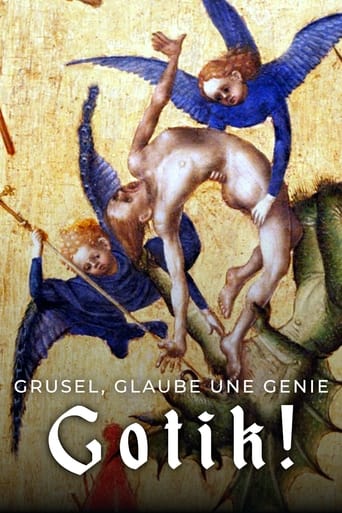
Death and the devil, nudity and eroticism, horror in blazing colours, Gothic art cast a spell over people 500 years ago. In these image-poor times, art deliberately and skilfully played with the emotions of the viewer, triggering fear, devotion, but also rapture. Art documentary on German gothic art of the late-middle ages.
Based on Vadakkan Pattukal, a collection of Northern Ballads of medieval origin.
In the spring of 1980, Esther Jochmann, a young Austrian woman, flies to San Salvador. Her husband, a journalist, has been killed. She has to identify his corpse so that the authorities will allow it to be transferred to Europe. She learns that Archbishop Oscar Romero, who was also a victim of an assassination, had granted a taped interview to her husband. Padre Manuel hands the tape over to her. Esther accompanies the Padre and John, an American reporter, who are trying to find the murderers.
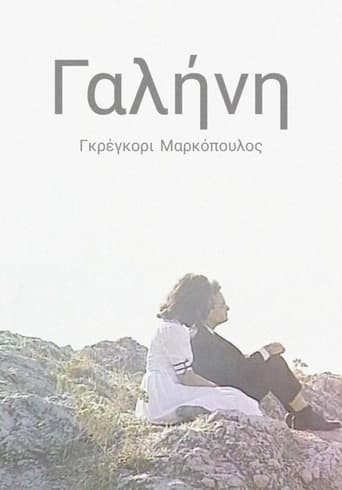
Originally edited in two versions. Version I, 70 minutes; version II, 90 minutes. (The only known existing version is not Markopoulos’s edit and contains additional titles, music and voice-over added later than 1961. 65 minutes.) Filmed in Mytilene and Annavysos, Greece, 1958. Existing copy on video, J. and M. Paris Films, Athens.
Activate your FREE Account!
You must create an account to continue watching