A curious college student travels to Haiti to unravel the life of the president. What she finds is...unspeakable. While investigating the past of President Moïse for a memoir, Shedeline walks into the heart of a life-changing event for her, Haiti, and its president; as she gets a front-row seat to the chaos and intrigue of a bloody political firestorm. This unexpected turn of events shakes her and introduces a terrifying twist to what she thought would be an ordinary story. Now, her memory is heavy with the answer to the prodigious question hanging over an unsettled nation. Who killed the president?
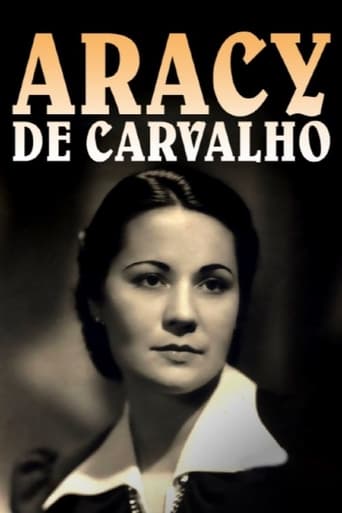
The Brazilian Aracy de Carvalho moves to Hamburg with her son in 1934. Despite the Nazi dictatorship, Germany is a refuge for her as a single woman. But through her work at the Brazilian consulate, Aracy is confronted with the persecution of Jews in the Third Reich. She helped countless of them to leave the country in the years before the Second World War. For the refugees and their survivors, who have their say in the film, she becomes the angel of Hamburg. The docudrama tells the story of a woman who did not want to be a hero, but who saved the lives of countless people.
Describes the origin and development of the trade union movement.
An old Bedouin tells the story of the twenty-three year old Prince Abdul Aziz ibn Saud’s daring raid on Riyadh to geologists exploring the deserts of Saudi Arabia.
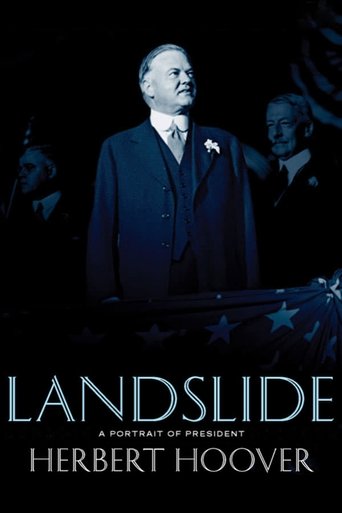
Documentary about personal life of Herbert Hoover's and his governmental career, profiles the former head of state's political philosophy, memorable election campaigns, Great Depression policies and more. Through interviews with scholars such as David Kennedy, Robert Reich and Tim Egan, this biography sheds new light on the underappreciated president's difficult tenure and enduring legacy.
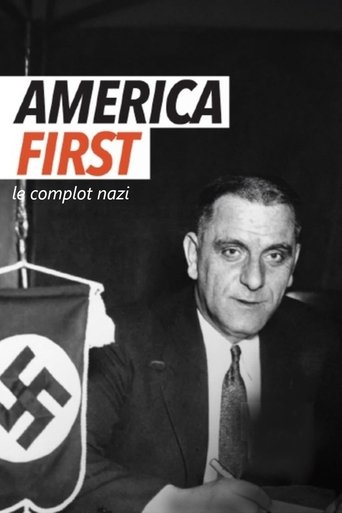
April 17, 1944. A high-profile trial for sedition opens in Washington. Dozens of individuals—including members of Congress—are accused of cooperating with German forces, participating in pro-Nazi movements, and plotting to overthrow the U.S. government. How did this happen in the world's greatest democracy? And why does no one remember this major episode in American history?
A thin gent in formal wear, amid a club or party, reads a book about primitive man after he's ignored by a pretty lady. We see the book enacted: Weakhands loses his girlfriend to Bruteforce, but chances upon a design for a weapon to vanquish his rival and win her back. His tribe sees this and sets him up as their leader. With the club, he fends off various creatures (a winged lizard, a snake, a dinosaur) and a rival tribe led by Monkeywalk. The women even manage to repel an attack. But the rival tribe discovers the secret of the club themselves, and capture the women. Weakhands, sitting in despair, chances upon a new weapon: the bow and arrow.
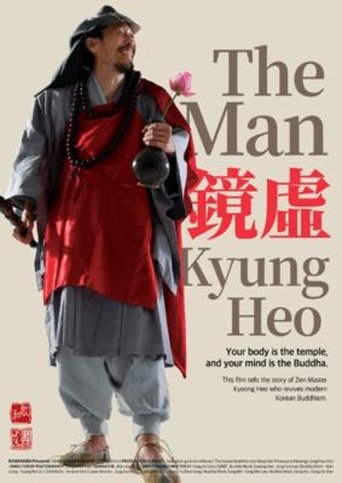
This film tells the story of Zen Master Kyeong Heo Seongu who revives modern Korean Buddhism. He cares for a woman who is sick and tired of cold and hunger, but other monks misunderstand it.
Georgia, 1864. Desperate to escape an arranged marriage to her brutal neighbor, Willa Randall disguises herself as a boy and joins the confederate Cavalry.
Director Michèle Stephenson’s new documentary follows families of those affected by the 2013 legislation stripping citizenship from Dominicans of Haitian descent, uncovering the complex history and present-day politics of Haiti and the Dominican Republic through the grassroots electoral campaign of a young attorney named Rosa Iris.
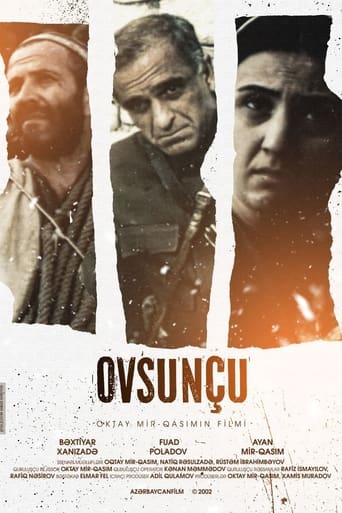
Local healer embarks on the path of revenge against the Russian Bolsheviks who captured his native village, establishing their own rules there.
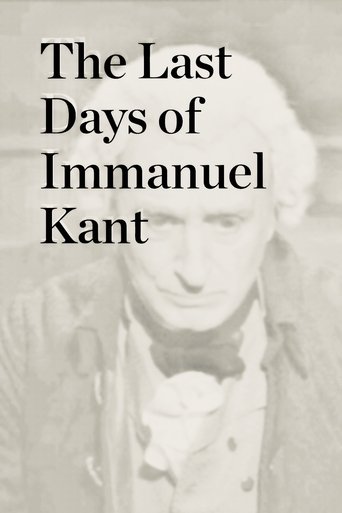
A brief, fictionalized time period in the life of Professor Kant. The story is set in his hometown, Konigsberg, chronicling his last few years prior to his death in 1804 at the age of 79.
Hag horror meets grotesque mukbang in Ireland circa 536 AD (referred to by medieval scholars as “the worst year to be alive”) in this psycho-biddy period piece about three paganesses, a foreign man lost in the forest and a feast appalling enough to shock a Visigoth.
On 15 March 1921, Talat Pasha, a high-ranking Turkish dignitary, was shot dead in a Berlin street by a young Armenian. A few months later, Soghomon Tehlirian, his assassin, appeared before a German court. He faced the death penalty. Yet, during the trial, the victim gradually changed into the guilty party, and the accused was finally acquitted.
From Raymond Baxter live on Tomorrow's World testing a new-fangled bulletproof vest on a nervous inventor to Doctor Who's contemporary spin on the War on Terror, British television and the Great British public have been fascinated with the brave new world offered up by science on TV. Narrated by Robert Webb, this documentary takes a fantastic, incisive and funny voyage through the rich heritage of science TV in the UK, from real science programmes (including The Sky At Night, Horizon, Tomorrow's World, The Ascent of Man) to science-fiction (such as The Quatermass Experiment, Doctor Who, Doomwatch, Blake's 7, The Hitchhiker's Guide to the Galaxy), to find out what it tells us about Britain over the last 60 years.
On the occasion of a theatrical performance, the tumultuous history of modern Greece is presented, from the Asia Minor Catastrophe to the invasion of Cyprus. In particular, the ways in which Greece's foreign protectors benefited from the disasters and trials of both our country and the wider Mediterranean and Balkan region are examined.
Ayodhyecha Raja, literally "The King of Ayodhya", was the first Marathi talkie. It is based on the mythological story of Raja Harishchandra of Ayodhya and his test by sage Vishwamitra, as recounted in Valmiki's epic, Ramayana. The film was also made as a double-version, Ayodhya Ka Raja (1932) in Hindi, making it the first double version talkie of Indian cinema.
The sinking of the Titanic was far more than a simple accident. It was a tragedy that could have been prevented. It was the result of a long chain of mistakes: a fatal series of avoidable human errors that sent the Titanic and more than half of her passengers to their watery graves. Based around the official inquiry held immediately after the event, plus evidence that's come to light since the wreck of the Titanic was discovered in 1985, National Geographic, in this drama-documentary special, answers the question: Who Sank the Titanic?
Activate your FREE Account!
You must create an account to continue watching