Made famous by the 1957 Hollywood movie, the bridges of the River Kwai emblematize one of the most misunderstood events in history. Contrary to the romanticized film version, the structures represent a period of terror, desperation, and death for over 16,000 POWs and 100,00 local slaves. The Thailand - Burma Railway was the vision of the Japanese Imperial Army: a 250-mile track cut through dense jungle that would connect Bangkok and Rangoon. To accomplish this nearly impossible feat, the fanatical and ruthless Japanese engineers used POWs and local slaves as manpower. Candid interviews with men who lived through the atrocity - including Dutch, Australian, British, and American POWs - illuminate the violence and horror of their three-and-a-half-year internment. From Britain's surrender of Singapore the enduring force of friendship, The True Story Of The Bridge On The River Kwai narrates a moving and unforgettable account of a period in history that must be remembered.
The film is about a young Georgian poet Mirza Gelovani, who died in WWII. It also tells the story of Mirza Gelovani’s contemporaries who sacrificed their youth to their homeland
On the 50th anniversary of the Cyprus Peace Operation, TRT World revisits the island's turbulent history and asks: Is there still hope for reconciliation?
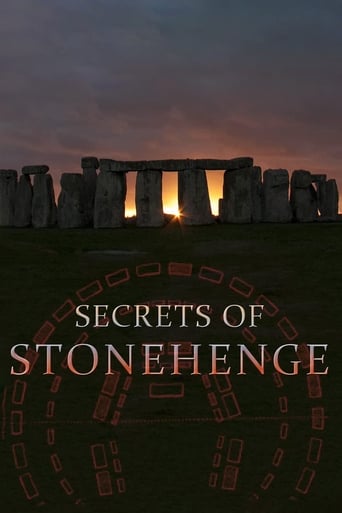
Dated to the late Stone Age, Stonehenge may be the best-known and most mysterious relic of prehistory. Every year, a million visitors are drawn to England to gaze upon the famous circle of stones, but the monument's meaning has continued to elude us. Now investigations inside and around Stonehenge have kicked off a dramatic new era of discovery and debate over who built Stonehenge and for what purpose. How did prehistoric people quarry, transport, sculpt, and erect these giant stones? Granted exclusive access to the dig site at Bluestonehenge, a prehistoric stone-circle monument recently discovered about a mile from Stonehenge, NOVA cameras join a new generation of researchers finding important clues to this enduring mystery.
The history of Niagara Falls and the people that made it famous.
While playing football, two children stumble across the grave of a French WWI infantryman who died in the trenches in 1918. His name was Pierre Delpeuch and in the last days of his life he and his comrades shared an extraordinary human adventure. Exhausted, cut off from the front, huddled in their trench, Pierre and four others bravely stood firm. Facing them was another trench containing five similar exhausted and determined Germans. Their only aim was to resist, whatever the cost, until reinforcements arrived.
The life of the Celtic Queen Boudica (Boadicea) and her rebellion against the Roman Empire.
The film is based on Zahari Stoyanov's memoir "Notes On Bulgarian Uprisings" depicting the events around the April Uprising in 1876.
The life of legendary Brazilian musician Alfredo da Rocha Vianna Filho, better known as Pixinguinha.
In the 1800s American Southwest, an Indigenous family witness an extraordinary extraterrestrial event. The family must confront their fear of the phenomenon while also fending off the encroaching American military.
The tragedy of the Pequot War through the eyes of Wampishe, a Pequot elder who survived the burning of the Mystic fort as a young boy.
A documentary-fiction that reconstructs the complex procedural path followed by the 1969 massacre through the point of view of Francesca Dendena, daughter of one of the victims and President of the Family Association of the victims of the Piazza Fontana massacre.
In 1942, Nea' Vitu is in trouble with his children: a son is fascinated by the world of war profiteers, and the daughter is going around with the speculator "Treispemii" (Dan Nutu). On the evening of her engagement, Vitu is denounced by his son for hiding an illegal printing press in a painter's house. Thirty years later, he returns to the slum and searches for the Vitu family. They no longer live there, the neighbors have changed, and he investigates to find out what happened to them. Nea Vițu, you raise your daughter, Rădița, and son Fănică. His wife Dorina died when Fănică was born. Apparently, family problems are difficult barriers to overcome. He's an honest man. He gets angry at the slick Fănică. Fănică is also chased away by the slum priest, because he wanted to make a new bible... where he'd be Fănică the God .... Rădița goes around with the speculator "Treispemii". In 1942, nea Vițu joins the fight against the Nazis and runs an illegal printing house with a painter...
This short-form documentary focuses on the true story of Alfons Heck, who as an impressionable 10-year-old boy became a high-ranking member of the Hitler youth movement during World War II. The story is told in his own words. This film originally aired as part of the "America Undercover" series on HBO.
In the middle of the eighteenth century, at the time of the Prusso-Austrian War, a cuirassier, a hussar and an infantryman meet by chance and hide together in a secluded place. The war has left different marks on each of them, but they all long for normal human happiness. Although they initially have different attitudes towards military service, they are changed by their stay in seclusion and the atmosphere of life in a peasant cottage and refuse to return to the Austrian army. But all three Theresian "misfits" take up arms again, which they no longer want to touch, when the solitude is overrun by the Prussians. They manage to cover the escape of the family and their child, but pay with their lives.
The story of Freda Kelly, a shy Liverpudlian teenager asked to work for a young local band hoping to make it big: The Beatles. Their loyal secretary from beginning to end, Freda tells her tales for the first time in 50 years.
The relationship between a nephew and his aunt in the begining of Mexico's 20th century.
Activate your FREE Account!
You must create an account to continue watching