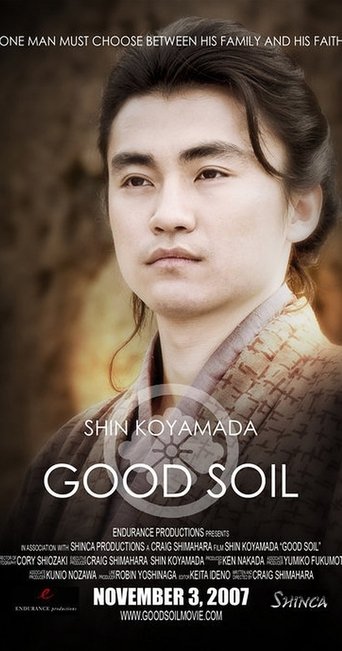
Ships from Europe brought Christianity to the shores of Japan in 1549. For decades the seeds of faith grew under the watchful gaze of the Shogun, but the fear of foreign influence eventually gave rise to persecution. By 1624, Japanese Christians enjoyed only a few more years of peace. Jinbei Mauda comes to a point in his journey were he has to choose between his family or faith. Jinbei Masuda, a Japanese Christian of the samurai class who draws his strength from his faith, family and kenjitsu (Art of the Sword). However, he is caught up in the shogun's policy of religious persecution and must choose between his loved ones or his God.
In the late 1600s, more than 150 men and women were accused of being witches. After the infamous Salem Witch Trials, 19 people were hanged for their alleged crimes, and one person was pressed to death under heavy stones. This History Channel documentary travels back to one of America's darkest times and reveals startling facts about who the real accusers were and what the community did to make restitution to the loved ones of the dead.
The tragic and shocking story of the notorious Magdalene Laundries, a shameful system, created by the Irish State but supported by all strata of Irish society, which enslaved more than ten thousand women between 1922 and 1996.
The work begins with a student objecting to the political situation in 1919, which reminds the teacher of the same position, but his hero at that time was the national leader (Mustafa Kamel), who spent his whole life defending the homeland from his trip to France to study law, and the formation of the National Party, which was a platform for presenting His homeland issue.
Set in 18th century, a 10 year old deaf boy has been abandoned by his mother, Comtesse de Solar, and is taken care by Abbé de l'Épée, who teaches him how to comunicate and express.
An extrabiblical tale of Barabbas and Judith Iscariot, the presumed sister of Judas, starring Constance Crawley and Arthur Maude.
Seven years after the disastrous Battle of Alcácer Quibir, where King Sebastian and the nobleman Dom João disappeared, the latter's wife Dona Madalena de Vilhena finally gives up hope that he'll return and marries the knight Dom Manuel de Sousa Coutinho, with whom she has a daughter, who is afflicted by a fatal illness. Now only the tutor Telmo Pais retains the hope that the lost husband is alive, a premonition that may be confirmed after two decades, with the arrival of a mysterious pilgrim...
A research-based essay film, but also a very personal perspective on the history of socialist Yugoslavia, its dramatic end, and its recent transformation into a few democratic nation states.
Four days after the second atomic bomb was dropped on Nagasaki, American airmen are flying the last and longest bombing mission of the war. In Tokyo, a fanatical group of Japanese officers stage a daring coup d'etat in an effort to prolong the war. As the rebels take over Japan's Imperial Palace, and with it - Emperor Hirohito; radio operator Jim Smith and the men of the 315th Bomb Wing are facing their own dangers in the sky above Japan. In a development not anticipated by generals or world leaders - the Last Mission and the coup d'etat converge, helping to bring an end to the most destructive war the world has ever known.
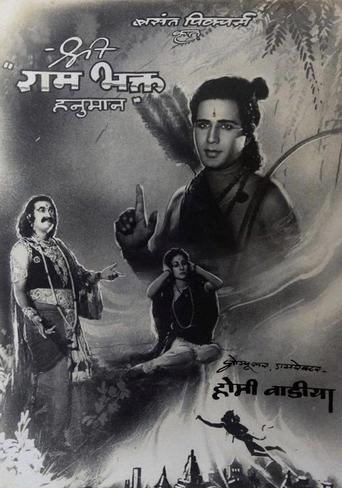
Ravana (Niranjan Sharma) orders Maricha to turn into a deer to entice Sita (Sona Chatterjee) with the notion of kidnapping her. Rama (Trilok Kapoor), Lakshman (Prabhash Joshi) and Sita are in the Panchavati forest for their fourteen year exile. Espying the golden deer sent by Ravana to lure Rama away, Sita asks Rama to get it. On hearing a cry of pain she sends Lakshman after his brother thinking he’s hurt. Ravan comes in the guise of a hermit begging alms and makes Sita step over the Lakshman Rekha (line), Lakshman had drawn around their cottage for her safety, asking her not to step beyond it. In their search for Sita, Ram and Lakshman meet Hanuman (S. N. Tripathi) whom they help in the fight between Sugriva and Bali. Hanuman then helps in finding Sita. (Wikipedia)
Autobiographical documentary in which Ian Dury, fighting a battle with cancer to which he would later succumb, recalls his life and career. With contributions from painter Peter Blake and members of Dury's band, the Blockheads.
The eventful history of Tyko Vylka, the first Nenets artist, cartographer, polar explorer, participant in World War II, chairman of the Novaya Zemlya Island Council.
Chronicling the Harlem Renaissance era, this retrospective documentary tracks the origins of the soulful music of the period, along with the challenges many of the genre's artists faced when trying to gain recognition within conventional society. Included are anecdotes from musicians and historians, plus footage of performances and interviews with Cab Calloway, Duke Ellington, Count Basie and more.
This humorous and factual history of five lads who grew up to become Founding Fathers brings the early days of American history to life with sass and substance, in Lane Smith's inimitable style.
In Kino Klassika’s first film commission, British filmmaker Mark Cousins imagines a conversation between D.H.Lawrence and Sergei Eisenstein. This playful film essay carries forward Mark’s film dialogue with Eisenstein from his feature film about Eisenstein in Mexico ‘What is this film called Love?’
Gabriel, a young soldier, is sent to the Western Front in 1914. He experiences the hell of the trenches and the devastating effects that fear has on all the troops. He comes out alive after this horrendous experience, full of rage and fire, and discovers his own humanity.
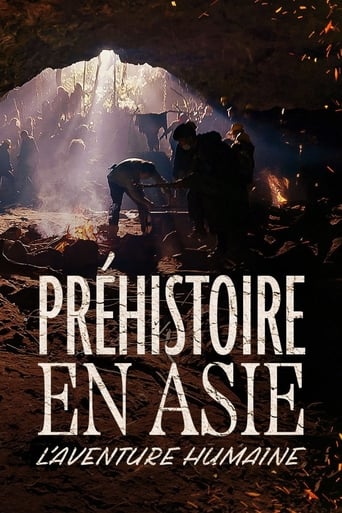
In the docudrama "Les Derniers Secrets de l'humanité" (The Last Secrets of Humanity), author and director Jacques Malaterre and paleoanthropologist and professor at the Collège de France Yves Coppens reveal the incredible adventure of Asian prehistory. How does science help to reconstruct these bygone times in images? Thanks to discoveries made at excavation sites and in analysis and genetics laboratories, researchers are now revealing this distant, vanished past.
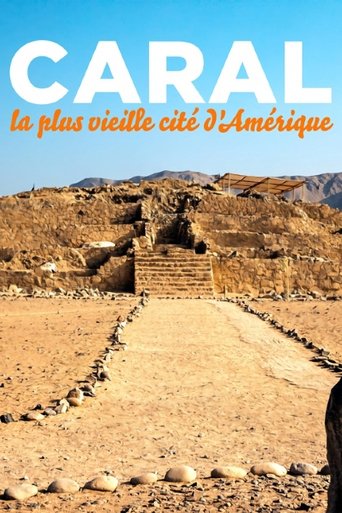
The Sacred City of Caral or Caral-Supe is the capital of the Norte Chico Civilization of Supe located in the Supe Valley, 200 km (124 miles) north of Lima. The Sacred City of Caral is the earliest known civilization in the Americas, it dates to the Late Archaic period. Radiocarbon analysis performed by the Caral-Supe Special Archaeological Project (PEACS) dates its development between 3000 to 1800 B.C.. It is believed that this civilization started by the merging of small villages based on trade of agricultural and fishing products. Its importance rests on the success of techniques of domestication of cotton, beans, potatoes, chilis, squash among other products. Success in agriculture was due to the development of water canals, reservoirs and terraces. They used guano, bird excrement, and anchovies as fertilizer.
Activate your FREE Account!
You must create an account to continue watching