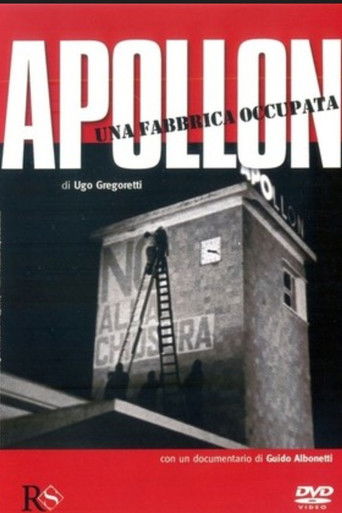
The film documents the trade union battle of the workers of the Apollon printing house in Rome, occupied for a few months after the management decided to fire all the personnel and sell the land on which the factory was standing. In the form of a docu-fiction, the events of the long occupation are reconstructed, which began on June 4, 1967 and ended in December 1968. The workers play themselves and various other roles, but they are also co-authors of the film, which is not a simple chronicle of events, but an analytical reading of the reality of the factory, the story of the conquest of instruments of struggle and democracy, with the indication of strategies of attack on the bosses' power. The narrative voice of Gian Maria Volonté gives continuity to the story and comments on the events.
Mazepa, the Ukrainian governor is in love with his goddaughter Maria. He quickly wins her heart. But her old father treats the wooer harshly… Maria runs away. The furious father won’t submit. This intrigue makes the most of the ingredients of historical drama. Maria is confronted to the arbitrary; the young woman is in a dilemma between her love and her family. The tragic outcome is equal to her destiny.
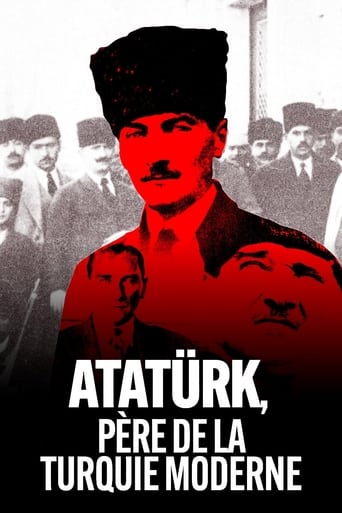
Mustafa Kemal Atatürk (1881-1938) was a Turkish field marshal, revolutionary statesman, author, and the founding father of the Republic of Turkey, serving as its first president from 1923 until his death in 1938.
In 1849, the liberation war against the Habsburg Empire is close to its end in Hungary. Having hidden from military draft, Barnabás leaves his hometown and walks across the country to find and save his wounded brother who has been hiding with a guerilla group deep in the forest. Despite their exhaustion, lack of food or information, they are still fighting for their cause. Barnabás finds his brother alienated and distrustful. The tension between the boys further increases when they turn out to be attracted to the same nurse in the camp. Hoping he can earn his brother's trust and take him home, Barnabás decides to stay and lie about his past. In the meantime, he has to face the cruelty of war.
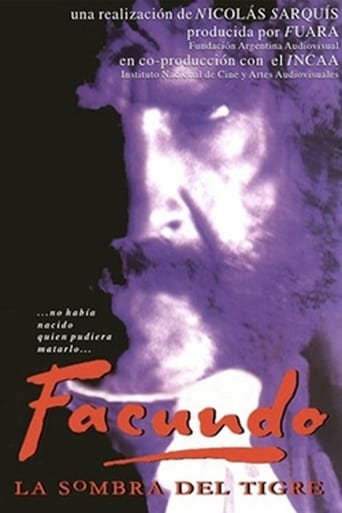
The film focuses on the journey of General Juan Facundo Quiroga, with a very compromised health, to the north in order to resolve the conflict between the provinces of Salta and Tucuman.
Zhang Xianchi is a man thrown into the Cultural Revolution and its afterimage, plunged into the ideological deadlocks of the era and suffering its consequences beyond it. Born into a family that supports the nationalist Kuomintang, Zhang eventually became a leftist and joined the Communist Party. But his family’s background eventually catches up with him, and in a series of bureaucratic measures, he is labelled as a Rightist, leading to a slew of irrational yet life-affecting consequences. His story is told through an exhilarating hybrid of forms, blending documentary-styled interviews and spectral theatrical displays within an ever-mutating studio-space. Hypnagogic in its imagery and ironic in attitude, Mr. Zhang Believes is a tour-de-force treatise of a man caught within dogmatic political maneuverings, which it critiques indirectly with creative and stoic fervour.
Travel through the streets of Rochester and you’ll find some extraordinary architecture. From California bungalows to English Tudors, French colonials to Victorians, the Flour City is home to so many beautiful dwellings. WXXI takes you on a private tour inside some of these exquisite house in Great Homes of Rochester.
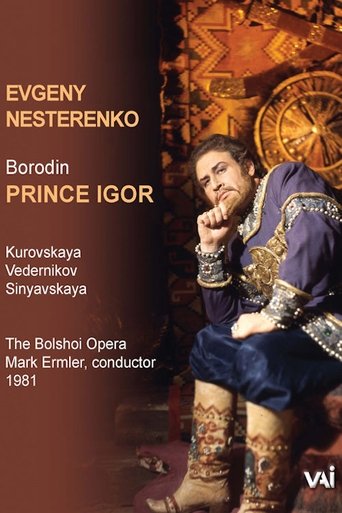
This 1981 Bolshoi production performed in the concert hall of The Kremlin is by far the best available, despite the more ‘historical’ picture and mono sound. The production itself is a very classic period production, with utterly authentic costumes and aptly dramatic sets. There are even horses on stage. The depiction of the Don Cossacks’ Khan Konchak and his tribe is colourful and historically informed in one. Needless to say, the scene of the Polovtsian Dances is spectacularly presented with great choregraphy and terrific dancing, in the league of the Spartacus of Bolshoi, no less.
The historical-revolutionary film by Dmitry Frolov, permeated with the romanticism of the revolutionary events of 1917, echoing the moods of August 1991. Since the film was shot the day after the victory over the coup plotters in the USSR in August 1991. All thoughts of the beekeeper - quotations from Lenin's works.
When the King of France demands that John relinquish his crown in favor of his nephew, the young Prince Arthur, war is the inevitable result. Excommunication, attempted atrocity, rebellion, and assassination all contribute to political turmoil and personal grief for a mother who has lost her son.
Discovery examines the history of "Golden age of Piracy." The program takes a detailed look at the harsh lives of pirates, their tactics, motivations and why they would choose such a life. The geopolitical forces that lead to the proliferation of pirates and their final demise are explained.
Clara Mingueza, an actress from Barcelona, sets out to move the mortal remains of Elena Jordi (1882-1945), vaudeville star, actress and the first woman director of Spanish cinema, to her hometown, while trying to find a copy of Thaïs, the only film she directed.
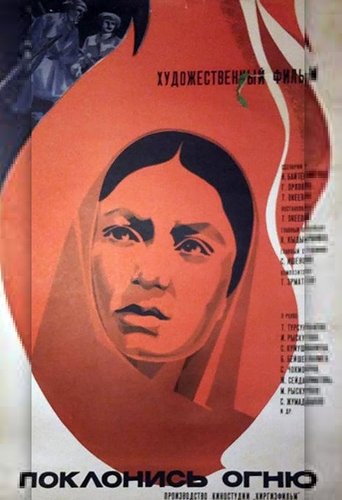
Kyrgyzstan, the 1920s. In a remote mountain village, against the will of the local elites and in defiance of centuries-old traditions, a woman—Urkuya Salieva—is elected chair of the agricultural cooperative. Salieva is determined to build a new life with an uncompromising resolve against anyone who would obstruct the poor, a stance unusual for a woman.
A young girl named Maia disguises herself as a boy in order to fight against the enemies of her country.
The Great Kanto Earthquake of 1923 marked a moment of unprecedented material destruction and cultural rupture in modern Japan. The disaster soon became subject to human interpretation and political manipulation as the earth tremors and subsequent fire produced not only physical chaos but also the rumors and violence against Koreans revealing what was fearful and why. After a century, this documentary reconstructs the course of this mayhem against the colonized, and traces the ways in which the story of this genocidal violence has long been covered up, haunting those whose lives were never the same after encountering the forbidden truth.
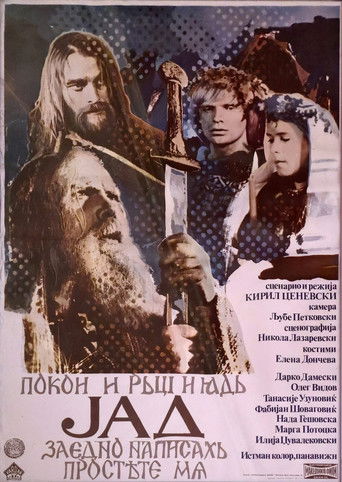
The story takes place in Ohrid, at the end of XI century. Slavic population gives resistance to Byzantium and the Christian dogma leads to the persecutions and murders. The villages are plagued with outbreak of smallpox, and all the people with the symptoms were thrown into the lime. The film follows the fate of Abraham's family as the story of survival in the Balkan intersections.
Activate your FREE Account!
You must create an account to continue watching