In a remote village in colonial India, an old man and his grandson display strong differences in their attitudes towards the country’s British rulers.
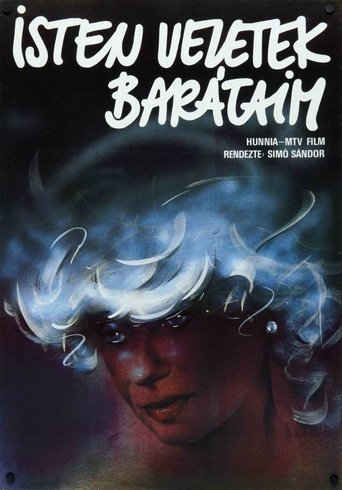
In the spring of 1980, Esther Jochmann, a young Austrian woman, flies to San Salvador. Her husband, a journalist, has been killed. She has to identify his corpse so that the authorities will allow it to be transferred to Europe. She learns that Archbishop Oscar Romero, who was also a victim of an assassination, had granted a taped interview to her husband. Padre Manuel hands the tape over to her. Esther accompanies the Padre and John, an American reporter, who are trying to find the murderers.
When Imeda’s father is killed in a blood revenge accident, the family moves him to the city where he is sheltered at his father’s friend. After fifteen year he gets back to Khevsureti. A talented painter, he spends most of his time doing sketches of nature and people. There he meets a local beauty, Mzekala and fells in love with her but finds out that Torghva is also in love with her. Enraged by Imeda’s impudence Torghva calls him for a sword fight and is killed by Imeda. To avoid another round of blood revenge, the villagers let Imeda and Mzekala out of the village but someone who wants Imeda’s blood finds it out and follows them.
13 August 1961: the GDR closes the sector borders in Berlin. The city is divided overnight. Escape to the West becomes more dangerous every day. But on September 14, 1962, exactly one year, one month and one day after the Wall was built, a group of 29 people from the GDR managed to escape spectacularly through a 135-meter tunnel to the West. For more than 4 months, students from West Berlin, including 2 Italians, dug this tunnel. When the tunnel builders ran out of money after only a few meters of digging, they came up with the idea of marketing the escape tunnel. They sell the film rights to the story exclusively to NBC, an American television station.
The singer and dancer Vera Opalinska performs as Arlette in 1920s Paris, where she is a star. Next on the agenda is a tour of the United States. The contract is to be signed after a final, highly acclaimed show. During the negotiations, her new PR agent asks about her background.
Six Jewish women, from different countries and different backgrounds, found themselves deported to the notorious concentration camp, Auschwitz-Birkenau, during the Holocaust. This film attempts to chronicle that experience through those same female eyes. While subject to the same physical hardships as men, these women do not dwell on that. Instead, they speak of camp families and faith, uplifting one another while trying to remain human. It was this path of spiritual resistance that, while not responsible for their direct survival, led to their ability to survive with healthy minds and spirits despite the constant barrage of their surroundings. Swimming in Auschwitz gives us a perspective of the camp, its surroundings and the Holocaust that we need to understand and remember, so that we never forget.
The film tells the story of Abdo, a man who loves fun and romance, who is sent to prison for a murder he did not commit. Abdo's only goal is to clear his name, reunite with his beloved, and take revenge.
The life story of Jan Amos Comenius, who became probably the most famous Czech exile due to his beliefs and opinions. He spent most of his life outside his homeland, but nevertheless, with his unique ideas, which he recorded in almost 200 books and writings, he was far ahead of his time and influenced the whole world.
September 1938. Tenants of a Budapest block of flats live their everyday lives, conducted by tradition. World politics does not divide them. Their major experience is the private life of the actress in the house.
An interracial couple faces social tensions in the aftermath of the September 11, 2001 terrorist attacks. The film follows the perspective of Harpreet, a young Sikh-American man, as he cautiously navigates a sudden climate of fear and dangerous assumptions.
Teresa Wilms Montt is a writer, a rebellious woman, tormented and beautiful. He marries at age 17 challenging family opposition. She falls in love with someone she should not and the family court condemns her to confinement in a convent. Separated from her two daughters, she escapes to Buenos Aires with Vicente Huidobro. From that flight her life becomes an exciting and tragic itinerary.
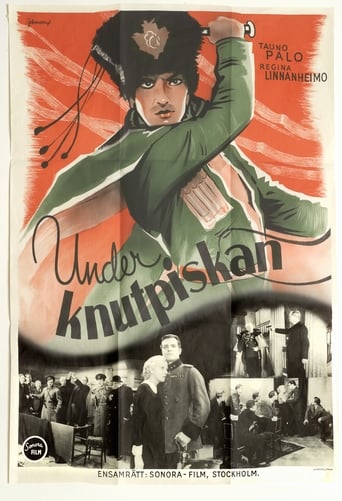
February Manifesto was Yrjö Norta's and Toivo Särkkä's Finnish movie from 1939. It is a Finnish historical drama about developing independency based on book of the writer Mika Waltari. Movie Starring Tauno Palo and Regina Linnanheimo. For it's anti-soviet thematics it was banned in Finland from 1944 to 1987.
Luftwaffen training film featuring numerous rifle men.
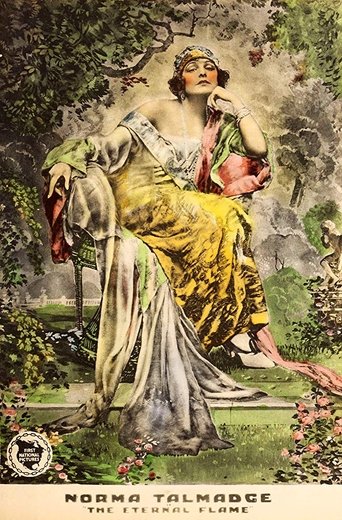
A 1922 film directed by Frank Lloyd.
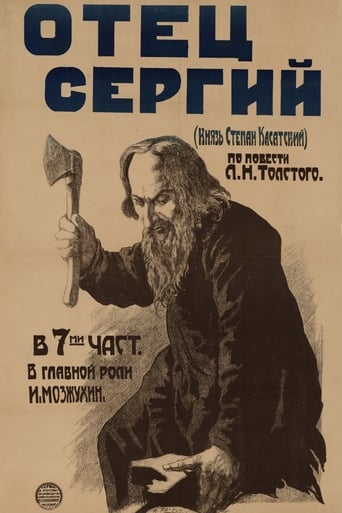
The story of Prince Stepán Kasátsky discovering his fiancée was the mistress of the Czar, so he then becomes a monk.
The epic story of Thomas Edward Lawrence the First World War military officer who united the tribes of Arabia against the Ottoman Turkish army. The film reveals that while being one of the most enigmatic figures of the 20th century, he was also a deeply troubled man, delving into his personal torment, the secret his family were hiding, and the punishment he endured.
During turbulent times of the First Serbian uprising in 1804, on a freshly liberated land, a woman who betrayed her husband to the Turks has been taken to the court. A complicated truth and the real motives of the case get overlooked by the judge, a neutral Turk.
The gun was a vital part of life in colonial Williamsburg, and this docudrama demonstrates the expertise that went into the making of each weapon. The master gunsmith explains the principal parts of an early American rifle and demonstrates the gun's complex manufacturing process. The guns of the period were crude military weapons, but with revolution stirring, the colonists depended on their weapons to send a message to the British Crown.
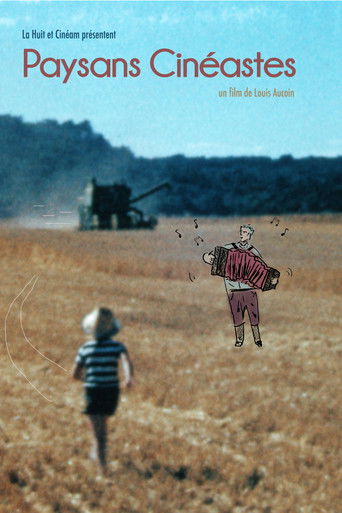
Farmers in the Île-de-France region, they filmed life on the farm, working in the fields, and family and village celebrations on 8 mm or Super 8 film. From the 1950s to the 1980s, these testimonies unfold a history of rural life: we move away from a peasant and family model to industrial agriculture for export. Through these family images, I attempt to answer my own questions about our agricultural future. In the 1950s, the land of Île-de-France fed us.
Activate your FREE Account!
You must create an account to continue watching