When Isa provokes the Nazis with a satirical song at her graduation party, she is denied her degree despite passing her exams. She has to give up her plan to become a teacher and, against her mother Petra's wishes, manages to perform in a political cabaret. She enjoys stage success as a singer with an accordion and falls in love with the pianist Laurenz. During the Second World War, Isa's family gets caught up in the wheels of political power and is torn apart - until, after much turbulence, the Vermehrens regain their old cohesion and accompany Isa together as she enters a convent in Bonn.
Simple-minded Yeong-jin is considered to be the village idiot. But he holds the key to saving his sister's boyfriend. The latter stands accused of killing the policeman who was raping his Yeong-jin's sister
Collage of sequences drawn from a wide variety of ephemeral (industrial, advertising, educational) films, touring the conflicted landscapes of twentieth-century America.
The magical epos of Friesland's biggest hero.
Sri Datta Darsanam, dubbed into Hindi as Shri Datta Darshan in 1988, is a 1985 Telugu film directed by Kamalakara Kameswara Rao. The story is based on the life of Hindu deity Dattatreya.
As toy maker LEGO heads into its 80th year, Lego present this newly launched animated short film, which looks at the history of the iconic brand. A nicely produced look back at the brand LEGO.
After the end of the GDR, thrashings, threats and hunts were part of everyday life. In the years after the reunification of the early 1990s, hatred, racism and violence against foreigners and supporters of leftist ideology broken out in Eastern Germany. Most of those involved was young people. In many cities and towns, the streets and squares belonged to the right-wing scene, organized in neo-Nazi comradeships. Bomber jackets, combat boots and the Hitler salute showed the intimidated rest where they were. The baseball bat was a popular weapon. There were riots, attacks on asylum seekers' homes, mass brawls and hunt downs to those who look or think differently. It doesn't took long and the first deaths were to be mourned. The majority of the Eastern German population looked the other way or even applauded the deeds. A bad omen for the political development of later years. In six film segments, a team of authors take a look at the time reflected in interviews with contemporary witnesses.
Once a vibrant part of American culture, drive-ins reached their peak in the late 1950s with almost 5,000 dotting the nation. Although drive-ins are experiencing a resurgence, today less than 400 remain. In a nation that loves cars and movies, why haven't they survived? April Wright's lovingly made documentary, filled with archival images of hundreds of open and closed drive-in theaters, interviews with theater owners, operators and cinema luminaries attempts to answer that question.
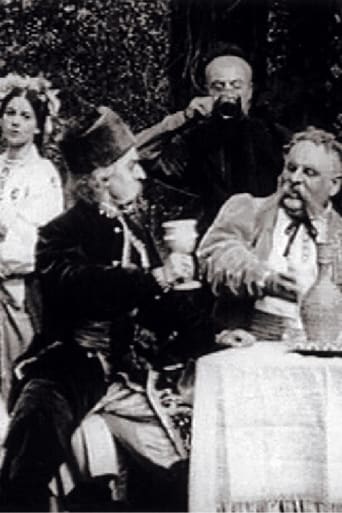
Mazepa, the Ukrainian governor is in love with his goddaughter Maria. He quickly wins her heart. But her old father treats the wooer harshly… Maria runs away. The furious father won’t submit. This intrigue makes the most of the ingredients of historical drama. Maria is confronted to the arbitrary; the young woman is in a dilemma between her love and her family. The tragic outcome is equal to her destiny.
"Man of Arran" is a cinematic exploration of the beauty of Ireland's coastline, juxtaposed with the inner strength of 83-year-old Paddy Conaghan, a man who refuses to let age define him. Embarking on an extraordinary adventure: circumnavigating Ireland, diving into winter seas, literally immersing himself in Irelands rugged coastal beauty, and promoting the cause of mental health awareness. Through, stunning visuals, heartfelt interviews, and Paddy's captivating storytelling, Man of Arran aims to transport the audience into Paddy's world and his mission.
There are over 6,000 languages in the world. We lose one every two weeks. Hundreds will be lost within the next generation. By the end of this century, half of the world's languages will have vanished. Language Matters with Bob Holman is a two hour documentary that asks: What do we lose when a language dies? What does it take to save a language?
Germans colonized the land of Namibia, in southern Africa, during a brief period of time, from 1840 to the end of the World War I. The story of the so-called German South West Africa (1884-1915) is hideous; a hidden and silenced account of looting and genocide.
During WW2, in a Nazi-occupied country, a local partisan blows-up a German military train, prompting the Germans to take civilian hostages to be shot if the culprit doesn't surrender before a deadline.
Uma, a mute Brahmin girl, lives with her uncle's family as she is an orphan. Since Uma has a faulty horoscope which indicate widowhood, the family finds it impossible to get her married off. According to a custom prevalent at the time, Uma is given in marriage to a tree.
The Great Kanto Earthquake of 1923 marked a moment of unprecedented material destruction and cultural rupture in modern Japan. The disaster soon became subject to human interpretation and political manipulation as the earth tremors and subsequent fire produced not only physical chaos but also the rumors and violence against Koreans revealing what was fearful and why. After a century, this documentary reconstructs the course of this mayhem against the colonized, and traces the ways in which the story of this genocidal violence has long been covered up, haunting those whose lives were never the same after encountering the forbidden truth.
Several times president of the Council, at the end of the 1930s Pierre Laval became one of Marshal Pétain's strongmen, a loyal collaborator for the Germans. Rounding-up Jews, forced labour, tracking the French resistance..., he served Hitler faithfully to the end. When France was liberated, he was tried, condemned, shot.
A detailed look at the events leading up to the blacklisting of Hollywood writers and artists. In October 1947 nineteen Hollywood personalities were subpoenaed by the House Committee on Un-American Activities to testify about their knowledge or possible involvement in the American Communist Party. The first ten to be called refused to cooperate, claiming their first amendment rights, were cited for contempt of Congress and sent to prison. They became known as the "Hollywood Ten" and this is their story.
A retrospective of the classic game show, What's My Line, in which a four-member celebrity panel attempted to identify a contestant's occupation through yes or no questions. In addition, each episode featured a celebrity mystery guest that the panelists tried to identify the guest while blindfolded. The show ran from 1950-1967 and prominently featured John Daly, Bennett Cerf, Arlene Francis, and Dorothy Kilgallen. This documentary looked back on the show 25 years after it premiered.
Activate your FREE Account!
You must create an account to continue watching