A historian travels through time from the swampland that one day turned into the squalor that it has become in contemporary time.
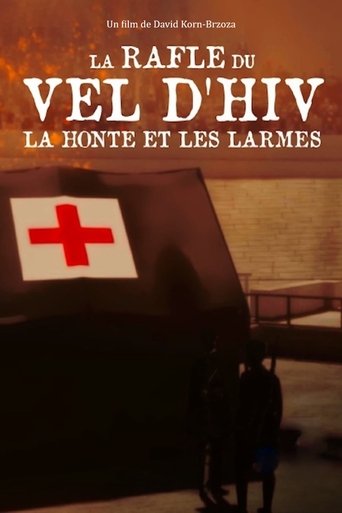
In 1942, more than 8,000 Jews were arrested on 16 and 17 July and sent to the Vélodrome d'Hiver sports center in the 15th district, a stone's throw from the Eiffel Tower, before being deported. The expression "Vel d'Hiv round-up" has become part of our collective memory, to the point of becoming the main memorial reference point for France during the dark years. Based on research carried out in unpublished or rarely explored archives, this film retraces the history of this roundup as experienced by hunted Jews and police trackers, from its planning in the Vichy offices to its hour-by-hour unfolding in the streets of Paris.
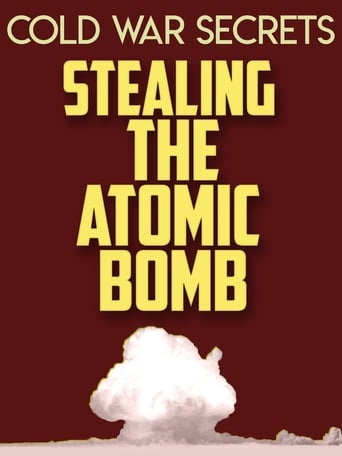
On the 29th of August 1949, the USSR set off their first atomic bomb, just four years after the Americans. The speed with which they achieved this surprised the world. What nobody knew was that it was the result of espionage. At the centre of the operation was a very unusual female spy, Elizabeth Zaroubin, in a story worthy of the best spy novels ever written.
Two friends, a military and a journalist, after the collapse of the Albanian front, go to Macedonia to organize resistance against the Bulgarians.
A documentary about the development and spread of the virtual currency called Bitcoin.
This film speaks of archaic peoples, their customs and mores, in an attempt to make the last snapshots of their traditional lifestyles before they are gone for good.
One day, in Savigny, an 18-year-old boy left his house in the middle of the war, saying: "I'm leaving, I'm going to kill Hitler." His name was Joseph, he was Jewish, he was my great-uncle. He disappeared during the night of the Occupation, and his existence became a family secret. He disappeared from history, the small as well as the big: he is not on any deportation list, and the only archive where he appears is a family photo of him as a child. It disappeared like a stone at the bottom of the water, instead of going up in smoke in the sky of Poland. What did he become? And why didn't anyone mention his name anymore?
A historical drama set in 1950s Britain. Dora Szumski, 30, is an Englishwoman married to a Polish immigrant, Eryk, a former Polish Army officer, who is left with no choice by the post-war balance of power, condemned to die in his homeland or emigrate. After an unsuccessful suicide attempt, Eryk stays in Mabledon Park, a psychiatric hospital designed for former Polish soldiers suffering from war trauma. Erik's illness resulting from a past that has been haunted and concealed from his wife not only becomes a barrier to the couple's future, but also a threat to Erik's life. Dora decides to find out what the secret of her husband's illness is.
The film evolves around questions of identity, popular memory and culture. While focusing on aspects of Vietnamese reality as seen through the lives and history of women resistance in Vietnam and in the U.S, it raises questions on the politics of interviewing and documenting.
During 1979 at the height of the Iran Hostage crisis, Babak goes on a trip to meet his fiancé’s parents and ends up confronting the realities of what it means to be an Iranian immigrant in a patriotic post-Vietnam America.
March 4, 1977. A 7.4-magnitude earthquake strikes Romania, leaving over 1,500 dead, dozens of buildings destroyed, and thousands more damaged. Immediately afterward, under the direct guidance of the communist state apparatus, the assessment and consolidation of the affected buildings begins.
In this John Nesbitt's Passing Parade short, a look is taken at the problems of film preservation efforts in the 1930s and early 1940s.
The story of Mexican President Benito Juárez and the emperor Maximilian of Habsburg and the empress Carlota.
The stories of The Arabian Nights (One Thousand and One Nights) have captivated mankind for centuries. However, two of its most famous tales do not belong to the original canon.
Activate your FREE Account!
You must create an account to continue watching