In 1892, Jean Jaurès, a republican deputy from the bourgeoisie, supported the miners' strike in Carmaux, in the south of France.
Between February and April 2025, filmmakers Bernard-Henri Lévy and Marc Roussel filmed the Pokrovsk and Soumy fronts in eastern Ukraine, following the fighters of the Anne de Kyiv Brigade, armed by France. They filmed the daily lives of the inhabitants, bombarded by Russian forces terrorizing civilians on the eve of possible negotiations. They interview President Zelenskyy, who is reluctant to travel to Washington, and then watch the rebroadcast of the meeting with Ukrainian soldiers in a bunker. For the real heroes are the anonymous fighters and civilians who hold their heads high in the face of adversity and suffering, and who are filmed on a daily basis. The final part of Lévy’s “Ukrainian Quartet”, Our War is a diary, peppered with flashbacks in which the author recalls the high points of this war that began in 2014.
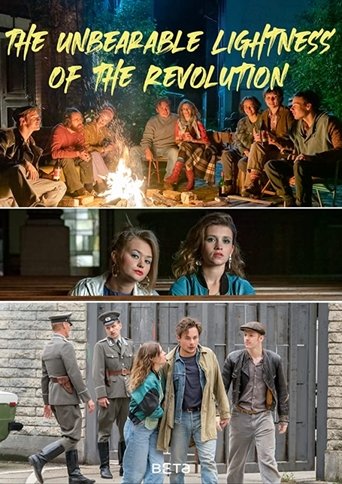
East Germany, 1988. 19-year-old Franka doesn't really care for politics. She prefers going to the disco and dreaming about seeing Bruce Springsteen and Michael Jackson live in concert. But beneath her carefree façade, she is scarred by the loss of her baby brother. But then she meets Stefan: He's young, idealistic, and part of an environmental activist group. A mix that makes Franka instantly make fall for him – and his group, which welcomes her with open arms. But this wild, revolutionary influence does not stay unnoticed: Her mother, who's with the Party, is worried about Franka. As Stefan's group loses the support of the church, leaving them vulnerable to the state, Stefan and Franka are soon in the government's line of fire…
Three moments in the life of Fray Bartolomé de Las Casas; his youth encounter with the natives; his resignation in maturity to lands and encomiendas to evangelize and defend justice and dignity against the cruelty of the Spanish and his reflections at the end of his life
Based on one of the major literary texts survived from the Middle Kingdom, the classical period of Egyptian literature, The Eloquent Peasant is a combination of a morality/folk tale and a poem. The events are set between 2160 and 2025 BC. When the peasant Khun-anup and his donkey stumble upon the lands of the noble Rensi, the peasant’s goods are confiscated and he’s unjustly accused of theft. The peasant petitions Rensi who is so taken by the peasant’s eloquence that he report his astonishing discovery to the king. The king realises the peasant has been wronged but delays judgement so as to he can hear more of his eloquence. The peasant makes a total of nine petitions until finally, his goods are returned.
Historic adventurism movie inspirited by legend about mystery monk, alchemist and healer who made the flying machine according to lost book wrote by Leodardo DaVinci in 18th century.
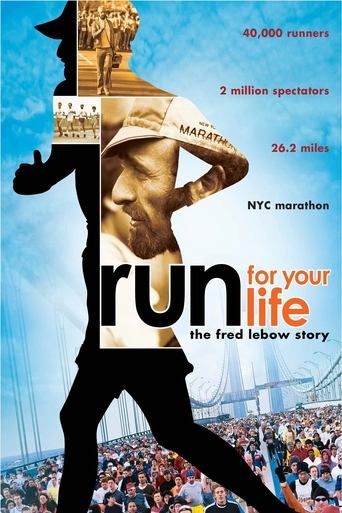
Without one eccentric first-generation Jewish immigrant from Transylvania, the New York City Marathon simply wouldn't exist. Ehrlich's fun, loving, and inspirational tribute to the late Fred Lebow shows how one man's imagination, determination, and love for running created one of the world's most popular sporting events.
To pay his debts, a small-time actor is forced to impersonate screen icon P. Ramlee.
On August 5, 1944, in Brittany, civilians fell into the hands of the German army. Among them, Jean Palu, a man like the others, who looks back on his life. Between failure and illness, he paints a bitter picture of his life.
The leader of the emerging organized labor movement in the 1880s, Ladislav Zápotocký-Budečský, is exiled to his native village, where he works as a tailor and continues to raise social awareness among members of the working class.
This film was a true peculiarity, a filmed version of the great Feodor Chaliapin in one of his most famous roles; the fact that it was a silent film, with title cards, meant that audiences could only appreciate his acting. Another curiosity is that the film also included a minor role enacted by Richard Boleslavsky, who in 1932 directed “Rasputin and the Empress.”(9)
The Eureka Stockade was a civilian revolt against the gold licence. Drawings and archival photographs depict the events that lead to the battle between gold miners and authorities at the Eureka Stockade. It describes the emergence of Peter Lalor as the leader of the Stockade and how the diggers used the Southern Cross flag.
Artistic look at the relationship between Serbian poet Laza Kostic and Lenka Dundjerski, the lovely daughter of the richest man in 19th century Vojvodina, who inspired him to write his masterpiece "Santa Maria della salute".
The protagonist in this picture is legendary Bulgarian Khan Krum - a ruler in the beginning of IX century. In this period, Bulgaria ranked third in Europe in terms of territory and military power. It is Khan Krum who contributed to the union of Bulgarians and Slavs. He enforces unseen to that day laws against calumniators, thieves, violators. It stirs discontent among his closest men. The ruler is smart and just, but isn't he too severe? At what cost can one ensure order and progress in a state?
On August 10, 1978, a coffeehouse frequented by leftists in Ankara was raided. Even the strict rule in the country could not prevent this and similar atrocities. A few hours after the incident, which would later be known as the Balgat Massacre, the police detained many young nationalists in the surrounding neighborhoods whom they believed to be connected to the incident. Among those detained was Mustafa Pehlivanoğlu, who was only 20 years old at the time. Mustafa's detention marked the beginning of a legal battle for his mother, Zeynep, and his father, Ahmet Bey. Years later, Mustafa Pehlivanoğlu was sentenced to death by a court established by the September 12 Military Coup and was executed one morning without his parents even knowing about it...
Two thousand years ago, in the Roman province of Judea, Jesus was crucified by imperial troops. Thousands before him had suffered the same fate. But unlike his predecessors on the cross, Jesus did not disappear from history. Instead, his memory was kept alive by a small band of Jews - men and women who held fast to their conviction that Jesus was the Messiah.
A biography of a famous Russian Admiral Pavel Stepanovich Nakhimov.
Biopic of French film pioneer Alice Guy-Blaché, considered the world's first female director, who directed, produced and/or supervised over 700 films between 1896 an the 1920s, in France and, for a period, in the US.
Each World Trade Center tower consisted of 110 floors. Each floor has a story. In this two-hour special, survivors from two of those floors, many speaking publicly for the first time, tell their stories. Focusing on one floor in the North Tower and one in the South, this film will provide a never-before-achieved intimacy with what it was really like to be inside the Twin Towers on 9/11.
Activate your FREE Account!
You must create an account to continue watching