In May 1945, a broken violinist lies drunk by a creek, haunted by memories of his life before and during WWII. Once the celebrated first violin in spa orchestras, he married Jewish nurse Róza and dreamed of fatherhood, only to face brutal anti-Jewish persecution. Relegated to second violin, he spirals into alcoholism and betrayal, while Róza and their daughter are deported. Cast out by colleagues and lovers, he descends into madness, murdering a vagrant with his violin case. In a final psychotic haze, he tends a roadside Christ statue before collapsing, his shattered life a testament to love, loss, and atrocity.
Narrated by Candice Bergen, Elusive Justice is an unprecedented examination of the more than six-decade global hunt for the 20th century's most notorious war criminals, thousands of whom are still presumed to be alive. Featuring intimate portraits of the Nazi hunters, the film also examines the nations and institutions that helped bring war criminals to justice or, in too many cases, helped them to escape.
Based on a true story from the fateful day of August 29, 1943, when the Germans disarmed the Danish army and navy. The minesweeper MS 1 plays the leading role in the film about the ship that refused to surrender. The commander, Captain U.H. Gad, camouflaged the boat as a tugboat under the name 'Sorte Shara'. With Sweden as its destination, the boat set sail and experienced hours of excitement as it approached the German observation posts.
The story of America's rise to power starting with 1959, using archival footage and US pop music to highlight the consequences to the rest of the world and in the peoples' minds.
In 1913, in the state of Santa Catarina, Brazil, the Government gives some lands to a foreign railway company, giving rise to revolt by the former owners of the land. The episode became known as Guerra dos Pelados.
In the Middle Ages, the earl Wetter von Stahl is accused of having bewitched Catherine, the daughter of the blacksmith of Heilbronn. The earl tries to be exonerated by proceeding himself to the interrogation of the young woman, who apparently shows an "unnatural possession".
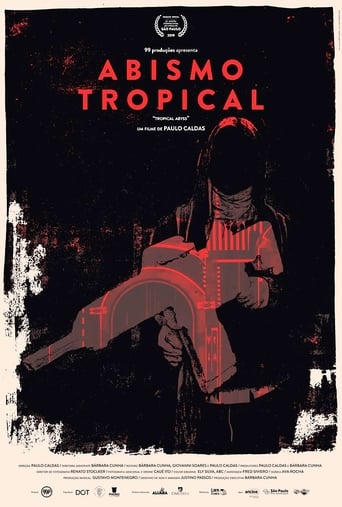
A film that portrays the anguish of an artist on the day of the presidential elections in Brazil in 2018.
The 24 Hours of Le Mans, 1955. 300.000 spectators are watching from the sidelines. It is 6:00 PM when Pierre Levegh's car ploughs into the spectator stands, scattering the crowd with his car engine's hot debris.
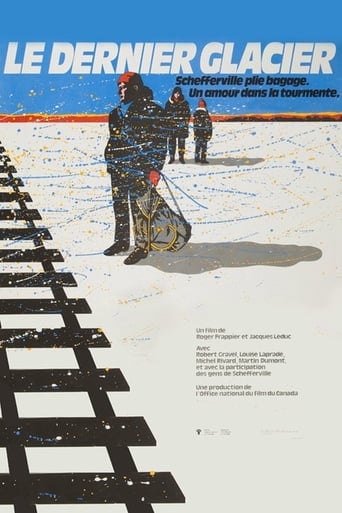
A docudrama on the closing of the town of Schefferville. When Raoul loses his job at the mine because the operations are ending, he's been settled there for ten years with Carmen and their son. They're now forced to leave the town, leaving behind the traces of an ephemeral prosperity.
Bring Us Your Women is an international anthology dedicated to women and the pursuit of divinity and freedom. The project seeks to tell existing and re-imagined stories of historic and mythical individuals, each presenting a message of humanity that transcends gender and religion.
Episodes from the life of Elizabeth I, Queen of England (1533-1603), focusing on her ill-fated love affair with Robert Devereux, Earl of Essex.
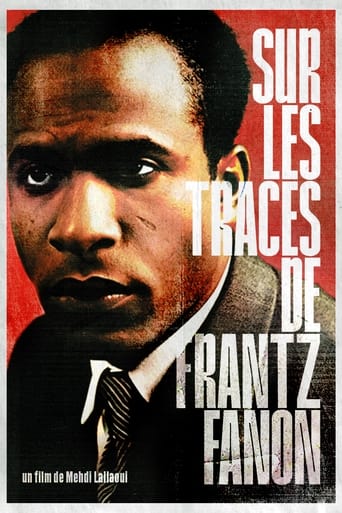
Who was Frantz Fanon, the author of Wretched of the Earth and Black Skin, White Masks, this Pan-African thinker and psychiatrist engaged in anti-colonialist struggles? Born in Martinique, Frantz Fanon was not yet 20 years old when he landed, weapons in hand, on the beaches of Provence in August 1944 with thousands of soldiers from "Free France", most of whom had come from Africa, to free the country from Nazi occupation. He became a psychiatrist and ten years later joined the Algerians in their fight for independence. Died at the age of 36, he left behind a major work on the relationships of domination between the colonized and the colonizers, on the roots of racism and the emergence of a thought of a Third World in search of freedom. 60 years after his death, the film follows in the footsteps of Frantz Fanon, alongside those who knew him, to rediscover this exceptional man.
The life and times of radio commentator and syndicated newspaper gossip columnist Walter Winchell, who reached an audience of 50 million at his peak.
The history of the famous Brazilian bantam and featherweight world champion Eder Jofre, who tries to deal with his personal life and the obligations of a world class athlete, with the mentoring of his trainer and father Kid Jofre.
Once upon a time, there was an empire where the sun never set. This empire had a court. This court had a king, but this king had no heir. They married the king, who understood that copulation was a duty of state and attempted it with exemplary dedication, but failed. The entire court, from the nobility to the jesters, gets down to work, sparing no means or methods, to produce the desired heir, and they reach a conclusion: the king has been bewitched and needs be exorcised.
Production company Taoyuan chose for its inaugural film a comedy and Fong Yim-fun gets to take a break from playing long-suffering roles and showcase her talents in making us laugh! She plays the spritely titled character, brandishing a fresh image. The film is an adaptation of the literary classic Romance of the Western Chamber, in which the Prime Minister's daughter (Law Yim-hing), under siege from rebel soldiers, is rescued by a plan formulated by a poor scholar (Law Kim-long), with whom she is in love. But her mother (Poon Yat On) reneges afterwards on her promise to let the rescuer marry the daughter, and the clever Red Maid steps up as go-between, devising a series of sharp-witted tactics to help the lovers.
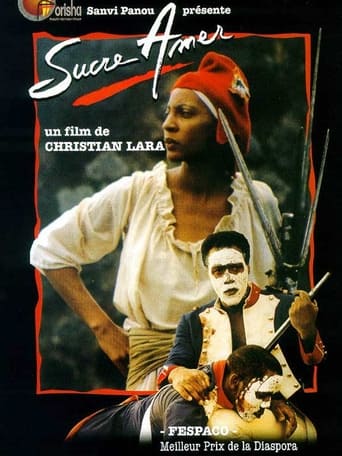
Sucre Amer tells the story of a unique court case in which an event from the past is judged by a court of history. Major figures from history are brought together in the present to re-examine the "Ignace case", about a legendary figure in the history of Guadeloupe who fought against the armies of Napoleon Bonaparte to preserve his freedom. A hero despite himself, Ignace's life and struggle were subsequently consigned to oblivion by his enemies. His treatment has left a bittersweet taste in the mouths of the people of Guadeloupe.
Splinters is the first feature-length documentary film about the evolution of indigenous surfing in the developing nation of Papua New Guinea. In the 1980s an intrepid Australian pilot left behind a surfboard in the seaside village of Vanimo. Twenty years on, surfing is not only a pillar of village life but also a means to prestige. With no access to economic or educational advancement, let alone running water and power, village life is hermetic. A spot on the Papua New Guinea national surfing team is the way to see the wider world; the only way.
Activate your FREE Account!
You must create an account to continue watching