The film tells the story of Pir Sultan Abdal, a famous folk poet in Turkey, who criticized some Ottoman governors, Hizir Pasha in particular and as a result was hung by him.
This pre-WW II German costume drama chronicles the French Revolution with a particular focus upon Danton, Robespierre, and Marat. It depicts the dramatic downfall and execution of Georges Danton in 1794 at the hands of Maximilien Robespierre. The film also presents an interesting, if not historically inaccurate, portrayal of Louis XVI.
Under an Eastern European totalitarian regime, a prominent dissident writer survives repression by resuming a submissive sexual relationship with her former lover. After their split-up years ago, he had joined the Secret Police in order just to take her back and provide the protection she needed. Struggling to preserve her humanity, she falls in love with a young platonic dreamer, a kind of rebel without cause, whom she initiate in literature and reinvents as a character capable to meet her own desires of freedom. BEYOND AMERICA is a love story and an action drama altogether, with archetypes of an aggressive, totalitarian society.
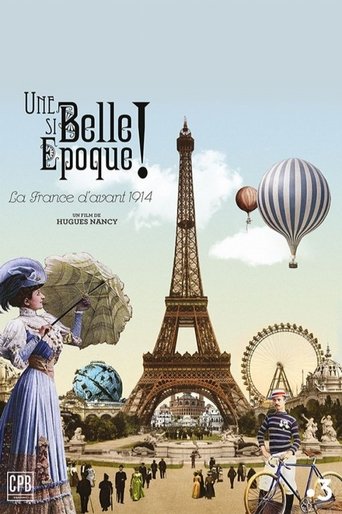
In 1900, the eyes of the whole world are on Paris. The World's Fair welcomed 50 million amazed visitors, and the city celebrated itself in a glamorous era. This period went down in history as the "Belle Époque." Elaborately restored and colorized historical photographs bring to life the exciting life in Paris between the end of the 19th century and the beginning of World War I in 1914. Bicycles, cars, airplanes, moving pictures, newly founded film studios, revolutionary composers and painters, avant-garde ballet performances, fashion houses, summer resorts on the Atlantic coast – life was intoxicating. People celebrate in the variety shows, cabarets, and revue theaters of Paris. Moulin Rouge, Folies Bergères, Bal Tabarin—in Paris, the nights are long and life is too short to sleep through. It is a dance on the volcano, given the political developments in the world.
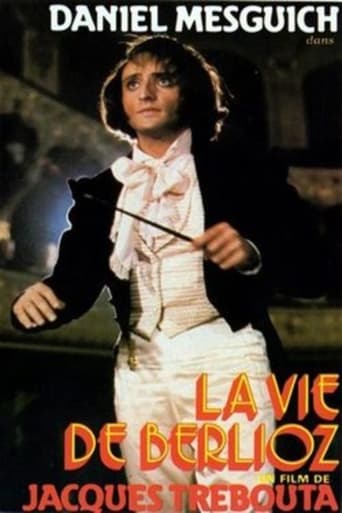
Miniseries on the life and work of the outstanding composer Hector Berlioz.
In 1939, as the world stood on the brink of World War II, Hartheim Castle, Austria, was at the centre of a turning point of history. It had been a centre for those with physical or mental disabilities. But from 1939 to 1944, it acted as a pilot scheme for the 'final solution.' Hartheim: the top secret Nazi school for mass murder.
An adaptation of the Hindu religious book Bhagavat Gita, an epic centering around two families and their fight for the throne.
The satirical short movie about traitors of Soviet Ukraine who mask their betray for "wishing for Ukraine's independence" through the history since 1918 up to modern times. Was considered lost, but was found in Latvian film fund in the year 2025.
The film consists of five short stories that reflect five stages (1947 — 1950 — 1957 — 1967 — 1982) the action programs of the heroine of the film, from the age of fifteen, rushed to a typical goal for that time — to smile from the front page of a central newspaper. Her fate is not simple: unhappy love, life with the unloved, a labor colony, love again, then love in return, earthquakes, fires, devastation. The heroine is getting closer to the goal and nothing can stop her..
A young peasant is forced to flee for killing involuntarily an abusive guard. After an entire year hiding in a remote fishing island, he decides to return to his countryside and reunite with his wife and daughters.
The story of the Hakoah Vienna Jewish womens swim team of the 1930s, their forced separation, and their reunion decades later.
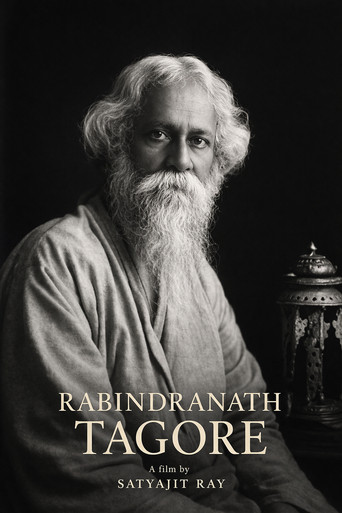
Docudrama about the life of Rabindranath Tagore, Indian polymath—poet, writer, playwright, composer, philosopher, social reformer and painter, who reshaped Bengali literature and music as well as Indian art, becoming in 1913 the first non-European and the first lyricist to win the Nobel Prize in Literature. The film was released during Tagore's birth centenary year.
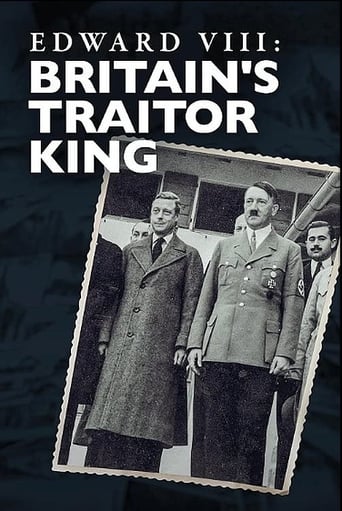
For the first time, the extent of the Duke of Windsor's treachery during World War II is revealed; not just sympathising with the enemy but, new evidence reveals, actively collaborating.
The film is based on true events, the battle of the Monastery of Dobra in Veroia, in March 1822. However, history repeats itself. Amidst the hostile climate of war, two families meet at a monastery to secretly perform a wedding. However, this does not go unnoticed. A betrayal will lead thousands of Turkish soldiers to the monastery. The abbot of the monastery, the monks, and the members of the two families take up arms, and the siege begins. Along with it, a struggle for survival and a series of revelations also begin. The story unfolds on the big screen through a conversation between two Greek army officers at the Roupel Fortress in March 1941, who are facing the same challenges a few days before the German attack.
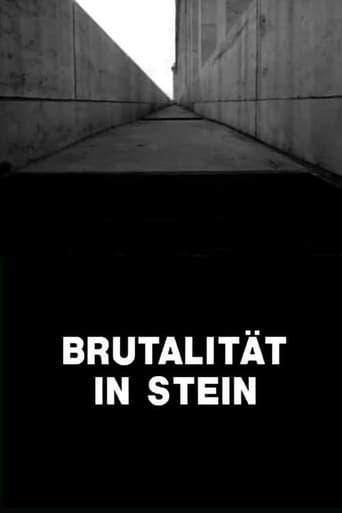
In his experimental short film "Brutalität in Stein" (Brutality in Stone), Alexander Kluge demonstrates how Nazi architecture used dimensions of inhuman and super-human scale to bolster the regime's politics of the same kind. Shots of huge neo-classical architectural structures from the Nazi period are confronted with equally anti-human national-socialist language as a voice-over.
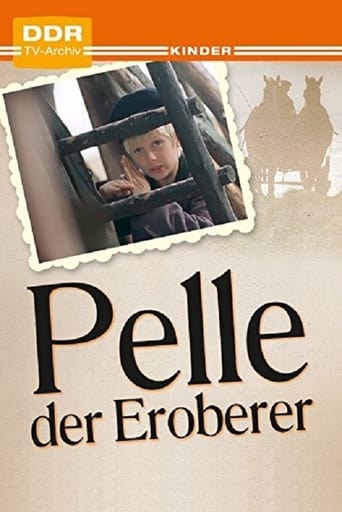
From Martin Anderson Nexo's novel comes this loved story of a Swedish boy and his elderly father trying to make a better life for themselves in Denmark. A bleak future quickly becomes apparent when the two find employment on a farm full of misery.
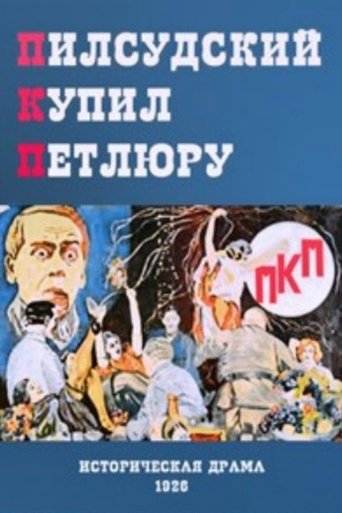
The defeated remnants of vile Ukrainian nationalists, headed by the leader of the Ukrainian liberation movement, Symon Petliura, cannot accept their historical fate and are plotting an insurrection against the Soviet regime in Ukraine. There is nothing Petliura and his cohorts would not do to win back control over Ukraine, including selling it to the highest bidder, in this case, the Polish dictator Jozef Pilsudski. A group of plotters are coordinating an insurrection in Kyiv with an attack from Poland headed by Petliura’s general Yurko Tiutiunnyk. Predictably, the invincible Red Army defeats the nationalist plotters and proves that the Soviet borders are impregnable.
JFK documentary directed by Arthur J. Bressan Jr.
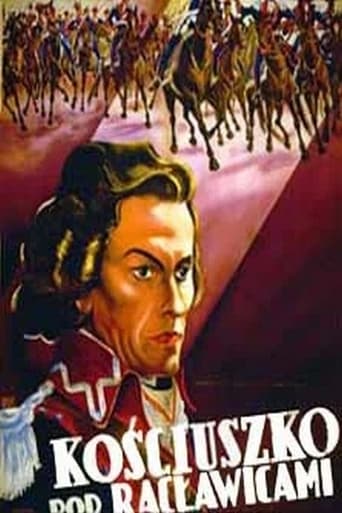
An exiled leader returns to Poland to lead an uprising against the Russian occupiers.
Activate your FREE Account!
You must create an account to continue watching