Stonehenge is an icon of prehistoric British culture, an enigma that has seduced archaeologists and tourists for centuries. Why is it here? What is its significance? And which forces inspired its creators? Now a group of international archaeologists led by the University of Birmingham and the Ludwig Boltzman Institute in Vienna believe that a new state-of-the-art approach is the key to unlocking Stonehenge's secrets. For four years the team have surveyed and mapped every monument, both visible and invisible, across ten square kilometres of the sacred landscape to create the most complete digital picture of Stonehenge and the surrounding area over millennia. Operation Stonehenge takes the viewer on a prehistoric journey from 8000BC to 2500BC as the scientists uncover the very origins of Stonehenge, learning why this landscape is sacred, preserved and has been revered by following generations.
Boris Pasternak, creator of the immortal Dr Zhivago, discredited by Stalin and denied the Nobel Literature Prize by Khrushev, Pasternak's Dr Zhivago was banned in the USSR until 1988. Only now in the new spirit of freedom and reconciliation that exists the story of Pasternak can be told. The words of Pasternak are spoken by Robert Powell, with Imogen Stubbs as Lara and Olga.
A portrait of Alexei Navalny (1976), the staunchest opponent of Russian President Vladimir Putin, severely poisoned in 2020, arrested in 2021 and died on February 16, 2024 in a Siberian prison camp under unclear circumstances.
In 1994, at over seventy years old, Gilberte and William Sportisse, threatened by the FIS, arrived from Algeria. Of Jewish faith, he of Arabic mother tongue, they formed a fighting couple, started for the independence of Algeria, always with an unshakeable faith in humanity. They enjoy recounting the participation of Algerian Jews in the Second World War and the struggle for Algerian independence. They provide us with previously unpublished information on the public and clandestine struggles of the Algerian Communist Party before and after independence, and on the repression of activists who, like William and Gilberte Sportisse, were tortured and imprisoned after Colonel Boumédiène came to power. The film is an ode to understanding between people of different origins or cultures and a tribute to a couple whose youthful character and enthusiasm still astonish.
Recent discoveries by archaeologists and researchers have shed new light on the Incas, shaking up our presumptions of this fascinating pre-Colombian civilisation.
Film about the life of Francisco Ramírez, leader of Entre Ríos.
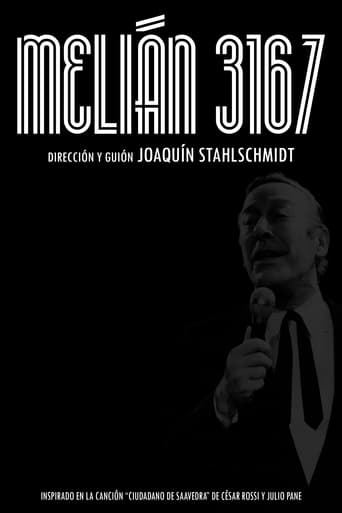
César and Luis, two tango authors, visit Polaco Goyeneche at his house, to give him a song in his honor. Based on the song "Ciudadano de Saavedra" by César Rossi and Julio Pane.
In 1946, just after the end of World War II, a secret organization of Holocaust survivors plans a terrible revenge: since the Nazis have killed millions of Jews, they will kill millions of Germans.
May 1968. Charles de Gaulle is 77. His great career is behind him. Obsessed by France's prestige, he's looking with distance to the student demonstrations. An intimate portrait of the General through the tale of 68'events.
A short historical drama about the Louisiana Purchase.
Ali, the caliph of the Islamic State between 656 and 661.
What is the connection between the bloody gang war that once raged over control of the Chicago fish market, the decades of terror perpetrated by the Chinese, Russian, and Italian mafias, the secret operations of the CIA and the KGB, the Cuban revolution, and the Kennedy assassination? And who is the 100-year-old monk who is revered as a saint in a Nepalese monastery and in whose body the presence of a strange crystal can be detected? Szilveszter Siklósi's thrilling "documentary" provides striking and convincing answers to questions that have preoccupied the world's public for nearly a generation.
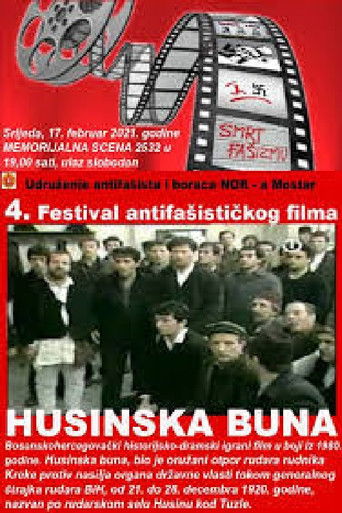
This is the true story of the miners who were seeking their rights by doing the hardest job in the world. Husinska rebellion is an armed resistance miners mine Krek against the violence of the state government during the general strike of miners Bosnia and Herzegovina, from 21 to 28 December 1920, named after the mining village Husin near Tuzla.
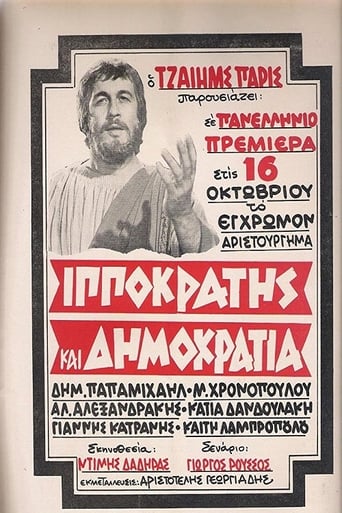
The father of medical in Kos, Hippocrates, believes that illnesses can be treated with medicines and herbs instead of prayers and comes into conflict with the medical establishment of the island. Leaving Kos, he goes to Athens, where he is called to face a plague for save the city.
In 1794, French revolutionary Maximilien Robespierre produced the world's first defense of "state terror" - claiming that the road to virtue lay through political violence. This film combines drama, archive and documentary interviews to examine Robespierre's year in charge of the Committee Of Public Safety - the powerful state machine at the heart of Revolutionary France. Contesting Robespierre's legacy is Slavoj Zizek, who argues that terror in the cause of virtue is justifiable, and Simon Schama, who believes the road from Robespierre ran straight to the gulag and the 20th-century concentration camp. The drama, based on original sources, follows the life-and-death politics of the Committee during "Year Two" of the new Republic.
Capt. Robert Kelly holds off the foreign mob single-handed and makes good his escape during the Boxer rebellion.
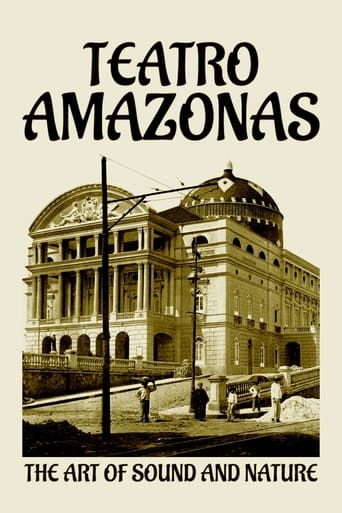
The history of the Teatro Amazonas in Manaus, an opera house located in the middle of the Amazon rainforest, whose construction, between 1884 and 1896, depended on the labor exploitation of the local indigenous populations, provides an insight into the cultural, social and political situation in Brazil.
Activate your FREE Account!
You must create an account to continue watching