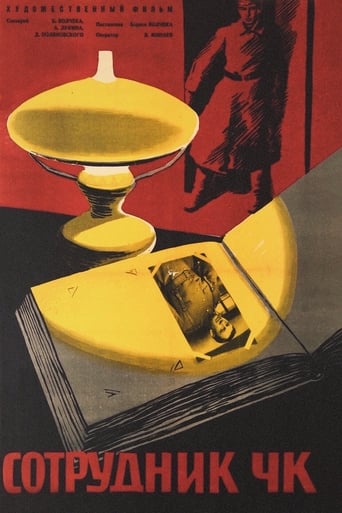
Based on the novel of the same name by Aleksandr Lukin and Dmitriy Polyanovskiy. Russia, 1919. A young soldier of the First Cavalry Army, Aleksei Mikhalyov, is sent to work in the provincial Cheka. Here in the south of the country there is a large White Guard underground led by the elusive Markov. Aleksei gets into the gang, where he is mistaken for his own. The day of the operation to eliminate the white underground is appointed. But unforeseen circumstances destroy the plans of the Chekists.
.Un periodista se introduce clandestinamente en la celda de Miranda, en la Carraca el 10 de Julio de 1816. El joven periodista urge al generalísimo para que le conceda una entrevista, con el objeto de propagar su pensamiento anticolonialista en cierto periódico de vanguardia que se edita furtivamente en Cádiz. Miranda, viejo zorro de la geopolítica internacional desde el siglo pasado, desconfía del impetuoso muchacho, quien poco a poco se va ganando su confianza hasta que el cautivo accede a concederle la entrevista.Aquí comienza un viaje retrospectivo de la vida del generalísimo donde la vuelta al pasado, a los momentos formativos más trascendentes de la construcción del joven, del hombre, del seductor, del soldado español, del ilustrado, el desertor, el independentista, el político, el guerrero, el espía, el contrabandista, el hereje, el conspirador y el precursor, se narran para develarnos la magnitud de Francisco de Miranda, quizás por siempre el más universal de los venezolanos.
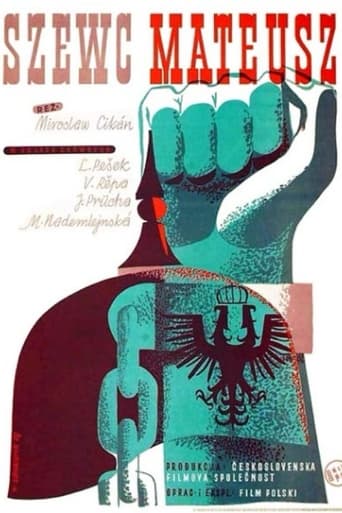
The revolutionary year of 1848 brought great hopes among the hitherto silent classes, awakening social and national hopes. The response also penetrated the remote countryside, even as far as the Podkrkonoše Mountains. The young shoemaker there began to take an interest in social and political events, and he also experienced disappointment in later developments.
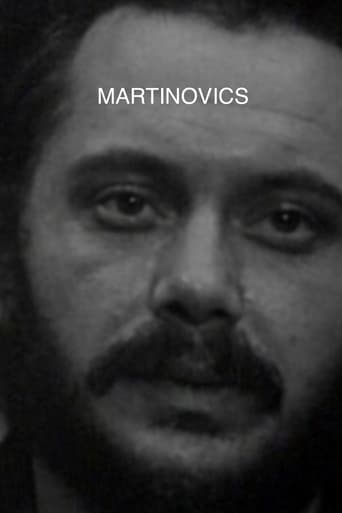
For this austere, clear and sharp telefeature, Judit Elek focused on the last months of Martinovics’ life: his interrogation by the Austrians, the examining Magistrate Schilling in particular, shown as a battle of wits as well as delusions on both sides. Elek had wanted to make this film in the early 1970s, but wasn’t allowed to. When she finally got the chance, the reactions were predictable, as the parallels with recent Hungarian history were simply too obvious for officialdom not to feel anxious. History may not repeat itself, but the variations look eerily similar.
In medieval Japan, a brutal and corrupt magistrate is planning to kill the child who is about to become the heir to the estate and position of the local lord and substitute his own "heir", an orphan, in order to get control of the late lord's estate and rule as the impostor's "regent". However, a mysterious stranger appears and sets out to thwart the magistrate's plans and free the people from his oppressive rule.
A controversial three part critical documentary on the history of the CIA.
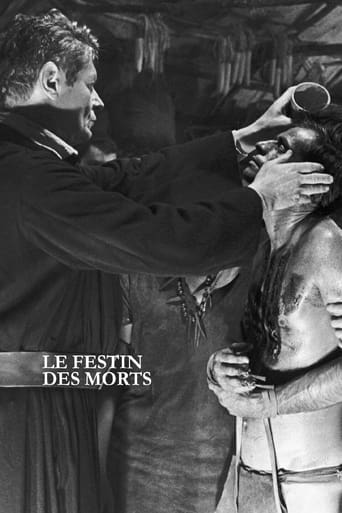
A young Jesuit missionary reflects on his life and his faith while awaiting his execution at the hands of the Native Americans he came to convert.
The fate of Tanya Ognevaya, whose image reflects the features of Liza Pylaeva (1898-1926), the first chairwoman of the Socialist Youth Union.
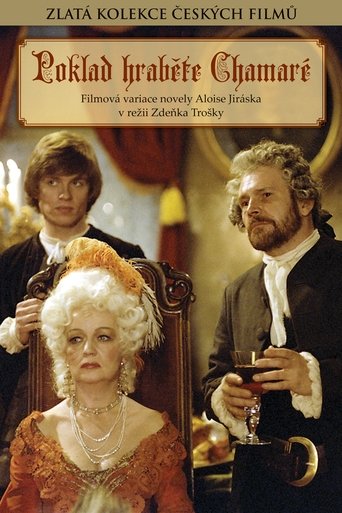
In 1781, Countess Marie Karolina shelters an influential Abbé, a former Jesuit who vehemently opposes progress. Only Dr. Kamenický dares challenge him, restoring the countess’s zest for life. Her husband, obsessed with finding a hidden treasure, neglects the estate and seduces her ward Renáta. Meanwhile, returning exile Václav’s secret reunion with Frantina in cave hideouts is betrayed by jealous suitor Tomáš, who, with the Abbé’s help, unleashes a violent manhunt.
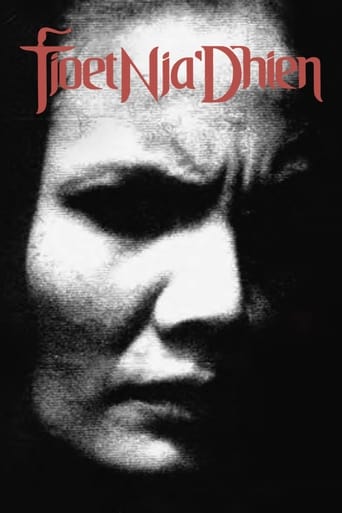
Set in 1896, "Tjoet Nja' Dhien" celebrates one of Indonesia's great heroes who fought for independence from the Dutch. The pious Muslim people of Aceh, a city that had flourished since ancient times as a trade port, enter into a fierce war with the Dutch. Tjoet Nja' Dhien, the widow of a rebel leader operating in Aceh in Sumatra, assumes the leadership when her husband Teuku Uma is killed in an ambush. Dhien's charismatic presence and power of survival motivate the locals to join and later continue their opposition to the Dutch. Despite personal obstacles, she remained in the thick of the struggle for ten years.
When the first railroads were built some two hundred years ago, they brought about a revolutionary change for mankind, linking cities and countryside, driving the industrial revolution and irrevocably changing the landscape: a history of the railroad from its beginnings to the present day.
2009, Slovenia. For 30 years, Alija, the miner, has been one of the many Bosnian immigrant workers. Due to the crisis, miners are losing jobs. Alija is sent to check an abandoned mine. His task is to quickly make sure the mine is empty before management sells the company. But in the mine, Alija finds hidden proof of executions after WWII. He is told to stop digging and report the mine empty. He decides to continue, although he is risking his job. Alija discovers thousands of executed people. He informs the police. He found women among the dead. Some of them were civilians, missing persons, just like his sister that was lost in the 1995 genocide in Bosnia. Alija is convinced the victims need to be brought out, identified and buried. But there is no interest in doing that. The mine is proclaimed a WWII military grave and walled in. The dead will stay unburied. Alija loses his job and struggles to preserve his dignity.
Documentary exploring the history of one of America's most notorious outlaws.
A mirror joins two worlds, modern-day Bangkok and Bangkok under Rama IV, together. Maneechan, a diplomat investigating recently uncovered documents in France concerning ancient Thailand, learns the story behind them first-hand as she travels back in time through the mirror.
A former silent film actor who has saved old movies of his time from destruction uses them to set up recreational performances at schools. After an accidental fire and the risk of prison, he meets a rich producer who helps him to build a film museum.
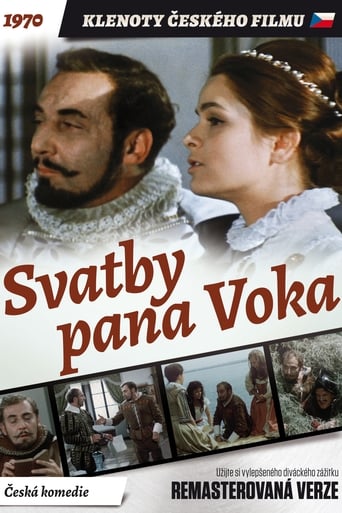
Czech nobleman Petr Vok of Rozmberk (Milos Kopecký) is no longer so young, but his amatory adventures continue to arouse the envy of men and the indignation of respectable ladies. In his "female retinue" at the chateau in Bechyne he has twelve comely girls, but he still manages to seduce the miller's wife and the maid. Lord Vok is in great financial difficulties. His elder brother Vilém advises him to marry a rich woman. Petr surprises him by announcing his intention to marry the very young Katerina of Ludanice.
On the 1991 European Basketball Championship an incredible event occured. A team of some of the greatest Balkan basketball stars accepted gold and watched the flag of their country be lifted up. The flag of a country that no longer existed.
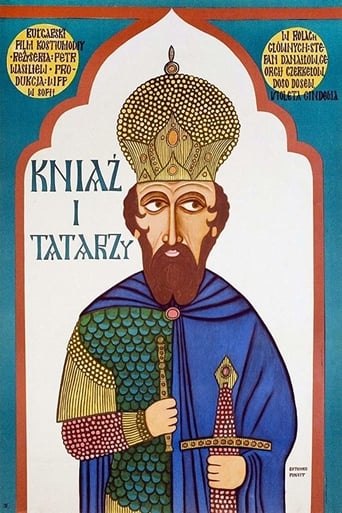
At the end of 13th and the beginning of the 14th century twenty-four-years old, Prince Svetoslav Terter takes the helm of the state. The young Prince engages in a intricate political game, into getting his way by means of court intrigues, and is forced by circumstances. Svetoslav Terter is remarkably shrewd and consistent. He is perhaps the only head of state at this time to take the liberty of impeaching the primate of the country's church. He tries to rally the neighboring Slav people to a joint resistance to the Turkish conquest. Terter lives through a great personal tragedy. He becomes estranged from his dearest person, Mariya, who is too weak to join him on the difficult road of his choice. (written by Georgi Djulgerov)
Gurudas was a Sanskrit teacher in a village school in undivided Bengal. While teaching he felt the absence of an up-to-date lexicon in the Bengali language which has gained a new shape delinking itself from the original Sanskrit. In no time, he devoted himself to reconstructing a Dictionary and spent most of his life in pursuit of culling vocabularies from the mouths of common people. In the wake of the partition of Bengal in 1947, he came over to West Bengal and found shelter in a refugee camp. Meanwhile, he lost his daughter, son, and wife one after another, and was thrown into abject poverty still undaunted in spirit Gurudas went ahead with his mission. The only woman beside him was his widow daughter-in-law who kept vigil like unflinching flame of love and affection. When his work saw the light of day the erudite came crowding to show honor. The govt. conferred a befitting award but he refused. He was opposed to all these empty shows of honor.
Activate your FREE Account!
You must create an account to continue watching