Macedonia is a small country, in the heart of the Balkans, which for five centuries was under the yoke of the Ottoman Empire. The action of the film "To the Hilt" takes place in the years of the general collapse and "free fall", after the Macedonian uprising of 1903 which was extinguished in blood. The story is a love quadrangle between an uncompromising idealist rebel, a merciless Turkish officer, an opportunist rich man's son returning home after his studies in Europe and a lucid and open minded European woman, who flirts with the three men and puts in train a series of events with dire consequences, that she could hardly imagine. The film is a harsh and romantic story in which the eternal Macedonian cause for own identity and independence is seen through the prism of relativity of the ideas of freedom, justice, love, sacrifice, and treason.
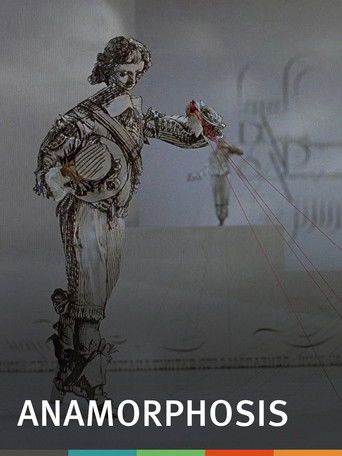
The Quays' interest in esoteric illusions finds its perfect realization in this fascinating animated lecture on the art of anamorphosis. This artistic technique, often used in the 16th- and 17th centuries, utilizes a method of visual distortion with which paintings, when viewed from different angles, mischievously revealed hidden symbols.
An exploration of the moral and survival dilemmas in Auschwitz from the point of view of a deputy head of a block and a few of the prisoners from his block who survived the horrors of the camp, immigrated to Israel in the 40's and are still struggling to begin new life in the newborn state of Israel. Based on a true story.
A group of royalists during the French Revolution make several attempts to rescue Marie Antoinette from prison, in this combination of genres: swashbuckler, melodrama, psychological drama, and historical tragedy. Based on the novel by Alexandre Dumas.
Film director and screenwriter Seijun Suzuki (1923-2017), who in the sixties was the great innovator of Japanese cinema; and his collaborator, art director and screenwriter Takeo Kimura (1918-2010), recall how they made their great masterpieces about the Yakuza underworld for the Nikkatsu film company.
A story about the life of Sergey Pavlovich Korolyov, the lead Soviet rocket engineer and spacecraft designer.
This affecting biography chronicles the life and times of prominent European philosopher John Wycliffe, who was the first to translate the Bible into English. The 14th century, Oxford University scholar often found himself caught between opposing theological, political and societal forces: He defended England's autonomy against the pontiff's authority and championed the indigent against the wealthy's abuses.
Surpassed only by the Bible and Shakespeare, Agatha Christie is the most successful writer of all time. We all know her characters and incredible plot twists, but what do we know about Agatha herself? Combining rare access to Agatha's family, her personal archive and speaking to those who know her work best, discover what made the world's most successful crime writer tick.
On the eve of an invasion in 1982 Lebanon, an 11-year-old boy at a mountain school is determined to express his feelings to a classmate. As tension builds across the country, the day takes an unexpected turn, reflecting the fragile line between innocence and conflict. Through a child's eyes, the film explores the impact of war, the power of love, and the resilience of the human spirit.
Fagun Haway is a Bangladeshi historical drama film based on the novel Bou Kotha Kou by Tito Rahman. This movie based on the language movement during 1952 in East Pakistan.
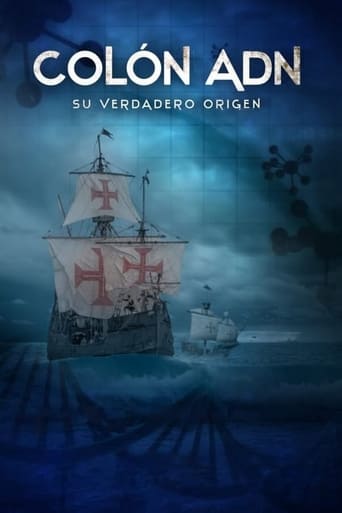
One of the most important and exciting historical research of all time, the study of the DNA of the navigator Christopher Columbus, finally answers two fundamental questions: where do his bones rest? What is his true origin?
Documentary takes a look at the ancient Egyptian Book of the Dead, a scroll created in 1880 BCE, and lost until 1887.
A possible impostor torments a newly crowned medieval czar who may have ordered the real successor's death.
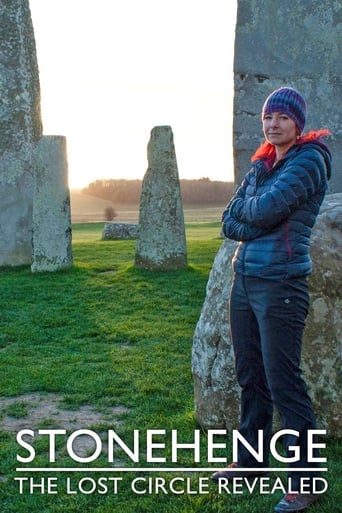
Professor Alice Roberts follows a decade-long historical quest to reveal a hidden secret of the famous bluestones of Stonehenge. Using cutting-edge research, a dedicated team of archaeologists led by Professor Mike Parker Pearson have painstakingly compiled evidence to fill in a 400-year gap in our knowledge of the bluestones, and to show that the original stones of Britain’s most iconic monument had a previous life. Alice joins Mike as they put together the final pieces of the puzzle, not just revealing where the stones came from, how they were moved from Wales to England or even who dragged them all the way, but also solving one of the toughest challenges that archaeologists face.
Cholera: Path. Acute, infectious disease, often epidemic and very serious.
In the streets of Vichy, France, during World War II, the Germans apprehend nine men and a boy. Among them are a painter, a businessman, an electrician, a waiter, an army doctor, an actor, a prince, a gypsy, and a Jew. Confined without explanation, they can only speculate about their fate.
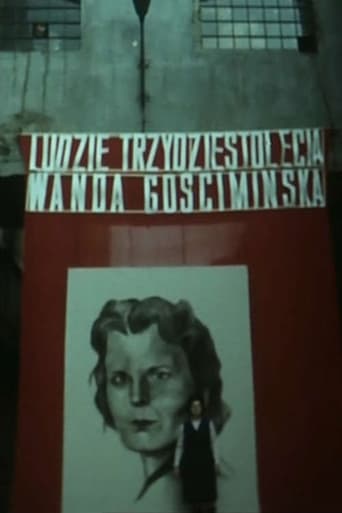
The life of a female weaver is thrown onto the socio-political canvas of pre-war and post-war communist Poland through the use of expressive allegorical and symbolic imagery in this imaginative take on the documentary form.
On the participation of the intelligentsia in the revolution and post-revolutionary transformations of the Soviet country.
Activate your FREE Account!
You must create an account to continue watching