Behind the iconic Eiffel Tower lies the story of an incredible challenge to erect a thousand-foot tower that went far beyond a design competition, and marked a major turning point in engineering history. It was the beginning of radical transformation where iron was pitted against stone, engineering against architecture, and modern design against ancients. Press campaigns, lobbying, public conferences, denigration of opposing projects, bragging about big names - all participants engaged in a fierce battle without concession. Using 3D recreations, official sources (reports, letters, drawings...) and intimate archives obtained from their descendants, this film will bring to life this vertical race through a fresh and visual way to mark the centenary of Eiffel death.
Fifteen-year-old Heidi Schreck earned her college tuition by winning Constitutional debate competitions across the United States. In this hilarious, hopeful, and achingly human show, Heidi resurrects her teenage self in order to trace the profound relationship between four generations of women and the founding document that shaped their lives.
Under the regime of Louis XVIII. Years after Waterloo, Napoleon's loyal officers live in retirement on half-pay. Useless and idle, they have lost their prestige and keep meeting in the hope of the Emperor’s return. When Napoleon dies, they decide to plot the rise to power of Napoleon II.
George Stoney investigates the living conditions, both good and bad, in the rural, segregated South.
Boris Pasternak, creator of the immortal Dr Zhivago, discredited by Stalin and denied the Nobel Literature Prize by Khrushev, Pasternak's Dr Zhivago was banned in the USSR until 1988. Only now in the new spirit of freedom and reconciliation that exists the story of Pasternak can be told. The words of Pasternak are spoken by Robert Powell, with Imogen Stubbs as Lara and Olga.
A 160-minute version of the life of Jesus Christ filmed entirely with a cast and crew of Christian Indians in India.
Showcases incidents based on the life of President Franklin D. Roosevelt. This mostly accurate privately produced biography of FDR is a cinema and political curiosity. Its lavish praise for the new president who had been in office for less than a month indicates how desperate the nation was for hope and change. The projections of FDR's future accomplishments and powerful leadership likewise were based more on hope than prior knowledge. Fortunately many of these projections proved to be accurate. Another oddity is about 1/3 of this biopic is devoted the life of the UK's Labor ex-PM Ramsey MacDonald.
Maren, a young girl, is the sole survivor of the Black Death in her Norwegian village. Using instincts, folklore, luck, and the clairvoyant powers granted her by being born with a "Victory Cap," Maren survives on her own, waiting for other people to discover her plight.
Biographical film story about the first Russian space explorer, inventor scientist, rocket-maker K. E. Tsiolkovsky.
The ancient Aztec world inadvertantly welcomes its doom in the form of the Conquistadors.
The protagonists are mainly Huirong, Zhaobai, and Jikan, who have studied business management in the USA and have returned to their hometown, Shanghai. Huirong and Zhaobai are engaged, and although three of them are close friends, problems arise when they find out that their opinions clash on the matter of what the objective for building a new China should be and what direction it should take.
Three episodes from the history of socialism: Babeuf, whose virulent discourse is a radical assessment of the bourgeois revolution of 1789 (Vincent Nordon episode); the legend of Napoleon I, or the formation of the state as it still dominates today (François Barat episode); and the carnage of the Paris Commune, which official history strives to repress and forget (Joël Farges episode). What does it mean to make a historical film today? It means illuminating the present in the light of the past, and therefore adopting the new modes of modern storytelling to challenge what dominates us, structures us, and oppresses us.
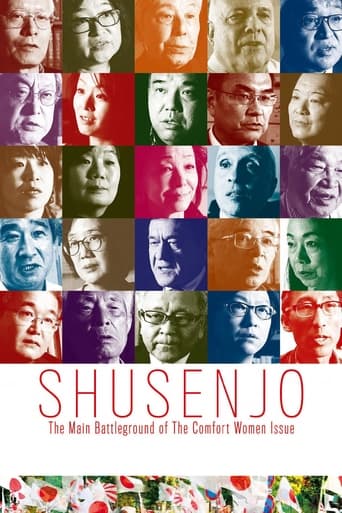
A Japanese-American director digs deep into the controversial 'comfort women' issue to settle the debate on whether the women were paid prostitutes or sex slaves, and reveals the motivations and intentions of the main actors pushing to revise history in Japan.
In 1864, the Spanish poet Gustavo Adolfo Bécquer (1836-70), suffering from health problems, retires to the monastery of Veruela. Far from the noise and worldly activity of the capital, he immerses himself in the landscape of the mysterious Moncayo mountain. There, he discovers a new world full of legends that converge in a small village located at the foot of the mountain: Trasmoz, the Village of the Witches, the only officially cursed village in Spain.
Biopic about general Hazi Aslanov, who died fighting Germans in WW2.
Biographical film "Youth of the poet", dedicated to Pushkin-Lyceum student. At the 1937 world exhibition in Paris, the film was awarded a gold medal. The Director managed to accurately recreate the historic era, to convey the atmosphere of the Tsarskoye Selo Lyceum in the years of the formation of the poetic genius of Pushkin.
Activate your FREE Account!
You must create an account to continue watching