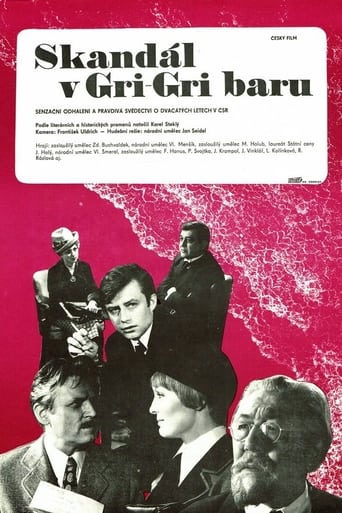
Two young returnees from the First World War face a difficult future because they cannot find work. One eventually finds a job as an electrician, the other breaks into the Social Democratic press, where he gets the chance to watch up close how the Social Democratic leadership deceives its members and enters the service of the ruling classes. And a newly-trained journalist solves the problem of whether he should also adapt to the corrupt environment...
A stridently nationalistic story of India’s freedom struggle, presented through the experiences of a Bengali family from 1885, when the Indian National Congress was established, to 1947. Important events incorporated into the plot were Gandhi’s satyagraha (1920), the Simon Commission (1928), Vallabhbhai Patel’s Bardoli satyagraha (1928) and the 1942 Quit India agitations. Krishan Chander’s script, Sachin Shankar’s choreography and the acting styles owed much to the IPTA theatre of the 40s. The film, made at Bombay Talkies, was produced by the distributors of the Chicago Radio PA systems label. Kishore Kumar plays the militant hero of this quasi-documentary. Motwane included old documentary footage purchased from Kohinoor and Krishna Film, as well as a shot of Rabindranath Tagore singing his Jana Gana Mana composition, one of India’s national anthems (Arunkumar Roy’s Of Tagore and Cinema, 1994, traces this footage to Ufa, shot when Tagore visited Munich)
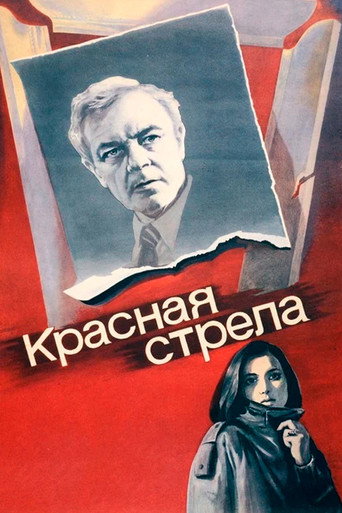
The Red Arrow is the special train No.1 between Leningrad and Moscow. The film is set in the 1980s during perestroika in the Soviet Union. Kropotov (Lavrov) is communist CEO of a big industrial company in Leningrad. He is crafty and successful in getting a major order from the Soviet Government; building an automated assembly line. But his style of management clashes with his subordinates, talented engineers. Their potential is strangled by Kropotov's manipulative control. The government order is not accomplished and Kropotov gets fired. He is rethinking his outdated business style while on the train No.1 to Moscow.
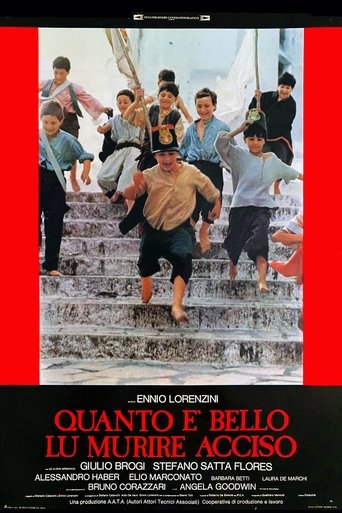
How Sweet it is to Die Murdered (Quanto è bello lu murire acciso) is an Italian historical film written and directed by Ennio Lorenzini and released in 1975. The original title of the film is that of a popular song reworked by Roberto De Simone, who is considered the precursor of the Neapolitan folk revival of the 1970s. The film depicts the failed expedition organized by Carlo Pisacane in 1857 to provoke an uprising in the Kingdom of the Two Sicilies.
Frontline friends Mircea, Stepan and Pavel decide to build a new life together in their native Moldovan village. Stepan and Pavel are killed fighting with their fists...
On June 6, 1944, the Allied Forces executed Operation Overlord, the largest seaborne invasion in history, storming the beaches of Normandy. This pivotal event, known as D-Day, liberated France and Western Europe. A new documentary features interviews with historians, experts, and eyewitnesses, providing detailed insights into the events leading up to this crucial day that played a vital role in bringing an end to World War II.
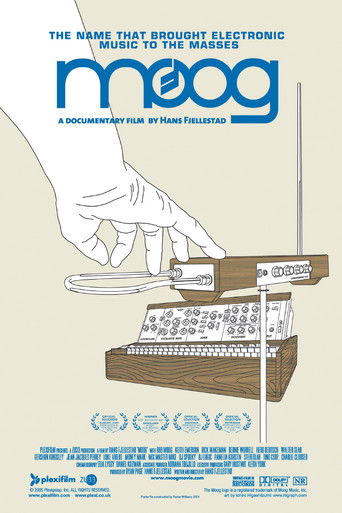
Best known as the inventor of the Moog synthesizer, Robert Moog was an American pioneer of electronic music, and shaped musical culture with some of the most inspiring electronic instruments ever created. This "compelling documentary portrait of a provocative, thoughtful and deeply sympathetic figure" (New York Times) peeks into the inventor's mind and the worldwide phenomenon he fomented.
While enjoying his relationship with Cleopatra, Antony neglects his Roman responsibilities, angering Octavian Caesar. Cleopatra rejoices when Antony's wife dies, but Antony's desire for political advancement leads him to marry Caesar's sister. The fragile peace that emerges is short-lived, as Antony returns to Egypt, leading to full-scale war.
In this highly regarded Mexican war film, peasant Demetrio Macias leads a band of outlaws in a revolt against the Federales during the Mexican Revolution.
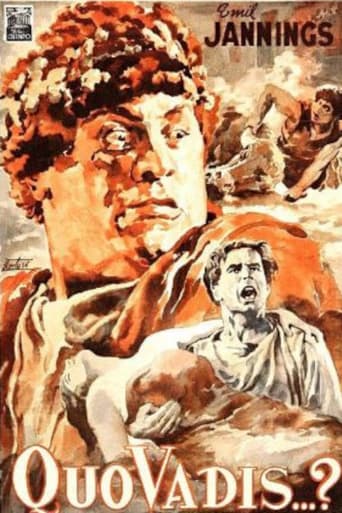
"The Roman Banquet, the golden glories, the unrivaled luxuries, the wine, the dance, the song, the beautiful women, the sumptuous splendors that taxed a barbaric world for a night of feasting and revel-- Re-created for your entertainment in the most colossal drama produced", reads an ad in the Daily Argus of New York. Unione Cinematografica Italiana's lavish production of the oft-told tale stars Emil Jannings as Nero.
The Real Haunted Mansion 2 explores the rich history and investigates the ghostly activity for the first time at an historic Gothic Iowa Mansion with a team of Historians and Paranormal Investigators.
Made just before America would be forced into the Second World War, this short subject is a brief dramatized history of American democracy. It targets a perceived threat to democracy from board room and soapbox fascists who advocated a government based upon contemporaneous European models.
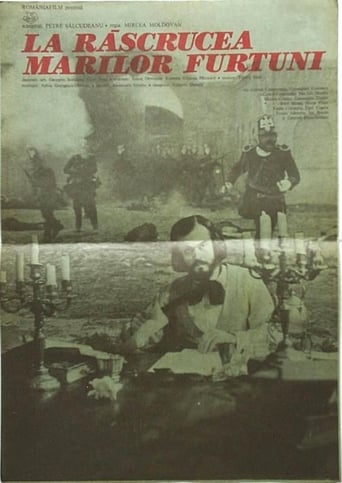
In 1848 during the tumultuous era of European revolutions shaking the continent out of its feudal-based empire-based system the Wallachian politician Nicolae Balcescu is trying to reach the same revolutionary goals at home.
Normandy, 1905. The picnic is finished. A group of middle-class people in their Sunday best, get ready to go home. There is one last photo to be taken, but somebody is missing
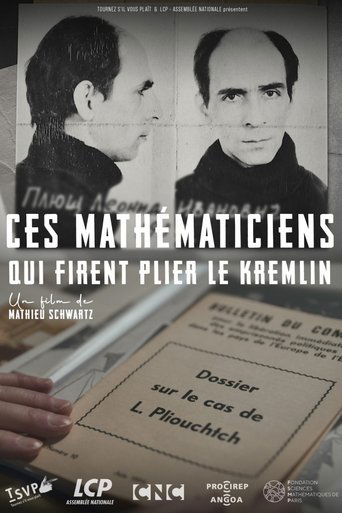
On January 15, 1972, Leonid Pliouchtch, a Ukrainian mathematician who was unknown at the time, was locked up in a Soviet psychiatric institution and accused of dissidence. His wife, Tatiana, fought for his defense and contacted a committee of French mathematicians to help him. Led by Laurent Schwartz, they launched a three-year campaign to secure his release and succeeded in getting the USSR to back down on the issue.
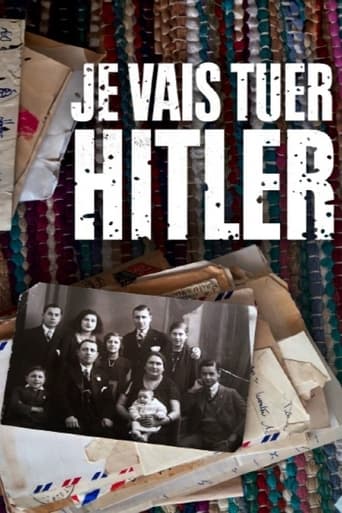
One day, in Savigny, an 18-year-old boy left his house in the middle of the war, saying: "I'm leaving, I'm going to kill Hitler." His name was Joseph, he was Jewish, he was my great-uncle. He disappeared during the night of the Occupation, and his existence became a family secret. He disappeared from history, the small as well as the big: he is not on any deportation list, and the only archive where he appears is a family photo of him as a child. It disappeared like a stone at the bottom of the water, instead of going up in smoke in the sky of Poland. What did he become? And why didn't anyone mention his name anymore?
October 1941. German forces have penetrated deep into Russia and are laying waste to everything they see. The Soviet high command takes every chance they get to secure the rear and take anything of historic importance out of harm's way.
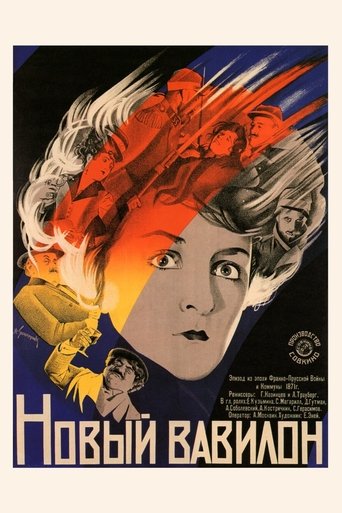
In the short-lived Commune of Paris, a conscripted soldier falls in love with a Communard saleswoman. As the army cracks down on the revolutionaries, the soldier is forced to fight against the Commune, and the pair's love is put to the test.
Activate your FREE Account!
You must create an account to continue watching