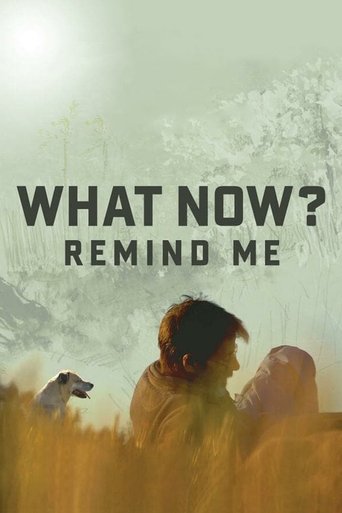
Joaquim Pinto has been living with HIV and VHC for almost twenty years. “What now? Remind Me” is the notebook of a year of clinical studies with toxic, mind altering drugs as yet unapproved. An open and eclectic reflection on time and memory, on epidemics and globalization, on survival beyond all expectations, on dissent and absolute love. In a to-and-fro between present and past memories, the film is also a tribute to friends departed and those who remain.
Philosophical essay about the October Revolution of 1917 in Russia, its influence on the destiny of the world in the 20th century.
"The Perfect Human Diet" is an unprecedented global exploration to find a solution to our epidemic of overweight obesity and diet-related disease - the #1 killer in America. The film bypasses current dietary group-think by exploring modern dietary science, previous historical findings, ancestral native diets and the emerging field of human dietary evolution; revealing for the first time, the authentic human diet. Film audiences finally have the opportunity to see what our species really needs for optimal health and are introduced to a practical template based on these breakthrough scientific facts.
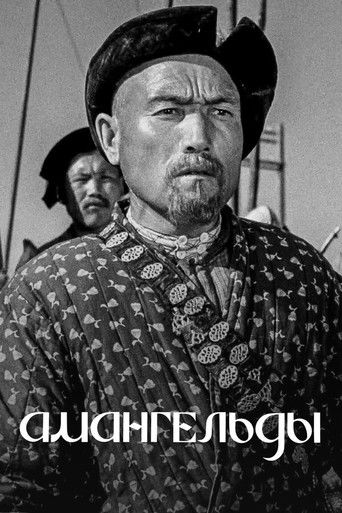
In 1916, a new Russian governor is sent to the Kazakhstan steppes by the Tsar and tries to impose mandatory military service upon the native Kazakhs. A popular uprising begins against the Tsarist empire. A Kazakh hero, Amangeldy Imanov, leads the revolt and allies with the Bolsheviks against the Kazakh clans loyal to the Tsar.
A story about the key events of the Wielkopolska Uprising - a dramatic arrival of Ignacy Jan Paderewski in Poznań, and the people who prepared the uprising, fought in it and won.
This is the year when the Vietnam War ends and terrorists take over the West German embassy in Stockholm. On TV, Staffan Westerberg's "Vilse i Pannkakan" coincides with Ingmar Bergman's "The Magic Flute". Despite the cold war, the USA and the Soviet Union take the opportunity to meet - in space! And Davis Cup tennis is played in Båstad. Sweden meets Chile and the police fear riots. This and much more in "The year was 1975" by Jonas Fohlin and Eva Tillberg.
SATAN'S GUIDE TO THE BIBLE is an animated documentary. Join Satan as he shares Bible secrets, secrets the students' pastor learned at Christian seminary but is afraid to share. Thankfully, Satan's not afraid of losing his job. Satan has amassed an impressive list of biblical scholars ready to reveal the "standard stuff" taught in Christian seminaries: Bart Ehrman (UNC Chapel Hill), John J. Collins (Yale), Dale Allison (Princeton Seminary), Susan Niditch (Amherst), Ron Hendel (UC Berkeley), and Hector Avalos (Iowa State). This is established seminary curriculum about biblical history, biblical morals, authorship claims, and early Christianity — a curriculum never shared with the congregation. Darkly comedic, but thoroughly researched, SATAN'S GUIDE TO THE BIBLE is a fascinating journey into the secrets of the world's best-selling book.
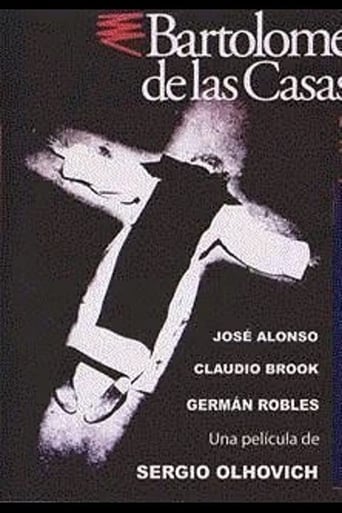
Three moments in the life of Fray Bartolomé de Las Casas; his youth encounter with the natives; his resignation in maturity to lands and encomiendas to evangelize and defend justice and dignity against the cruelty of the Spanish and his reflections at the end of his life
James Brown was the jewel in the crown, but the throne of Cincinnati’s King Records always belonged to its irascible founder, Syd Nathan. This is the 70th anniversary of the legendary record label and studio. It closed shop nearly 40 years ago, in a now long-neglected warehouse on the neighborhood border of Evanston and Walnut Hills, but its impact still reverberates across today’s music.
The Story of a Japanese-Canadian woman who finds friendship after her family is interned to a small town during World War II.
In Hanoi, a French couple who had come to adopt a baby met Maï, an old woman who had a love affair with a French officer in 1945. She tells how, sent by de Gaulle to restore order, Leclerc negotiates with Ho Chi Minh, against the advice of d'Argenlieu, the high commissioner.
A 1986 Bollywood film.
The amazing story of electronic music: its epic journey from its origins in Europe, at the hands of the great artists of the post-war classical avant-garde, to the great post-industrial cities of the USA, where this genre of genres took over music stores, shady clubs and, eventually, the big stages.
A contemporary retelling of the Mary Shelley story, produced as a tribute to the poet Percy Bysshe Shelley on the 150th anniversary of his death.
The action takes place at the beginning of the 16th century. The rich Belarusian lands that are part of the Grand Duchy of Lithuania, located at the intersection of trade routes, are attacked by Tatars. With rapid raids, the Crimean cavalry reaches all Belarusian cities without exception. The conquerors stormed the fortress, robbed, stole the population into slavery, leaving behind ashes. On the way, the troops of the Crimean Tatars, among the few who have not yet been defeated, stand up to the brave squad and brave residents of the city of Slutsk, whose defense after the death of the husband of Prince Semyon Olelkovich was led by Princess Anastasia Slutskaya.
A brief account of the Spanish-American War (1898) and the end of the Spanish Empire in the Caribbean Sea and the Pacific Ocean.
During the Mexican Agrarian Reform, an engineer travels to a town to distribute the land of the landowners among the peasants.
A curious college student travels to Haiti to unravel the life of the president. What she finds is...unspeakable. While investigating the past of President Moïse for a memoir, Shedeline walks into the heart of a life-changing event for her, Haiti, and its president; as she gets a front-row seat to the chaos and intrigue of a bloody political firestorm. This unexpected turn of events shakes her and introduces a terrifying twist to what she thought would be an ordinary story. Now, her memory is heavy with the answer to the prodigious question hanging over an unsettled nation. Who killed the president?
He is considered to be one of the greatest German film stars, Hans Albers, known as "Der blonde Hans", a man made for the cinema. He was an actor, singer, idol of the Germans - and darling of the Nazis. Nevertheless, he could not protect his great love, the Jewess Hansi Burg. In 1938 she had to flee to London from anti-Semitism in Germany. But Albers himself stayed in Germany and continued to film, driven by a desire for a career and the call of money. In 1946, one year after the end of the Second World War, they meet again: Hansi Burg returns to the land of the murderers of her parents in the uniform of the British Army and visits Hans Albers in his villa on Lake Starnberg. He lives there with another woman. The rival has to go, then there is a tense debate. For a day and a night, the blonde Hans has to face uncomfortable questions and even more uncomfortable truths.
Activate your FREE Account!
You must create an account to continue watching