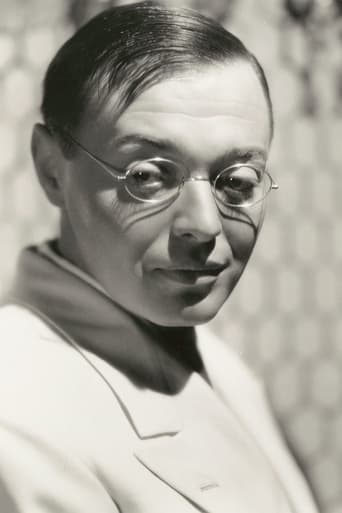
Featurette about the demise, during the early 1940s, of the once-popular Mr. Moto B-films series that starred Peter Lorre.
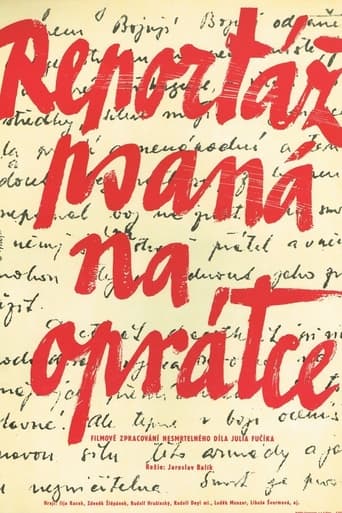
Screen adaptation of Julius Fucik's story about communist fighters.
Pyotr's jester Ivan Balakirev is caught up in complicated family relations of Russian emperor and palace intrigues of his court.
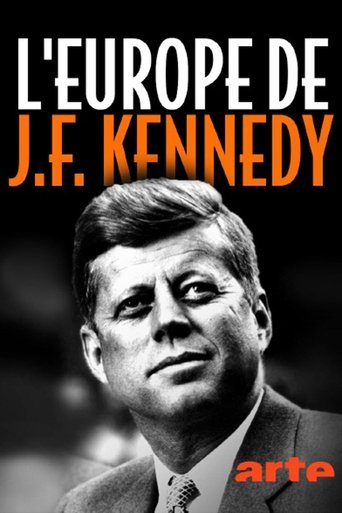
A docudrama on John F. Kennedy's early travels through Europe with his best friend Lem Billings. A road trip that would lay the foundation for JFK's later love for Europe and its countries, such as Germany.
A biopic about a Soviet general V. Gorbatov.
Since 2000, a woman among women upset the world and its inhabitants. This is probably the most popular woman on the planet. It is the origin of the largest global gatherings, performs miracles by thousands, calls for centuries undisputed scientific, multiplies his appearances lately, save secrets to illiterate children cry icons and transmits apocalyptic messages who wants to hear them. His name Mary. Filiation: the three religions of the book. A Jewish woman asked by Muslims. A goddess for Hindus, the Mother of God for Christians, a final appeal to the unbelievers.
In the early days of World War II, two Jewish brothers lost their parents during the Nazi invasion of Belarus. The boys were imprisoned in a German hospital and found many of their peers there. They were kept in inhuman conditions - hunger, cold, lack of sleep and rest. The only thing the boys had, their treasure - was a family portrait with mom and dad. Before the fascists separated brothers, each of them got half of it.
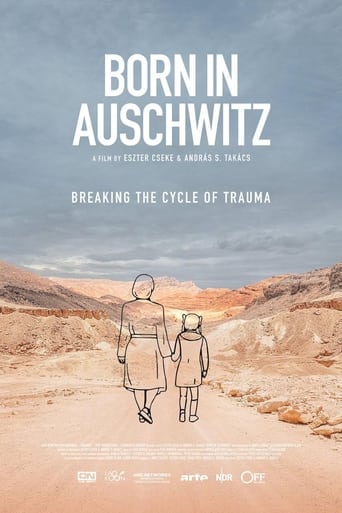
The untold story of a Jewish baby who was born in the death camp before the liberation and survived. An extraordinary journey of the second and third generation, breaking the cycle of trauma to free themselves from Auschwitz - forever.
Documentary film about the then longest range bombing mission in history, which changed the outcome of the Falklands War.
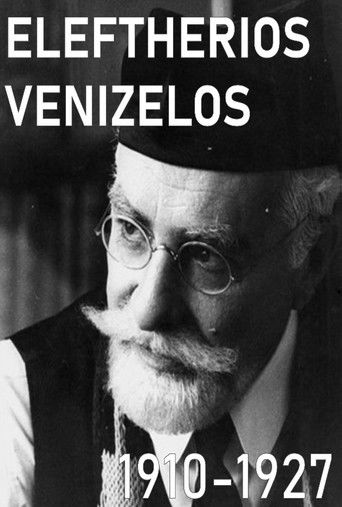
A biographical film about the great Greek politician Eleftherios Venizelos for the period between 1910-1927. The film highlights his vision of a Greater Greece and refers to important events in Greek history such as the formation of a government by Venizelos after the Goudi movement, his dispute with the King over Greece's stance in the First World War, the temporary his withdrawal from politics after his defeat in the 1920 elections and the Asia Minor disaster. A biography of the former Greek prime minister Eleftherios Venizelos and the recreation of his acts and the political and social climate in Greece from 1910 to 1927.
The film tells of devastating earthquake in Banja Luka in 1969 and follows a group of prisoners in prison during devastating earthquake and people and residents of Banja Luka. Fate of prisoners,the fate of the city and residents of Banja Luka, are light motive of this movie.
At the age of 25, Hauge had an experience of God that changed both him and the whole of Norway. Through preaching, writing and publishing their own books, business start-ups, by hiring both the mentally and physically ill, and exalting the women as both preachers and business leaders. Hauge stood in the breeze for a Norway that did not fall into good soil with the State, which in turn brought life to the Convict Poster to prevent Hauge from spreading the message of equality for all. The price was high, but Hauge and his successors left indelible traces in modern Norway.
Getting out of prison doesn't mean being free. After the bloody suppression of the Prague Revolution in 1848, one of its participants, the writer František Vinický, spent eight years in prison. Returning to Prague in 1857, he tries to make contact with his former friends. The main one is his former comrade-in-arms Antoš. Of course, the man's steps also lead him to his former love Ida, who has been married to the councillor Mayer for several years. Vinicky is followed at practically every turn by the secret police, who will not allow him to get a decent job, let alone publish his new book. Police Councillor Berger makes it clear to the writer that a lot could be arranged if Vinicky would commit to cooperating...
Berlin in the 1930s - Adolf Hitler comes to power, communists and social democrats are persecuted, books are burned and Jewish citizens are ostracized. The outwardly shiny façade of Berlin, the capital of the Reich, reveals nothing of the unequal struggle of young people against the increasing oppression...
This feature-doc tells the epic story of the Faberge name, from Imperial Russia until the present-day, spanning one hundred and fifty years of turbulent history, romance, artistic development and commercial exploitation. From the bejewel led Easter eggs of the Romanov Tsarinas to the 1970s allure of 'Brut by Faberge' aftershave, and from the Russian revolution to today's high-fashion glitz in New York and London, the film explores a multi-faceted world that began with one man: the prodigiously talented Peter Carl Faberge, Court Jeweler of St Petersburg. Shot at locations across Russia, Europe and USA (including the collection of Her Majesty Queen Elizabeth II), the film features interview contributions from the world's foremost Faberge authorities, as well as personal reminiscences from Faberge family members.
At the close of the Cultural Revolution, a group of young idealists battle for the right to return home and restart their lives after years of toil on a state run re-education farm in China.
Well known for its exploration of seduction and revenge, the “Dangerous Liaisons” by Choderlos de Laclos caused a scandal from its first publication in 1782. Despite – or because of the scandal – the book was a top-seller. Since then, it stood the test of time. Combining eras, continents and people, the novel is adapted around the world. Marvelous tool for reflection on the female condition, social satire announcing the Revolution, remarkable work on the conflicting nature of love but also of the gender war, consecration of the power of the words, a libertine manual… “Dangerous Liaisons” is all of these at once.
In 1912, Javanese activist Omar Said Tjokroaminoto co-founds the Sarekat Islam party to fight injustices of the Dutch East Indies' colonial regime.
Post-war Germany in 1946 while people are struggling to make ends meet, the film follows Hermann, a war veteran who finds employment at a train station. As he falls in love with an agricultural worker and starts comitting thefts, his fragile psyche seems to fall more and more out of balance.
Activate your FREE Account!
You must create an account to continue watching