Analytical view of one of the least reported conflicts of national cinema: the Cristero movement that developed in the regions of western Mexico between 1926 and 1929, highlighting the inability to be faithful to both the Church and the State.
Taiwanese historical drama about the Buddhist monk Huineng.
The bittersweet story of young lovers caught up in a political struggle waged by farmers against the grain trade, the banks, and the railroads. Set in 1915–16 North Dakota, a largely forgotten era of American history.
A family living in poverty faces financial difficulties while striving to educate their daughters. The mother resorts to extraordinary measures to procure the traditional silk dresses needed for her kids to attend school.
After decades of inaccessibility due to unrest and wars, teams of archaeologists from around the globe return to the greatest sites in Mesopotamia in a bid to save what can still be saved.
In the first decades of the 20th century, when life was being transformed by scientific innovations, researchers made a thrilling new claim: they could tell whether someone was lying by using a machine. Popularly known as the “lie detector,” the device transformed police work, seized headlines and was extolled in movies, TV and comics as an infallible crime-fighting tool. Husbands and wives tested each other’s fidelity. Corporations routinely tested employees’ honesty and government workers were tested for loyalty and “morals.” But the promise of the polygraph turned dark, and the lie detector too often became an apparatus of fear and intimidation. Written and directed by Rob Rapley and executive produced by Cameo George, The Lie Detector is a tale of good intentions, twisted morals and unintended consequences.
The film takes place during the Afghan war in an area where, by agreement of the warring parties, no military action was conducted. Taking advantage of this convenient circumstance, local mafioso Karakhan secretly built a drug factory here. US intelligence agencies find out about this and begin an operation to seize the factory. However, Karakhan's fighters are well trained and armed, they repel all attacks. But the American soldiers get an assistant: an unknown person destroys drug caravans and blows up the houses of Karakhan's partners...
1965 - The Rolling Stones is coming to Sweden - a little rougher and tougher than The Beatles who were here a few years earlier. And the fashion trend is spreading across Sweden - to the horror of many. The medium-strong beer will start to be sold in Sweden - in regular grocery stores. And at the end of the year Hasse och Tage's new feature film with Gösta Ekman in one of the main roles premieres. Tragedies strike: 10 Swedish youths die in an avalanche, a tunnel collapse in Stockholm causes suspense. American astronaut Ed White spacewalks after the Soviet Union's Aleksey Leonov. Hep Stars led by Svenne Hedlund dominate with three top-ten songs, including "Cadillac."
An urgent, timely and compelling portrait of Hollywood icon Greta Garbo, whose fame, isolation and loneliness still captures us.
The film reveals the dramatic destiny of wonderful young women, journalists who in 1936 started the socially-engaged magazine "Woman Today". The editorial office is in today's Nušićeva Street in Belgrade. They are highly educated. They skillfully dealt with censorship until 1940. The magazine was then banned. What were they willing to do, how much were they willing to take risks, what were they sacrificing, what were they warning about, what were they writing about? What fate awaits them? Who are Olga Alkalaj, Fani Politeo Vučković, Mitra Mitrović, Milica Šuvaković, Jelisaveta Beška Bembas, Nataša Jeremić, Jojić Olga, Dušica Stefanović, Zora Sher, Paulina Sudarski? The script for the film was based on the texts and war memoirs of those who survived. The texts in the film are interpreted by actresses: Milica Stefanović, Aleksandra Janković, Mitra Mladenović, Marijana Dugalić and Mina Obradović.
Band of ex-soldiers embark on a life of crime; their leader, meanwhile, wants to track down the man who murdered his parents.
The story of the last days of Austrian farmer Franz Jägerstätter (1907-43), who was executed by the Nazi regime because of his refusal to compromise with a perverse system.
Underwater Dreams, narrated by Michael Peña, is an epic story of how the sons of undocumented Mexican immigrants learned how to build underwater robots. And go up against MIT in the process.
This is the glorious story of the Hittites - the most powerful people in the Near East of their time. Narrated by Academy Award winner Jeremy Irons, "The Hittites" brings the fascinating history of this mighty empire to life with expert interviews, stunning cinematography, dramatic reenactments, and visual effects. Highlights include a breathtaking recreation of the controversial battle of Kadesh that decimated the armies of Egypt's Pharaoh Ramesses II. Based on the actual words of the Hittites, deciphered from ancient clay tablets excavated in the 20th century, their story unfolds as beautifully as it written almost 3500 years earlier.
When Isa provokes the Nazis with a satirical song at her graduation party, she is denied her degree despite passing her exams. She has to give up her plan to become a teacher and, against her mother Petra's wishes, manages to perform in a political cabaret. She enjoys stage success as a singer with an accordion and falls in love with the pianist Laurenz. During the Second World War, Isa's family gets caught up in the wheels of political power and is torn apart - until, after much turbulence, the Vermehrens regain their old cohesion and accompany Isa together as she enters a convent in Bonn.
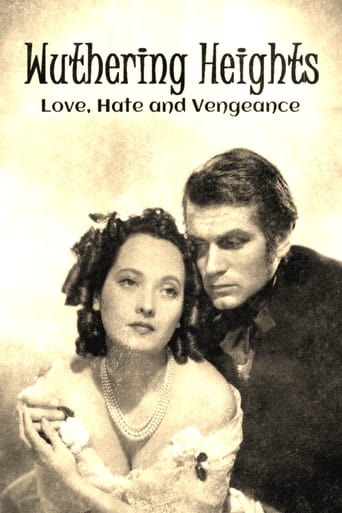
In 1847, British writer Emily Brontë (1818-48), perhaps the most enigmatic of the three Brontë sisters, published her novel Wuthering Heights, a dark romance set in the desolation of the moors, a unique work of early Victorian literature that stunned contemporary critics.
Director Elia Kazan and playwright Arthur Miller were once best friends and professional colleagues, to most that knew them then in both capacities as soul mates. Their politics were similar which was reflected in their work. Kazan was a Communist Party member for a few years in the mid-1930's, but Miller never officially joined the party ranks. Their relationship changed in the early 1950's when Kazan was subpoenaed to testify in front of the House Un-American Activities Committee where he named names of Communist Party members past and present.
Activate your FREE Account!
You must create an account to continue watching