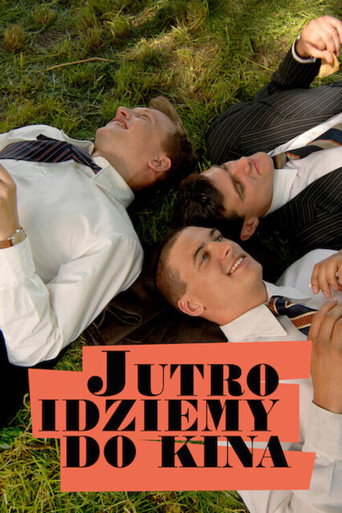
Three high school graduates prepare to start the next chapter of their lives, but the outbreak of World War II may derail their dreams forever.
This is the thrilling tale of one of the most famous battles in history. Hour by hour and often minute by minute, Waterloo describes the battle's twists and turns. Based on the written testimonies of actual combatants, Waterloo describes, without romanticising, the experience of battle, the hopes, fears, suffering, and death.
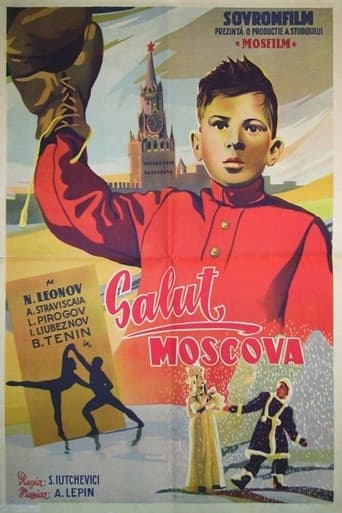
At the amateur talent show the boy, accompanying himself on the accordion, sings a song about Moscow... The plot of the movie is based on the story of the director of the school about how this accordion, once belonging to a cadre worker who died during a demonstration in 1905, has been in many hands before it got to the guys.
The eventful history of Tyko Vylka, the first Nenets artist, cartographer, polar explorer, participant in World War II, chairman of the Novaya Zemlya Island Council.
The film covers the period from 1947, when UPA troops broke with fights abroad, and to autumn of 1959, when in Munich KGB agent Bohdan Stashynskyi killed Stepan Bandera.
Patrick Stewart narrates the investigation into the true origin of Britain's King Arthur and his fabled heroes, and whether or not Camelot exists in some forgotten corner of England.
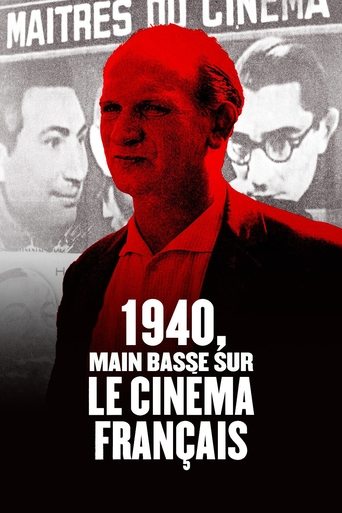
Paris, 1940. German occupation forces create a new film production company, Continental, and put Alfred Greven – producer, cinephile, and opportunistic businessman – in charge. During the occupation, under Joseph Goebbels’s orders, Greven hires the best artists and technicians of French cinema to produce successful, highly entertaining films, which are also strategically devoid of propaganda. Simultaneously, he takes advantage of the confiscation of Jewish property to purchase film theaters, studios and laboratories, in order to control the whole production line. His goal: to create a European Hollywood. Among the thirty feature films thus produced under the auspices of Continental, several are, to this day, considered classics of French cinema.
Set during the American Revolution, this colorful 2 reel short tells the story of Haym Salomon, American patriot and financier of the American Revolution.
The film tells the of certain events of the Polish-Soviet War as is accepted in Soviet history.
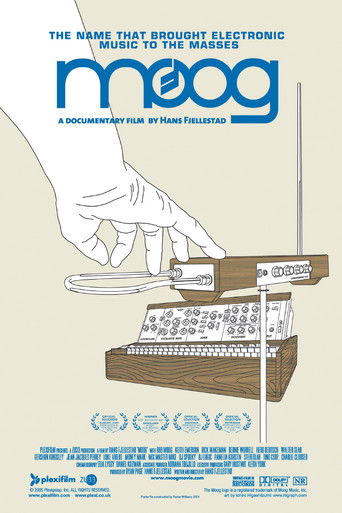
Best known as the inventor of the Moog synthesizer, Robert Moog was an American pioneer of electronic music, and shaped musical culture with some of the most inspiring electronic instruments ever created. This "compelling documentary portrait of a provocative, thoughtful and deeply sympathetic figure" (New York Times) peeks into the inventor's mind and the worldwide phenomenon he fomented.
Chronicle of the repression that a foreign company exerts on the miners of a small nitrate town in Chile, whose workers decide to claim their most essential rights. A reflection of the historic union struggles in the northern Chile that ended with terrible repressive acts.
Evocation of the life of Jesus Christ.
Based on real events in Macedonia during the Ottoman era. The plot revolves around a number of Macedonian revolutionaries battling against a large Ottoman-Turkish Army.
After the death of Octavian, the rebel populations of Illyria and Pannonia pose a grave threat to the Roman Empire. Tribune Marcus Ventidius is sent to subdue the uprising and, after a bitter battle, captures Pannonian chief Magdus together with a number of women hostages. These include Magdus's own daughter Helen, betrothed to cruel Illyrian warrior Batone who has killed many Romans. Julia, daughter of the Roman governor Messala, is in love with Tribune Marcus and, jealous of his sympathy for the barbarian girl, plots an escape by Helen and her father. Pursuing the fugitives, Marcus crosses a mountain pass where Batone has laid a trap.
Most people don't think about singing when they think about revolutions. But song was the weapon of choice when, between 1986 and 1991, Estonians sought to free themselves from decades of Soviet occupation. During those years, hundreds of thousands gathered in public to sing forbidden patriotic songs and to rally for independence. "The young people, without any political party, and without any politicians, just came together ... not only tens of thousands but hundreds of thousands ... to gather and to sing and to give this nation a new spirit," remarks Mart Laar, a Singing Revolution leader featured in the film and the first post-Soviet Prime Minister of Estonia. "This was the idea of the Singing Revolution." James Tusty and Maureen Castle Tusty's "The Singing Revolution" tells the moving story of how the Estonian people peacefully regained their freedom--and helped topple an empire along the way.
27 Olympic and Paralympic champions, aged 20 to 100, share their stories in this Mickaël Gamrasni documentary narrated by actress Marion Cotillard. As heirs to previous generations, they trace the incredible genealogy of French Olympism. The documentary revisits over a century of French participation in the Olympics, from their inception in 1896 to the recent feats that have elevated France to the summit. It’s a human adventure, brimming with memories, acts of bravery, and epic emotions: the collective narrative of France winning.
In 1860s London, three Greek female artists attend a gallery opening, seeking to impress the Pre-Raphaelite Brotherhood.
Alive and Kicking gives the audience an intimate, insider’s view into the culture of the current swing dance world while shedding light on issues facing modern American society.
An intimate and political history of the French working class from the early 1950s to the present day.
August Strindberg's historical play about the king he called Sweden's traitor.
Activate your FREE Account!
You must create an account to continue watching