King and prison escapee join forces. Hsu Feng & Carter Wong Play Yuan Loyalists who thwart an attack from the Mongol General and Mantis Master Chang Yi.
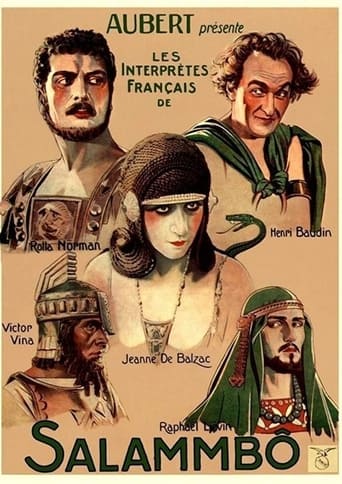
Based on the historical novel by Flaubert, "Salammbo" tells the story of the Mercenary War between Carthage and the Barbarians in the third century BC.
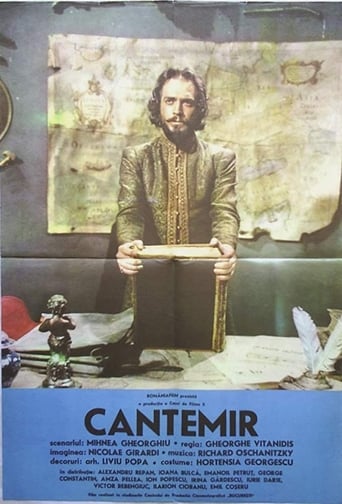
Historical adventure film that evokes the figure of the Prince Dimitrie Cantemir. The heroes fight for the manuscript "The History of the Ottoman Empire" and the jewels of the ruler's wife.
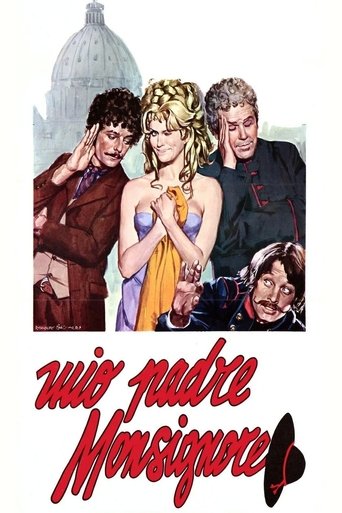
Against the backdrop of the Unification of Italy, two men have the dream of being recognized by their respective, illustrious, fathers: a bishop and the King.
After the World War I, Mussolini's perspective on life is severely altered; once a willful socialist reformer, now obsessed with the idea of power, he founds the National Fascist Party in 1921 and assumes political power in 1922, becoming the Duce, dictator of Italy. His success encourages Hitler to take power in Germany in 1933, opening the dark road to World War II. (Originally released as a two-part miniseries. Includes colorized archival footage.)
When the calendars showed the 1950s, curiosity and interest in space had reached new heights, and many countries from Europe to Asia, led by the United States and the Soviet Union, had launched space programs and entered into fierce competition to reach beyond the unknowns of the sky. By 1957, the Soviet Union had become the first country to launch a rocket into space with Sputnik, followed by the United States as the second to make history. During these years, high school students and their friends living in Bandırma were inspired by Sputnik to pursue their dreams of space exploration. Despite lacking a space program, government support, or financial resources, they established the "Bandırma Rocket Club" with the aim of launching a rocket into space.
In the summer of 1959, as a magazine correspondent, writer and filmmaker Pier Paolo Pasolini (1922-75) traveled along the Italian coast. In 1963, he documented the sexual behavior of the Italians. In the winter of 1970-71, he witnessed the hardships of the most impoverished Italian population suffering from the boot of state power. After these three trips, he came to the conclusion that Italian society had changed drastically for the worse over the years.
Russia, January 25, 1725. "Give it all...". The emperor's weakening hand was able to write in his will only these two short incomprehensible words that kept Russia in a bloody struggle for the crown for a century.
Based on Ghassan Kanafani's novel, 'Returning to Haifa,' this film, set in 1967, centres on a Palestinian couple who return to the war-torn city to search for their young son Farhan, whom they were forced to abandon when fleeing Zionist acts of terrorism in 1948. Saeed and Atefeh's own house has even been taken over by a Polish Jewish family, who, it transpires, are holding Farhan hostage. It is up to the couple, with the assistance of Farhan's steely grandmother, to find a way to reclaim their lost son. One of the few Iranian films to tackle the Palestinian issue from a historical perspective, this stunning piece of work from Seifollah Daad features meticulous attention to period detail and moving performances.
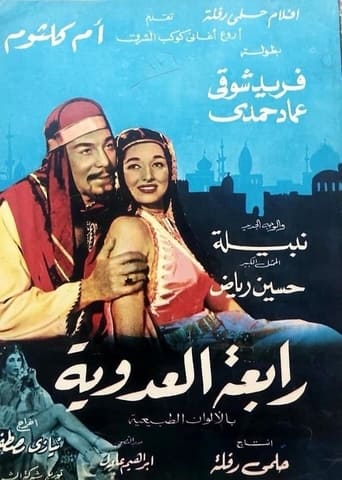
Rabi'a al-Adawiyya is a classic film from 1963 based on the life of the early Sufi saint and poet Rabi'a al-Adawiyya, also known as Rabi'a al Basri, in the second Islamic century.
The ancient Aztec world inadvertantly welcomes its doom in the form of the Conquistadors.
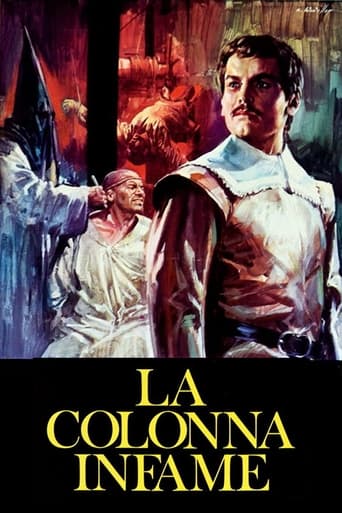
Historical drama, based upon the novel by Alessandro Manzoni.
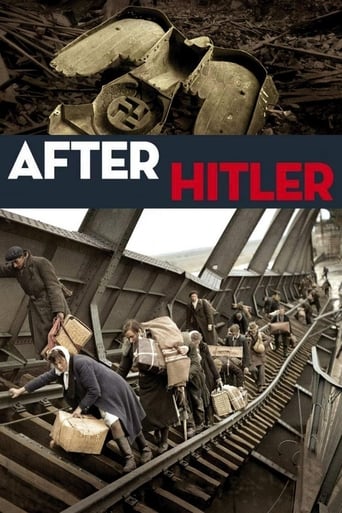
What happened in France just after WWII, between 1945 and 1949? An interesting historic documentary looks at the fate of male and female (presumed) collaborators with the Nazis, the use of the POW in the reconstruction of the plundered and devastated country.
It had been a crisp September morning like so many others. And then it was not. An explosion of evil would carve a path of death and destruction. The untold stories of resilience and unity from survivors pay tribute to hope amid tragedy.
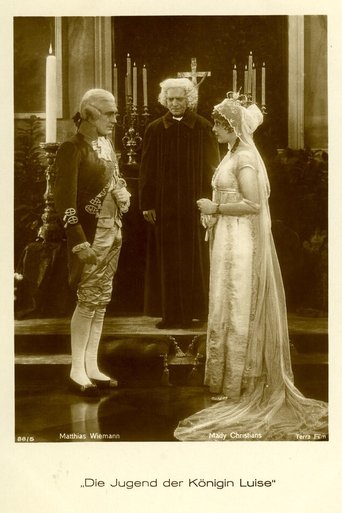
The young Crown Princess Luise of Mecklenburg-Strelitz grows up sheltered in the North German countryside in the late 18th century and develops into a bit of a rebel. She struggles to come to terms with the rules of etiquette at court; her actions are often spontaneous and driven by emotion. Thus, she resists accepting her father’s mistress and future wife. During a ball, she snubs her future stepmother and even has the audacity to ask the orchestra to play a waltz—a dance considered deeply improper at the time.
Between February and April 2025, filmmakers Bernard-Henri Lévy and Marc Roussel filmed the Pokrovsk and Soumy fronts in eastern Ukraine, following the fighters of the Anne de Kyiv Brigade, armed by France. They filmed the daily lives of the inhabitants, bombarded by Russian forces terrorizing civilians on the eve of possible negotiations. They interview President Zelenskyy, who is reluctant to travel to Washington, and then watch the rebroadcast of the meeting with Ukrainian soldiers in a bunker. For the real heroes are the anonymous fighters and civilians who hold their heads high in the face of adversity and suffering, and who are filmed on a daily basis. The final part of Lévy’s “Ukrainian Quartet”, Our War is a diary, peppered with flashbacks in which the author recalls the high points of this war that began in 2014.
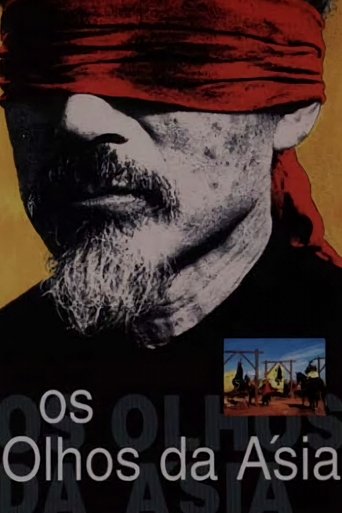
Julian Nakaura, a priest of the Society of Jesus, was one of four young ambassadors sent to Rome by the Jesuits in 1582, as proof that Japan had converted to Christianity. Fifty years after the mission, which so fascinated European royalty, Julian was forced again to prove his faith, only this time before a Shogun, who wanted to force him to abandon his religion. Julian resists, as does Miguel Chijiwa, a fellow at the embassy to Rome, who become a martyr. Betrayed by Cristóvão Ferreira, who cannot bear the torture, Julian suffers an inglorious death ... or maybe not. All the while, a woman wants to discover her past...
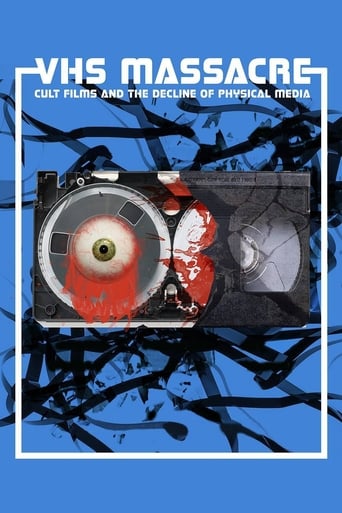
This lively documentary explores the rise and fall of physical media from the origin of film all the way through the video store era into digital media, focusing on B-movie and cult films. With icons like Joe Bob Briggs (MonsterVision), Lloyd Kaufman (Toxic Avenger), Greg Sestero (The Room), Debbie Rochon (Return to Nuke 'Em High), Deborah Reed (Troll 2), Mark Frazer (Samurai Cop), James Nguyen (Birdemic) and many others.
Activate your FREE Account!
You must create an account to continue watching