With Its Myriad Of Mysteries Ancient Egypt Continues To Work Its Spell. The Necropolis Of Saqqara Roughly 30 Kilometers From Cairo Holds One Of Egypt's Most Fascinating Treasures The Pyramid Of Pharaoh Pepi Ii. Few Know Of It As It Is Closed To The Public Yet It Holds The Vastest Collection Of Texts Of All Currently Known Pyramids. For The First Time In 90 Years Teams From The International Archeological Mission In Saqqara Open And Decipher This Wondrous Tomb. How Did The Egyptians Build The Pyramids? Their Walls Are Covered In Hieroglyphs But What Story Do They Tell? How To Crack The Mystery Of Texts That Are Over Four Thousand Years Old? Using Technological Innovations Such As Photogrammetry Endoscopes Hyperspectral Imaging And Ultrahigh Resolution Photography This Documentary Alternates Live Scenes With Staged Interviews To Plunge Us Into Saqqara's History And Offer New Insights Into The Pharaohs' Tombs.
Based on the memoir by Indian policy analyst Sanjaya Baru, The Accidental Prime Minister explores Manmohan Singh's tenure as the Prime Minister of India, and the kind of control he had over his cabinet and the country.
The Armenian national hero, David Bek, leads a major Armenian uprising against Safavid Persia in the Syunik region in the 18th century.
It is the beginning of the 17th century. As the prince, who is certain to become sultan in the future, sets out for the province of Saruhan, a murder is committed in Saruhan. Yusuf, the son of Salih Ağa, one of Saruhan's important figures, is killed in an inn. The judge of Saruhan assigns Selim, a clerk he knows from Istanbul, to solve this murder. Selim's appointment to this task, which led to the execution of the Janissary commander Bekir in Istanbul, does not please the Janissary commander Arif, but he does not have the power to prevent it. On the other hand, the prince and Deli İzzet Pasha, who accompanied him, must solve the murder before arriving in Saruhan.
Rescued from a burning house as a child, John Wesley believes the experience marked him for a higher purpose, a 'brand from the burning'. The film follows Wesley's years at Oxford and as a clergyman, his disagreements with the church over the social position of the clergy, his mission to America, the founding of Methodism, and his bringing of the Gospel into the lives of ordinary people.
The life and loves of Music hall singer Vesta Tilley, who married into the nobility
A Shaw Brothers production
True story of Norman Bethune, a medical doctor who fought for justice in China during Mao's rise to power.
The social ferment in late 19th century Russia which led to the 1917 Russian Revolution is movingly portrayed in this lengthy historical drama, which is very faithful to the 1907 novel The Mother by the celebrated Marxist writer Maxim Gorky (1868-1936). In the story, "the mother" (Inna Tchourikova) has no other recourse than to watch her decent, kindly husband turn into an animalistic, drunken brute as a result of working in the inhuman conditions of a steel mill in the town of Sormovo. When he begins to express his suppressed rage by beating her, she is defended by her teenaged son Pavel (depicted Viktor Rakov as an adult, Sacha Chichonok as a boy). After his father's death, Pavel is forced to go to work in the same factory. However, Pavel and his friends begin investigating Marxism and socialist thought, and work to organize their fellow workers.
The film is based on a true dramatic story of the fate of a wonderful Russian woman - Countess Yulia Petrovna Vrevskaya, one of the first Petersburg beauties. The events of the movie take place during the Russian-Turkish war for the liberation of the Bulgarian people from the Turkish yoke. An early widowed baroness, having left Petersburg, and having invested all her money in organizing a volunteer sanitary detachment, she becomes a sister of mercy on the front of the Bulgarian war with the Ottoman Empire of 1878.
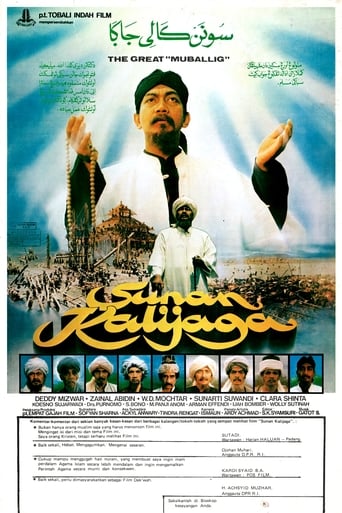
Raden Mas Said, the first son of Tumenggung Wilarikta, who rules Tuban, a district in the powerful kingdom of Majapahit, sees a poor family who suffers from hunger. He tries to take some food out secretly. His parents disapprove, and as punishment, he is locked inside the food storage. Since the incident, R.M. Said, does not feel comfortable at home. So he travels from one place to another and witnesses many cases of fraud and injustice. The Tumenggung is often blamed to cover up their crimes. Listening to his son's report, his father realises the real situation. Then he meets Sunan Bonang, who teaches his knowledge to R.M. Said. They meditate together on a riverbank. Due to his dedication, R.M. Said gets a "Nur" (enlightenment) from God. Shortly after, he is appointed as a Wali (a dated term for Islamic leader), and becomes the famous one amongst the Nine Great Wali (Wali Sanga). He is known as Sunan Kalijaga.
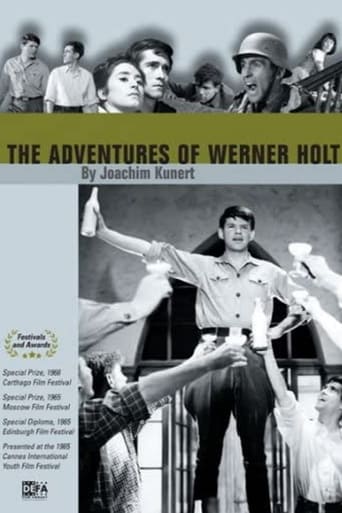
Two 17-year-olds, Werner Holt and Gilbert Wolzow, are pulled out of school and into Hitler's army. Gilbert becomes a fanatical soldier; but at the front, Werner begins to understand the senselessness of war.
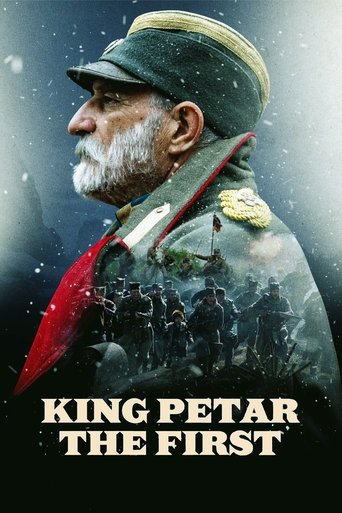
The story of the Serbian army, led by the King Peter, through the World War I.
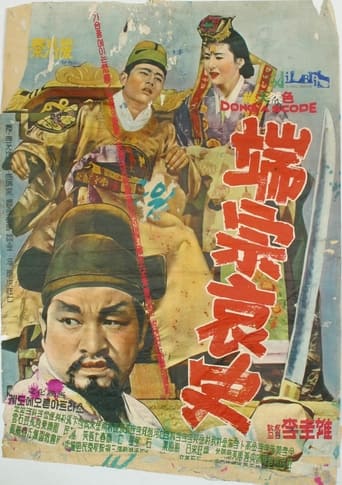
Master Maeng is very proud that an influential family will soon be his esteemed in-laws when his loving daughter, Mi-yeon, marries their son. A few days before the wedding Maeng hears a rumor that his future son-in-law has a cripple leg. Regretting that he can't give his lovely daughter to a cripple, he decides to marry his maid to him instead. Unexpectedly the future son-in-law shows up at the wedding hall and he is not a cripple, but a healthy and handsome youth. Feeling embarrassed, there is no way but to wed the maid to him. The Wedding Day is a recreation of A Happy Day of Jinsa Maeng, a comical play by Oh Yeong Jin. The first Korean film to win an international film award, the Best Comedy Award at the 1957 edition of the Asian Film Festival (now Asia Pacific Film Festival).
During the latter years of the reign of the tyrannical Roman emperor Nero, Marcus Vinicius, one of Nero's officers, falls in love with a young Christian named Lygia, attempting to enslave her. Lygia's protector, the noble and burly Ursus, works to save her from Vinicius' clutches. Pursuing Lygia, Vinicius finds himself at a catacomb prayer meeting led by the apostle Peter and finds his conscience stirring-- just as Nero orders Rome burned. A landmark in epic film, Enrico Guazzoni’s grand-scale masterpiece laid the foundations for what colossal Italian spectacles would become. The film had tremendous influence on Giovanni Pastrone’s Cabiria (1914) and D.W. Griffith’s Intolerance (1916).
Georg Lurich was a world-famous Estonian professional wrestler in the early 1900-s who became a legend already in his lifetime. He was called not only the world's best technique-wrestler but he was also a sports-philosopher, health and temperance activist, an efficient sports manager, a talent in acting, writing and chess, a "world's citizen" who spoke more than ten languages and an athlete with enormous popularity. At least 14 wrestling clubs in Europe and USA carried his name. This film is an unpretentious attempt to recall that unique man, the first world-famous Estonian.
Warsaw, December 13, 1981. Martial law shuts down the country. Overnight, a country turns into a prison. Taxis have been replaced by tanks. Citizens are treated like criminals. And visiting British Professor Joan Andrews finds herself trapped. After witnessing the murder of a young student by the secret police (the "Crows"), Joan herself becomes the target.
Starting in 1944 in the wake of the Liberation and continuing into the '60s, 'houses of hope' were established to lend a semblance of continuity to youngsters orpahaned by the war. Nina's Home takes place between September 1944 and January 1946 in an orphanage housed in a chateau outside Paris. At the outset, the country residence is run by Nina who has a core population of French Jewish children whose parents are probably dead. Food is scarce. News of the Concentration Camps hasn't hit yet, but some months later, a contingent of youths arrive form the liberated camps. The children are a disparate, wild, damaged group and conflicts ensue. Nina's challenge is to help them make their first delicate moves toward the future and in the process restore all of them, including herself, to life.
March 4, 1977. A 7.4-magnitude earthquake strikes Romania, leaving over 1,500 dead, dozens of buildings destroyed, and thousands more damaged. Immediately afterward, under the direct guidance of the communist state apparatus, the assessment and consolidation of the affected buildings begins.
Activate your FREE Account!
You must create an account to continue watching