Doomed attempt to get to California in 1846. More than just a riveting tale of death, endurance and survival. The Donner Party's nightmarish journey penetrated to the very heart of the American Dream at a crucial phase of the nation's "manifest destiny." Touching some of the most powerful social, economic and political currents of the time, this extraordinary narrative remains one of the most compelling and enduring episodes to come out of the West.
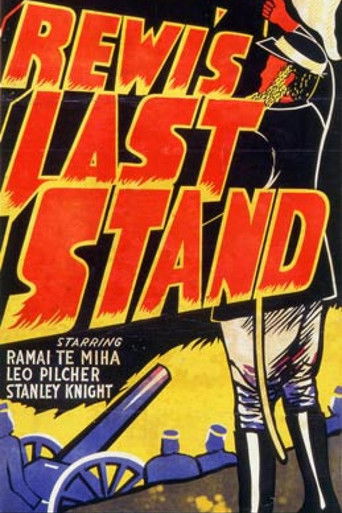
Star-crossed lovers, Robert and Ariana, are caught up in the New Zealand wars of the 1860s. Ariana is claimed by the Maniapoto people as one of their own and, despite Robert's chivalrous defence, is taken by them and must help them prepare for war. Robert likewise must do his patriotic duty and enlists to fight on the other side. He volunteers to ride despatch, thinking it may give him an opportunity to see Ariana again, which it does, but their joy is short-lived; Maniapoto women fight beside their men, and furthermore she is a Rangitira (noble) and will not let her people down. The climax is the siege of Oraku Pa where 300 Maori hold off 2000 troops for three days. The Maniapoto are defeated, but Ariana, although wounded, survives to be reunited with Robert.
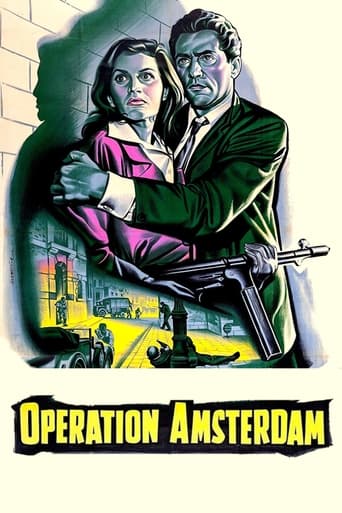
When Germany invades Holland in 1940, a British intelligence officer and two Dutch diamond merchants go to Amsterdam to persuade the Dutch diamond merchants to evacuate their diamond supplies to England.
Montreal, spring 1966. Jean Corbo, 16 years old, born to a Quebec mother and an Italian father, is torn between his two affiliations. After befriending two young far-left activists, he joined the Front de Libération du Québec, an underground radical group. Jean, from then on, marches inexorably towards his destiny.
A group of soldiers are sentenced for the murders of key political figures in the night of October 19th, 1921, in the streets of Lisbon. But the names of the conspirators remain unknown. Berta Maia, a widow of the 1910 revolution hero Carlos da Maia, will fight for the truth…
Medal of Honor Recipient George Sakato said with tear, ' I am not a hero. I just killed a lot of people. It's not good. This medal is for the people who couldn't return their homes, not for me.' Even many soldiers who received the decoration still have deep scars in their hearts now. He is the veteran of 442nd Regimental Combat Team in WW2 composed of Japanese Americans, who were at first seen as the problem because of their race, but later seen as problem solvers because of their splendid achievements on the battle field. They had to fight not only the enemy but also prejudice. This is the story of the 442nd and their veterans now and then.
The story of black and mixed race people in Nazi Germany who were sterilised, experimented upon, tortured and exterminated in the Nazi concentration camps. It also explores the history of German racism and examines the treatment of Black prisoners-of-war. The film uses interviews with survivors and their families as well as archival material to document the Black German Holocaust experience.
The love story between Emperor Pedro I of Brazil, after the independence of the country, and Domitila de Castro, Marchioness of Santos.
Film about the Bahian singer dives into the moment when shy Gracinha becomes Gal Costa, during the violent, innovative and mind-blowing years that helped shape Brazil's greatest singer.
The film loosely retells the legend of the Alvensleben ring through a series of one-take scenes filmed at different locations in Kalbe. Each scene acts like a fragment of memory that moves between centuries. Historical reenactments mix with contemporary elements. Three brothers appear as rulers of modern "kingdoms": the supermarkets of Kalbe. Their conflict eventually leads to their downfall.
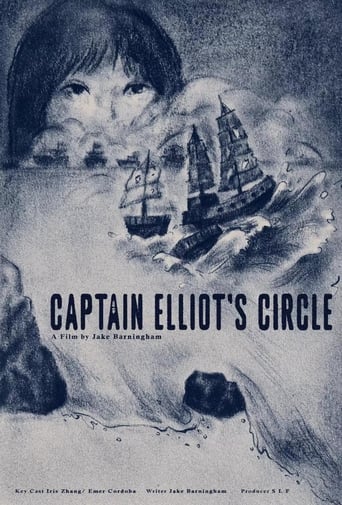
Equal parts documentary, essay, and narrative,"Captain Elliot's Circle" is mostly a poetic interaction with an obscure corner of Chinese and British history. Constructed using primary source documents about the taking of Zhoushan, Britain's first choice for a seaport, in the late 1830s,this movie uses Captain Charles Elliot's reluctance to brutalize the Chinese to reflect on the cyclical nature of history and the power structures that move it. The long takes used throughout function to illustrate the dramatically different ways in which people who lived in the mid-19th century perceived time. Additionally, it represents the psychological effect of living on an island regardless of what era you were born in.The last third of the movie focuses on a young woman whose strange day job has taken her far away from the island of Zhoushan generations after Captain Charles Elliot was last there. "Captain Elliot's Circle" was shot on location in Zhoushan and Hangzhou.
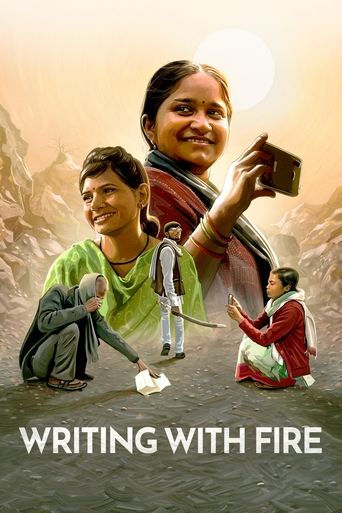
In a cluttered news landscape dominated by men, emerges India’s only newspaper run by Dalit women. Armed with smartphones, Chief Reporter Meera and her journalists break traditions on the frontlines of India’s biggest issues and within the confines of their own homes, redefining what it means to be powerful.
Biopic on the father of the nation of Bangladesh, Sheikh Mujibur Rahman. The film will showcase his growing up as a child to his standing up against all injustice in his youth to fighting for the independence of his country. How he led a country to it's independence with his inspirational presence and fight for the justice.
Through dramatic reconstruction and documentary asides, the spirit of Italian poet, playwright, journalist, aristocrat and army officer Gabriele D’Annunzio is captured, presenting the nascent fascism in his attempts to forge a new state in the aftermath of the First World War.
From his quirky compositions for the spaghetti Westerns of Sergio Leone to his sublime musical contributions to director Roland Joffé's acclaimed 1986 drama The Mission, film composer Ennio Morricone has crafted more than 500 scores over the course of his enduring career in film. Now fans can take a look back at the life and career of one of cinema's most prolific composers through interviews with both the composer himself and many of his longtime collaborators. From his Italian efforts to his work in America, this documentary covers every aspect of Morricone's career as few have, offering insight into his childhood, his longtime association with Leone, and his ultimate disenchantment with the American studio system.
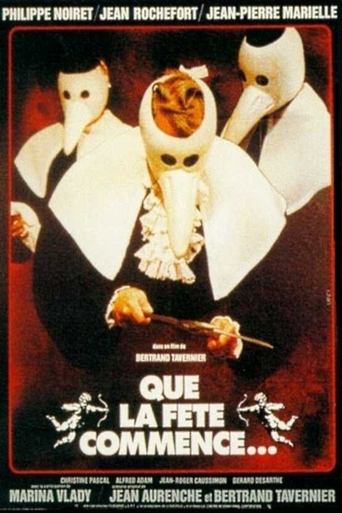
A look at 18th-century France, when the depravity of the authorities contributed to social oppression, and the uprisings flared up one after another.
Guitry reprises his role as Pasteur which he played successfully at the Vaudeville Theatre in 1919.
During the latter years of the reign of the tyrannical Roman emperor Nero, Marcus Vinicius, one of Nero's officers, falls in love with a young Christian named Lygia, attempting to enslave her. Lygia's protector, the noble and burly Ursus, works to save her from Vinicius' clutches. Pursuing Lygia, Vinicius finds himself at a catacomb prayer meeting led by the apostle Peter and finds his conscience stirring-- just as Nero orders Rome burned. A landmark in epic film, Enrico Guazzoni’s grand-scale masterpiece laid the foundations for what colossal Italian spectacles would become. The film had tremendous influence on Giovanni Pastrone’s Cabiria (1914) and D.W. Griffith’s Intolerance (1916).
At the start of the 80’s sport climbing was in its embryonic stages. Bolted routes were beginning to make a regular appearance, indoor climbing walls as we know them nowadays had not yet been invented and there was no such thing as being a pro athlete. During that period standards rose exponentially, from 7b+ as the cutting edge to 9a becoming the new world standard at the end of the ’80’s. In such a short period the sport changed beyond recognition and, in Britain, was fuelled by a small group of climbers who would do anything to climb full-time: sleeping in sheds underneath crags, shoplifting for food and clothes, and living off unemployment benefits. As illustrated in this film directed by Nick Brown, these climbers were living outside the rest of society and went on to become the most influential figures in the history of British sport climbing.
China’s rapid changes from the late 1970s to the early 1990s, as seen through the lives of four performers in a theater troupe.
Activate your FREE Account!
You must create an account to continue watching