In this ensemble drama set in rural France, the women of the Paridier farm are left to run it by themselves while their men are off fighting in World War I. But things become complicated with the arrival of American troops.
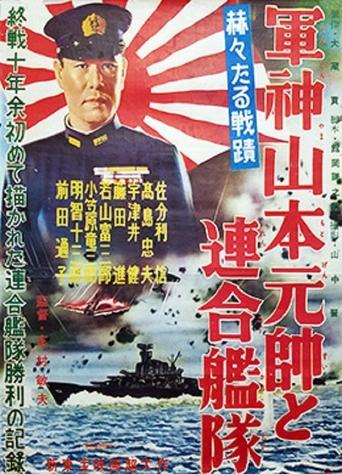
Admiral Isoroku Yamamoto leads the Combined Fleet of the Imperial Japanese Navy to defeat the American Fleet.
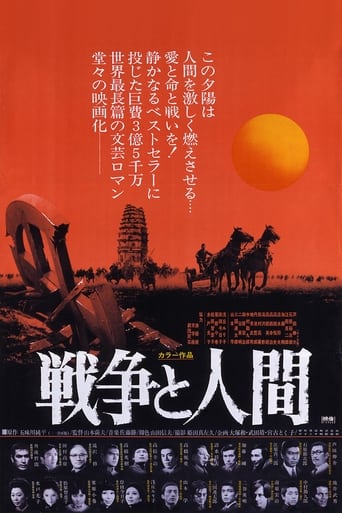
The upstart Godai family conglomerate plans to strengthen ties with the hardliners in the Kwantung Army as they plan military expansion into Manchuria.
After carrier pilot Lt Bingham is rescued at sea by a submarine when he crashes, he applies for submarine duty. During training he competes with Commander Heywood for the affection of Navy nurse Lt Susan Peabody. Heywood gets a new sub command at the outbreak of the Korean war and Bingham is assigned to his sub.
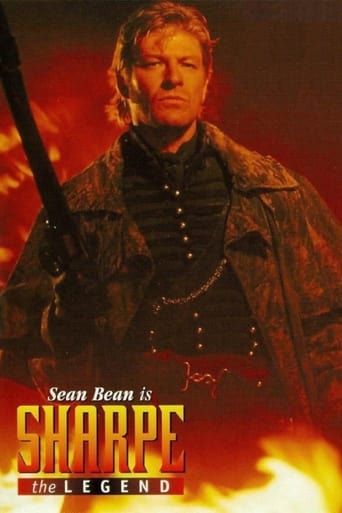
Several years after the battle of Waterloo, a former soldier from Shoreditch sits in a London inn reminiscing about the brave and determined officer who took him to hell and back. The narrator is Rifleman Cooper, and the officer whose fame he recalls is the legendary Richard Sharpe.
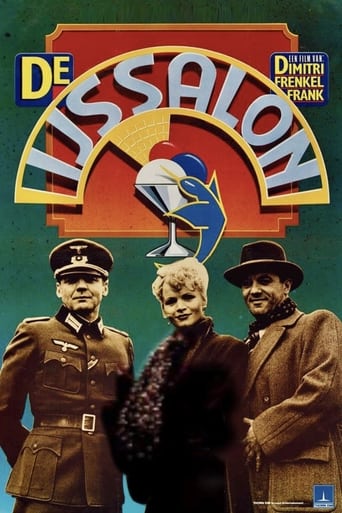
Otto, a Jewish refugee who managed to escape from Berlin in the early days of WW2, is now the owner of an Amsterdam ice cream parlor. Otto's place soon becomes a microcosm of the city with its German invaders, Dutch collaborators and anti-fascist resistance groups.
The movie follows a group of resistance radio broadcasters in Nazi-occupied France as they evade capture alongside a Jewish family.
The Falklands Play is a dramatic account of the political events leading up to, and including, the 1982 Falklands War. The play was written by Ian Curteis, an experienced writer who had started his television career in drama, but had increasingly come to specialise in dramatic reconstructions of history. It was originally commissioned by the BBC in 1983, for production and broadcast in 1986, but was subsequently shelved by Controller of BBC One Michael Grade due to its alleged pro-Margaret Thatcher stance and jingoistic tone. This prompted a press furore over media bias and censorship.The play was not staged until 2002, when it was broadcast in separate adaptations on BBC Television and Radio.
In war-torn Jakarta 1946, a haunted violinist ordered to bomb a colonial theatre sees his plan unravel when a charismatic rebel falls for his wife—jeopardising Indonesia’s freedom and their lives.
In the occupied Netherlands near the end of WWII, a young teenager, Jeroen Boman (Maarten Smit) is sent to the Dutch countryside to avoid the war in Amsterdam. While living with his adopted family, Jeroen meets and becomes friends with a Canadian soldier named Walt Cook, who is stationed at the same town he is staying at. Joroen and Walt spend a lot of time playing around and eventually a romantic relationship develops between them. The boy’s sexual curiosity leads him to have a sexual experience with Walt, an encounter that is shown with some vague detail but without actually showing any nudity, even though sexual intimacy between the two of them is implied. Overall, the movie handles this difficult subject with an elegant style and feeling, without having the adult-child relationship overwhelm the viewer and thus allowing the movie to be seen as just a wartime relationship between two people that marks an important time in a young boy’s life.
After her parents’ divorce, six-year-old Vladlena moves from Crimea to Grozny, not yet aware of the changes that lie ahead. When war breaks out in Chechnya, it deeply affects her city and family. Years later, filmmaker Sandu reflects on her childhood in this poetic, autobiographical hybrid film, exploring how cycles of violence shape children—and how healing and change are possible.
Malta, 1942, during World War II. While the German air force is relentlessly bombing the island, a British pilot falls in love with a young Maltese girl.
Wilfred Owen and Siegfried Sassoon, two of England's most important World War I poets are sent, along with other traumatized combatants, to a rest home in order to treat their emotional troubles, caused by the psychological fatigue that suffer the soldiers fighting in the no man's land.
In WWII, Lieut. Martino and his men are assigned to lead a group of prostitutes through the mountainous ways to serve in brothels for Italian soldiers in Albania.
In this the fourth episode, “Battle of Berlin,” the Soviets start their assault on Berlin, and Stalin negotiates with the other Allies.
After learning the finer points of carrier aviation in the 1920s, career officer Jonathan Scott and his pals spend the next two decades promoting the superiority of naval air power. But military and political "red tape" continually frustrate their efforts, prompting Scott to even consider leaving the Navy for a more lucrative civilian job. Then the world enters a second World War and Scott finally gets the opportunity to prove to Washington the valuable role aircraft carriers could play in winning the conflict. But what will it cost him and his comrades personally?
Karlskov is a self made, successful owner of a large electronics factory, has a wife and five children. They live the good, privileged upper-class life on Strandvejen north of Copenhagen when the Nazis occupy Denmark in April 1940. Karl struggles to continue production at the factory, but to protect his family and employees he reluctantly begins to produce for the German market. It brings him into a controversial collaboration with the occupying power and causes painful breaks in the family.
The movie is based on a real historic event. During French's invading war against China in 1885, the French army took over Zhengnan Guan located in the Guangxi Province. Wishing to protect their beloved country, the 70 years old General Feng Zicai and his two sons volunteered to join the battle. The general understood it would be a difficult battle to win as the French soldiers held much more advanced equipment, resources and weapons. To show his devotion and determination, he brought his own coffin alongside with him to the war zone. He also utilized his experience with the Zhangnan Guan terrain to pave out strategies, made weapons applicable to their situations. These actions bolstered the morale tremendously, and prepared them well for the war. As a result, although the Chinese soldiers sustained heavy losses, they turned the tide of the battle and won.
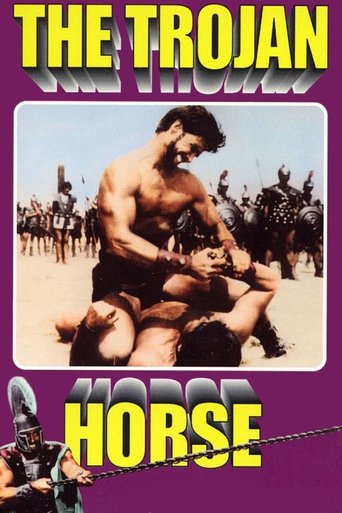
Trojan hero Aeneas battles to save his city from the Greeks, but once Troy falls, he leads the 600 survivors to Italy and founds the city of Rome.
This presentation of 'Waterloo', a film by Karl Grune about the last hurrah of Napoleon, is a fascinating companion to the Abel Gance epic 'Napoleon'. 'Waterloo' presents a tale of several people involved in the final battle. Napoleon and Wellington, of course, but also the Austrian general Blutcher (who is seen as a ladies' man - his scene with a flirty Countess about halfway through the film is priceless; as are his touching scenes with his plain wife (who he imagines to be a young and nubile girl when they get romantic) and some people within his regiment. Not simply a film of war, 'Waterloo' is a story of people, of lovers, of lost opportunities.
Activate your FREE Account!
You must create an account to continue watching