1988 CBC docudrama on Canada's role in WW1. Terence McKenna tours the Battlefields of Ypres, the Somme, Vimy Ridge and Paschendaele. Actors portray several Canadian soldiers in WW1 in re-enactments based on their memoirs, diaries and letters.
During the final year of WWII a young member of the 104th Infantry Division's first contact with the enemy subverts his expectations.
A year on from Russia's invasion, a look at how the war has played out from the air and how Ukraine use drones, satellites and smart tech to thwart the enemy. Featuring drone photography of key locations from before and after the war.
The issue of young Muslims traveling from Europe to countries such as Syria and Somalia to fight with Islamic rebels is a highly topical one, making this story of a Danish-Somalian boy even more relevant. His back turned to the camera as he looks out over a nondescript housing development in Copenhagen, “The Shadow” describes how he fell victim to recruiters from the militant Somalian rebel group al-Shabaab. He outlines the conditions that make boys such as him susceptible to the lure of the “holy war,” explaining that, “Nothing in my life made any sense.” So eloquent is he in his account that one might think it was scripted, but what happened to him is as real as the scenes from a suicide attack by one of his former friends.
In 2015, Ossamah Al Mohsen and her son were the victims of a trip on the Hungarian border by a television reporter in her desperate flight from a Syria at war. The cameras captured this moment by scandalizing public opinion. This kick allowed Ossamah, famous soccer coach in his country, to arrive in Madrid and resume his profession. But the rest of his family did not have the same luck. The story of Ossamah allows us to reflect on the survival of thousands of Syrian families trapped in Turkey but also that of Moatassam, Youssef and Muhannad, three promising Syrian footballers who were robbed of the best years of their lives by war.
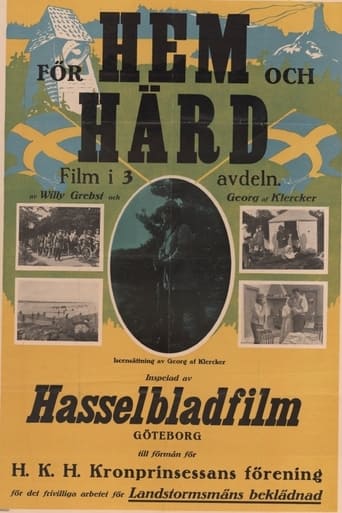
Sweden's only war film during World War I.
Gabriel León, at ninety-nine years old, reminisces and recounts his memories of the Battle of the Ebro, when he was just eighteen. He wrote letters home that have been preserved to this day as a true testament to all these anecdotes, which he is still able to tell with the enthusiasm of a young man who had to face acquaintances and brothers in one of the bloodiest battles of this conflict.
1942 Oscar nominated documentary that explains just how a bomber is made and staffed as it races to attack an enemy submarine
At the Paulistano Club pool, Lygia tells Nilo that she liked the album "Lua Branca," recorded by the young man. He promises to visit her to perform the song in person. The visit marks the beginning of a romance between the two, which later becomes an engagement. However, Nilo is involved in the 1924 uprising in the barracks and, with the outbreak of the revolution, leaves for the front. The city of São Paulo shows the damage caused by the bombings. The rebels, wanting to avoid further sacrifices to the city, after days of fighting and victory, decide to abandon it.
A lost soldier rescues a prisoner of war.
Ascent of Evil: The Story of Mein Kampf is an autobiographical manifesto written by Nazi Party leader Adolf Hitler while imprisoned following his 1923 failed coup attempt in Munich. In Mein Kampf, Hitler outlined his political ideology and goals for Germany. Today, Mein Kampf is still available in libraries, on the Internet, at universities and even at bookstores worldwide. Yet much of the history of this 720-page, two-volume screed is now forgotten. Using historical footage, photographs and interviews with scholars, Ascent of Evil plunges deep into the infamous blueprint for evil’s dark secrets and reveals how this book came to be written and its impact on world.
Beirut – or indeed maybe any city, anywhere – is at war with itself. Here, no conflict is ever resolved, and no wall is ever repaired. The explosions resonate better in this city full of holes. Young men who live here are caught between military service and religious affiliation. I visit some friends, gather their suicidal testaments. No one goes anywhere. I cross my city in every way possible, day and night. 16mm
Gaza, in the middle of Ramadan. A mother struggles to leave her home when she receives a telephone threat, giving her 10 minutes to leave. What is lost when the bomb strikes?
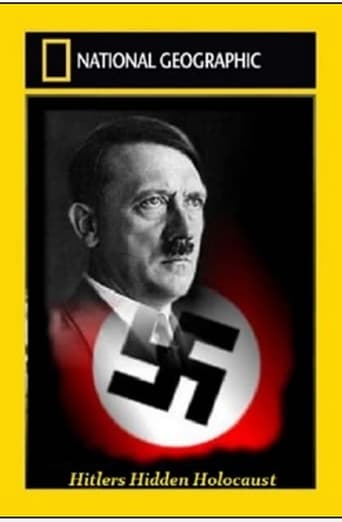
National Geographic Channel (NGC) journeys back to Nazi Europe to tell the story of Hitler's Hidden Holocaust -- the killing frenzy of Hitler's extermination brigades, known as the Einsatzgruppen or "action groups." Woven together with harrowing testimonials from survivors, witnesses and experts, this one-hour special presents in chilling detail -- with photographic evidence and rare video footage - how Nazi soldiers planned, documented and committed these horrific crimes. It was the same routine: Go into a town, round up Jewish families, take them to a ditch and shoot them, often in front of curious spectators.
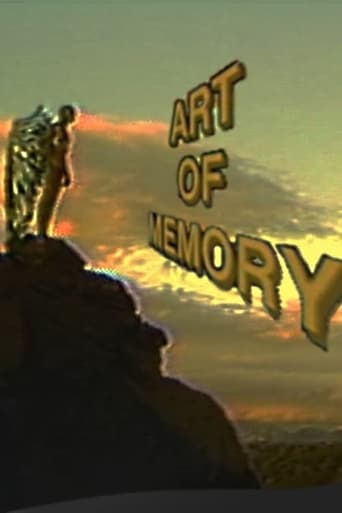
Manipulating a variety of sources, Vasulka uses creative imaging tools to situate historical images against Southwestern landscapes of incredible beauty. Contorting the images into a variety of isomorphic forms, Vasulka creates a literal shape for these memories, developing these shapes as metaphors for the processes of fragmentation, condensation, and inversion, that inevitably contort fact into memory. While much of the raw material for the tape is drawn from World War II and its rehearsals, the Spanish Civil War and the Russian Revolution, The Art of Memory is really an extended meditation seeking to reconcile the blurry, banal photographs of historic figures with the mass destruction they helped engineer.
A young boy tries to survive the ravages of war.
Activate your FREE Account!
You must create an account to continue watching