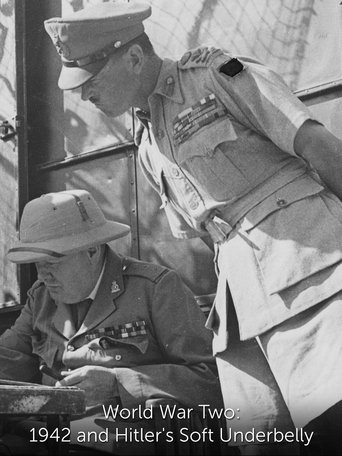
The British fought the Second World War to defeat Hitler. This film asks why, then, did they spend so much of the conflict battling through North Africa and Italy? Historian David Reynolds reassesses Winston Churchill's conviction that the Mediterranean was the 'soft underbelly' of Hitler's Europe. Travelling to Egypt and Italian battlefields like Cassino, scene of some of the worst carnage in western Europe, he shows how, in reality, the 'soft underbelly' became a dark and dangerous obsession for Churchill. Reynolds reveals a prime minister very different from the jaw-jutting bulldog of Britain's 'finest hour' in 1940 - a leader who was politically vulnerable at home, desperate to shore up a crumbling British empire abroad, losing faith in his army and even ready to deceive his American allies if it might delay fighting head to head against the Germans in northern France. The film marks the seventieth anniversary of the Battle of El Alamein in 1942.
White troops are approaching the village. A small garrison of Red Army soldiers decides to evacuate civilians and a wounded soldier to safety. This important task is entrusted to the young Komsomol member Efimka. The carts leave the village and travel along forest roads, but lose their way. At night, at a rest stop, Efimka, his mother and Verka talk about the future, about a forty-story house with a tower, a star and a spotlight - let it shine!..
Tư Hậu is a common woman from a fishing village whose husband has gone away to fight in the revolution. She takes care of her young daughter as well as her aging father-in-law. Soon, her peaceful village is attacked.
A squadron of North Korean soldiers during the Korean war must scramble across dangerous terrain to cut off an American attack (with only the eponymous 12 hours in which to do it). With a commander whose health is failing him, a group of young but fiercely patriotic soldiers the DPRK army manage to hold off the Yanks (who foolishly informed the press of their planned attack before going through with it).
The key aim of every ZOO is to protect animal species from extinction. In times of war, the most endangered species was the man. Under the Nazis' noses, about 300 people, mainly Jews, found shelter at the Warsaw Zoo during the Second World War. With the help of reenacted scenes with animals, interviews with the survivors, and archive footage, we are going to revive the surreal atmosphere of those events.
A story set in a Slovenian town during WW2. The White Guardists bring a wounded partisan to doctor Koren, but he kills their lieutenant, thus helping them both to escape.
Explorer follows Bob Ballard and veterans from both America and Japan as they search for ships that were sunk during the Battle of Guadalcanal.
In the depths of a snowy forest in an unknown wartime, two soldiers from opposing armies try to outwit each other in a perilous game of cat and mouse - until they find themselves outplayed by destiny.
Three friends serve in special forces, their daily tasks are to confront dangerous criminal groups. In one of the confrontations they will have to test their friendship.
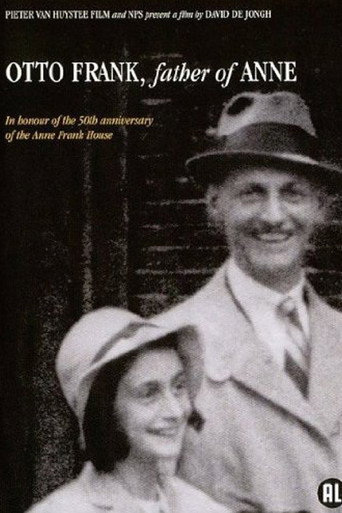
Director David de Jongh represents the life Otto Frank in his documentary Otto Frank, the father of Anne. The film deals with various facets of Otto Frank’s life: his youth in Germany, including his military service during the First World War, his marriage to Edith Holländer and the birth of their daughters Margot and Anne, their flight to the Netherlands, the time in hiding and the deportation to Auschwitz, his life after the Second World War and his dedication to the diary and the ideals of his daughter Anne, and his second marriage to Fritzi Geiringer. The documentary features many photos and film images, as well as interviews, including new ones, with people who knew Otto Frank. His stepdaughter Eva Schloss is one of the interviewees. The film is produced by Pieter van Huystee Film.
A short animated War Office commissioned health education film, showing the fate of each of the 6 jungle soldiers.
A British army officer is cashiered, and re-enlists as Private to take part in the Crimean War. He succeeds in capturing a top Russian spy which results in the famous Charge of the Light Brigade to take the Balaclava Heights.
Through exclusive testimonies and clandestine videos, this documentary gives voice to courageous women in Iran who risked their lives to share their stories and to prominent women in culture, art and academia who were forced to leave their beloved country. They are a guiding force, able to explain through their individual, perilous and often tragic experiences, the drastic shift of a nation, caught between patriarchy, deep economic crisis, corruption, rigid religious and ideological beliefs.
During World War II, during a misty morning, near a fishermen's village, four children come across two RAF pilots ejected from a plane that crashed in the sea.
In the Balkans, every generation has its war. Sons are continuing fights started by their fathers. There are rifles and pistols in every hand. Concentration of arms has reached a critical point. Even the smallest incident would be disastrous to this fragile peace. Watching children playing with toy guns makes you wonder: what are we leaving to the next generation?
When NATO troops withdrew from Afghanistan, the Afghan National Army (ANA) took over control of Helmand Province, an extremely dangerous region where attacks by Taliban fighters are the order of the day. Security, much less peace, would seem to be unattainable; it is even difficult to find a common language in a country where everyone mistrusts each other. The directors of this film accompanied an ANA company during a year of frontline duty in Helmand. The soldiers are paid irregularly, there are not enough supplies and their equipment is substandard. They cannot fight a war with the equipment left behind by the ISAF.
A Security Service Major wishes to "buy" gullible priest Zieja and turn him into an agent who will discredit the opposition. The priest's interrogations become a natural pretext for a journey through the history of Poland in the twentieth century: from the Bolshevik war of 1920, through World War II, up to modern times. It turns out that the seemingly naive Father Zieja is actually a clever rebel.
Summer 1916. A transport of Russian prisoners of war passes through Brno. The health of Russian officer Ryepkin deteriorates so much that he is taken to an Austrian military hospital. He almost dies and needs a transfusion. The German nurse Mathilda is the only one with the same blood type. However, because she hates everything Slavic, she hesitates to help and the chief physician, MUDr. Šrámek, has to remind her of her human duty.
The action takes place in the North of Scandinavia, where Hitler's Germany tried to keep its last frontier. Here by the will of circumstances gets pilot-Navigator uzbek Akbar Ibrahimov, whose plane was shot down in battle, and joins the ranks of the Resistance. Soon he managed to get an officer on a German submarine, and later report on the secret bases of the enemy.
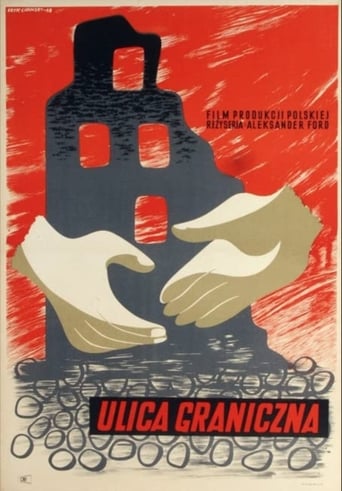
The story of Polish and Jewish families living side by side in one Warsaw street. Everything changes once and for all with the Nazi invasion.
Activate your FREE Account!
You must create an account to continue watching