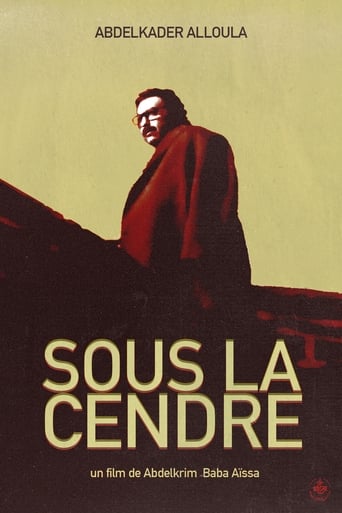
The Second World War. French authorities ban political parties and unions. In Algeria, the leaders of political and trade union organizations were arrested and interned in "surveillance" camps with more than 2,000 French and foreigners: communist activists, trade unionists, brigadists, Spanish republicans and other opponents of the Vichy regime. The Djenien Bourezg camp is one of these camps, located in southern Algeria and is one of the most formidable. An old activist for the Algerian national cause returns to the scene. He blows away the ashes that cover this part of history. And through it, we discover the hard fight of the camp inmates for respect and human dignity, under a fascist command.
How was Adolf Hitler able to count on the German public even in the face of unspeakable suffering and impending doom? Evocative and previously unseen private archive footage, much of it in colour, shows life in Nazi Germany from 1933 onwards till the end of the Nazi regime in 1945. This documentary is a revealing portrait of the German people, how they lived and perceived the world, under Hitler.
Story about famous ballet dancer Marija who was horrified by the terror of Ustasha regime, and joined the partisans.
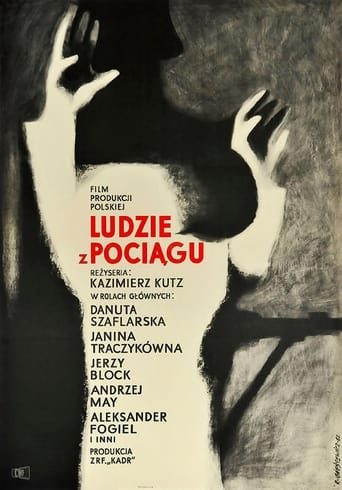
A group of people find themselves stuck in remote train station in German-occupied Poland. A drunk German station guard there gets paranoid and sees partisans all around him, phones headquarters, and when the German soldiers arrive and search the station they find a gun. They then threaten to execute every fifth person unless someone claims it.
Historical Epic about The Voortrekkers
A chauffeur becomes an officer and later cares for his master's widow and child.
Documentary following the efforts of a historian to clear the name of Albert Goering, brother of Herman. Albert strived to save Jews while his brother masterminded plans to exterminate them. Through eyewitness accounts and the historian's findings, the film explores the notion that Albert's deeds may not have been possible without the help of his brother.
An apocalyptic story of three wars in three film tales encompassing the end of the WWI,WWII, as well as a vision of the world destroyed by nuclear weapons. This film was honored at the film festivals in Venice and Sorrento. Immediately after that the copy with Italian subtitles was locked in a safe as evidence of the anti-communist activities of the director, who used real footage of the Soviet invasion.
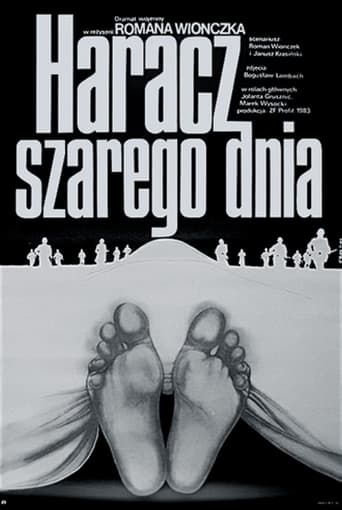
The year 1943. The Second World War is on. A group of partisans, which includes, among others, the young poet Gonczar, his friend Włodek and Zosia, are ordered to blow up a railway bridge during a military transport crossing. The task is completed, but with great losses.
This film was created by combining and shortening the films Kierunek Berlin (Destination Berlin) and Ostatnie dni (The Last Days). It presents the final phase of the great offensive of 1945, which ended with the capture of Berlin, from the perspective of a private soldier of the First Polish Army.
A small village during World War II. Driven by misery some peasants smuggle goods across the mountain frontier. Thus an ever-greater gap opens between them and those who are fighting the invaders.
A movie crew is shooting in Thailand when some military guys kidnap the female star. The crew decide to fight back to get the movie star while shooting their movie.
The film takes place in Russia during the World War I. Three Hungarian POWs are on the run from their Russian captives. One of them gets shot down. Lieutenant Balogh and Miska, his servant, are brought before Szergej Dragow. The Russian offers to take them on to serve him. Balogh says yes, only to attempt to escape later.
Story of Yugoslav prisoners of war in Germany during Second World War. Based on the novel “Farewell in October” by Oto Bihalji-Merin.
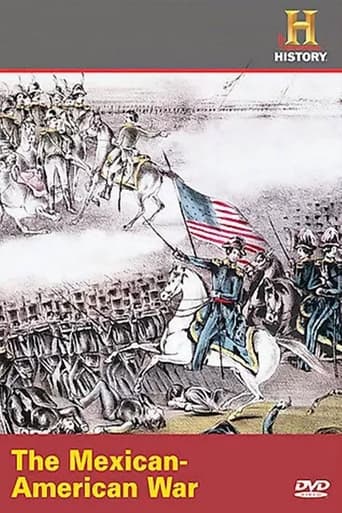
One of the most controversial conflicts in U.S. history, the Mexican-American War erupted as President James K. Polk sought to extend the borders of the nation to the Pacific, taking by force whatever territory stood in the way. This special, produced by The History Channel and hosted by Oscar de la Hoya, looks at the war from the perspective of both countries, and chronicles the fighting from its inception to its conclusion with the Treaty of Guadalupe Hidalgo.
The U.S. Army Signal Corps Pictorial Division made this short documentary shortly after the end of WWII to look at the after-effects of the atomic bombs dropped on Hiroshima and Nagasaki. There is no credited crew or cast.
How I Was Stolen by the Germans (Serbian: Koko su me ukrali Nemci) is a Serbian movie. Alex (52) is sufficiently renowned writer who is engaged in repairing other people's texts. It is vital, educated, talented but a bit of a misanthrope. One day in his life enters a girl Roma (6). Alex tells her the stories of his childhood ... The movie is a story of the film director childhood.
The main character in the film is a real person in history - the hero of the Vietnamese people's army, Cu Chinh Lan, set in the middle of the resistance war against the French (circa 1951) on the battlefield in North Vietnam.
The film is about the life of Dmitry Cantemir and the Moldovan people from November 1710 to July 1711. Turkish troops are preparing for war with Russia. The Sultan entrusted him with the throne of Moldavia. Cantemir secretly established ties with Peter I and concluded a military-political agreement with him, according to which Russia took Moldova under its protectorate, pledged to help expel the Turks and restore the former borders of the Moldovan state.
Activate your FREE Account!
You must create an account to continue watching