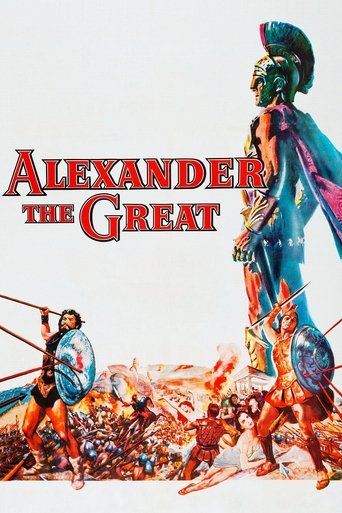
An engrossing spectacle set in the 4th-century BC, in which Alexander of Greece leads his troops forth, conquering all of the known world, in the belief that the Greek way of thinking will bring enlightenment to people. The son of the barbaric and ruthless King Philip of Macedonia, Alexander achieved glory in his short but remarkable life.
During the Nazi occupation of Poland, an acting troupe becomes embroiled in a Polish soldier's efforts to track down a German spy.
During one of the missions, of the Wolf Pack squad led by Lao Diao who are engaged in overseas security work for a long time discovers that foreign terrorist forces have extended their reach into China's energy lifeline.
In 1932 Shanghai, a resistance leader and a gangster join forces to eliminate a Japanese military strategist. Their mission leads to violent encounters, public uprising, and ultimate sacrifice in the fight for freedom.
After returning home from an extended tour in Afghanistan, a decorated U.S. Army medic and single mother struggles to rebuild her relationship with her young son.
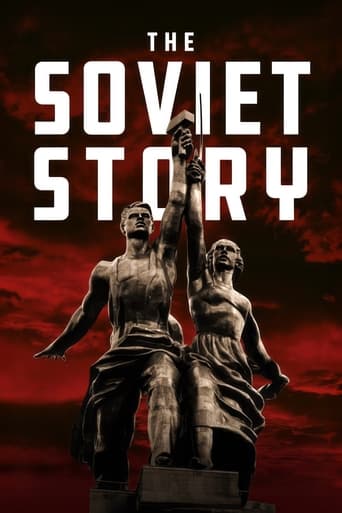
“The Soviet Story” is a story of an Allied power, which helped the Nazis to fight Jews and which slaughtered its own people on an industrial scale. Assisted by the West, this power triumphed on May 9th, 1945. Its crimes were made taboo, and the complete story of Europe’s most murderous regime has never been told. Until now...
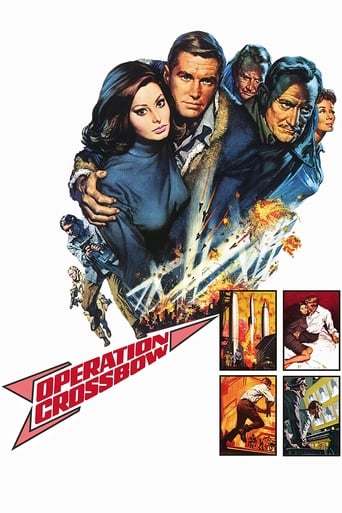
Allied agents infiltrate the Nazi rocket complex at Peenemunde in order to obtain their secrets and sabotage the plant. The film alternates between German developments of the V-1 missile and V-2 rocket (with a German cast speaking their own language) and discovery by British Intelligence of the weapon.
A made-for-TV dramatization of George Washington's perilous gamble of crossing the Delaware River and attacking the British forces at Trenton.
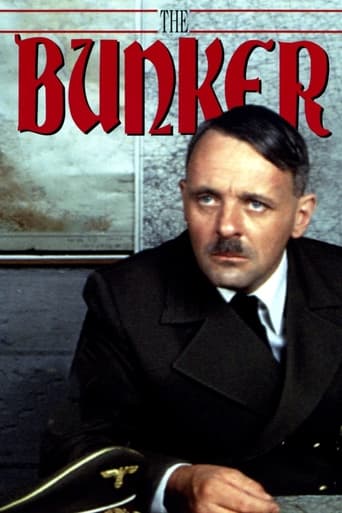
Dramatization depicting the events surrounding Adolf Hitler's last weeks in and around his underground bunker in Berlin before and during the battle for the city.
Karlag, short for Karaganda Corrective Labor Camp, was one of the largest labor camps within the Soviet Gulag system. Established in 1931, it was located in the Karagandy Region of Kazakhstan. The film will explore the hardships faced by people during the 1930s-1950s and the resilience of human dignity despite the daily struggle for survival. The atmosphere of Karlag will be conveyed through costumes, props, and sets created after extensive research in archives and museums.
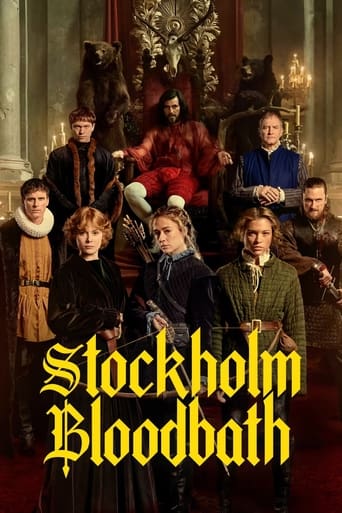
In 1520, the notorious and power-hungry Danish King Christian II is determined to seize the Swedish crown from Sten Sture, no matter what it takes. Meanwhile, sisters Freja and Anne make a solemn promise to seek revenge on the men who brutally murdered their family. Everything comes to a head in the heart of Stockholm, where the sisters are drawn into a ruthless political struggle between Sweden and Denmark that culminates in a mass execution, presided over by the mad King "Christian the Tyrant," known as the Stockholm Bloodbath.
This is a story about the battle for a hospital building in Grozny (Chechnya) in January 1995 between Russian Army forces and Chechen rebels supported by Arabian mujahideen and international mercenaries. Although the story is fictional, most of the characters are based on real-life prototypes and events are the compilation of true events during the Grozny Siege in the First Chechen War.
A powerful drama of soaring ambition and shattered dreams that takes a provocative insider's look at the way the USA goes to war—as seen from inside the LBJ White House leading up to and during the Vietnam War.
During World War II, a brave, patriotic American Soldier undergoes experiments to become a new supersoldier, "Captain America". Racing to Germany to sabotage the rockets of Nazi baddie "Red Skull", Captain America winds up frozen until the 1990s. He reawakens to find that the Red Skull has changed identities and is now planning to kidnap the President of the United States.
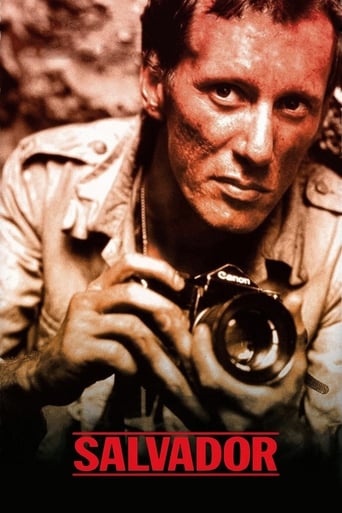
In 1980, an American journalist covering the Salvadoran Civil War becomes entangled with both the leftist guerrilla groups and the right-wing military dictatorship while trying to rescue his girlfriend and her children.
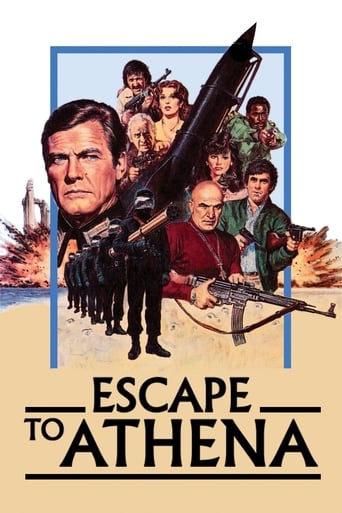
During the World War II, the prisoners of a German camp in a Greek island are trying to escape. They not only want their freedom, but also seek an ineffable treasure hidden in a monastery at the summit of the island's mountain.
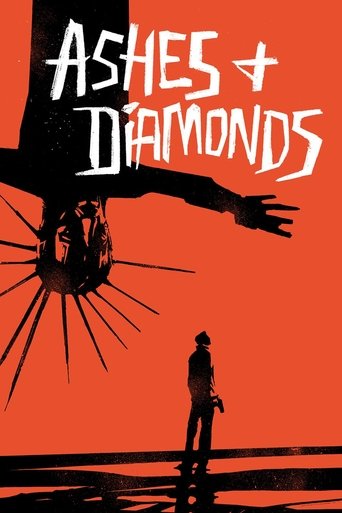
A young academy soldier, Maciek Chelmicki, is ordered to shoot the secretary of the KW PPR. A coincidence causes him to kill someone else. Meeting face to face with his victim, he gets a shock. He faces the necessity of repeating the assassination. He meets Krystyna, a girl working as a barmaid in the restaurant of the "Monopol" hotel. His affection for her makes him even more aware of the senselessness of killing at the end of the war. Loyalty to the oath he took, and thus the obligation to obey the order, tips the scales.
It is late spring of 1942, and the Great Patriotic War is in full swing. A long way off from the front-line, at some God-forgotten junction, the Germans make an air landing operation in an attempt to get through to the Kirov railway and the White Sea - the Baltic Sea Canal. These aren't just ordinary paratroopers. This is a team of seasoned and highly trained infiltrators, the elite of the Waffen-SS, superhumans. The only thing in their way is an anti-aircraft artillery unit of corporal Vaskov and five young women in training. It may seem like a fight of local significance, but the countrys main strategic transportation artery is at stake. Can the corporal and his 'petite newbies' prevent Nazi sabotage and at what cost? Television version: An extended version made out of four 45 minute episodes was released on Channel One Russia, on 9 May 2016. Available on PrimeVideo.
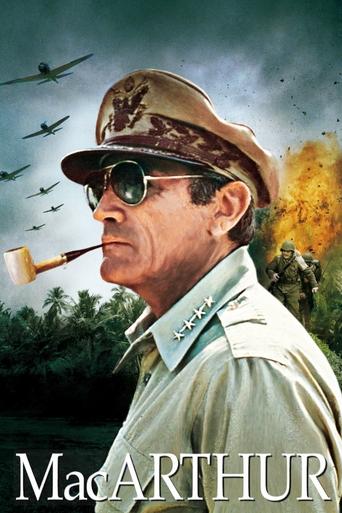
The film portrays MacArthur's life from 1942, before the Battle of Bataan, to 1952, when he was removed from his Korean War command by President Truman for insubordination, and is recounted in flashback as he visits West Point.
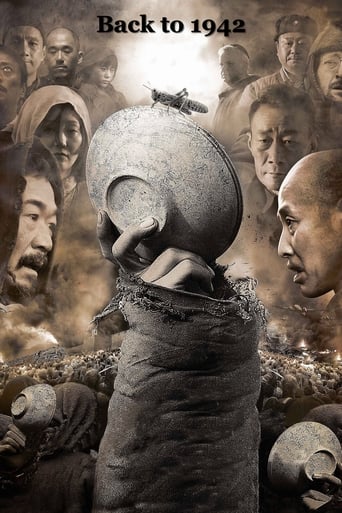
In 1942, Henan Province was devastated by one of the most tragic famines in modern Chinese history, resulting in the deaths of at least three million men, women and children. Although the primary cause of the famine was a severe drought, it was exacerbated by locusts, windstorms, earthquakes, epidemic disease and the corruption of the ruling Kuomintang government.
Activate your FREE Account!
You must create an account to continue watching