July, 1941. After the beginning of the German invasion, an Italian soldier, a veteran of the colonial wars, is sent to the Soviet front. As he remembers the fairy tales his Russian mother used to tell him, the train he is travelling in crosses Europe on its way to the vast Ukrainian plains, where the enemy and a cruel winter await him… (Based on the experiences of several Italian soldiers.)
Death in all it's faces and stages. From the horrors of Buchenwald to the devastation of Hiroshima. From the political assassinations of the second half of the 20th century to the bloody feeding frenzy of the pythons of Burma. Burned on to the screen like napalm victims of Vietnam. Followed by "Death in Focus" part 2.
Beirut resident Soraya is drawn to two men: daredevil photographer Nabil and Talal, who must embrace his feudal heritage when his father is kidnapped.
1920. Russian Civil War. Operation of GubCheka (Soviet police) to destroy one of the bands in Ukraine.
An epic fresco depicting the reign (1593-1601) of Mihai Pătrașcu (better known as "Mihai Viteazul" / "Michael the Brave"), the famous prince who united the three provinces: Transalpine Vallachia, Transylvania and Moldavia, into the country of Romania, at the end of the 16th century (1599-1601) against the opposition of the Ottoman and Austrian Empires, this movie features large scale battle scenes mixed with political intrigues, murderous treachery, and family drama.
The first Polish film to discuss the failure of September 1939 Polish-German war, seen from the point of view of a university intellectual, fascinated by German culture, who decides to take active part in the conflict.
Two Jewish boys escape from a train transporting them from one concentration camp to another. Beyond themes of war and anti-Nazism, the film concerns itself with man's struggle to preserve human dignity.
The film tells the story of a Turkish platoon serving in the Korean War. First Lieutenant Kemal is sent to Korea on a mission to learn the enemy's routes of operation. He sets out with a group of soldiers. They take up position at the farm of Can Bey, who lives in the area they have arrived at. The reconnaissance team discovers that the enemy is preparing for an operation. Lieutenant Kemal and his soldiers will attempt to thwart the enemy by making the necessary plans.
It’s the spring of 1945 in a small resort town on the Baltic. Günter is 16 and firmly believes that the Germans will win the war. During the hunt for a forced labourer who is on the run, Günter catches him and watches as he is shot to death. He proudly accepts the award of an Iron Cross before being shipped to the nearby front as part of the last contingent of troops. He is quickly captured by Soviet soldiers, but manages to escape and return home. When the town is occupied by the Red Army, Günter is arrested for the murder of the forced labourer. The film was banned in 1968 before it was completed, and a large portion of the negative was later destroyed.
A mother loses first her son and then her husband in the trenches of France during the First World War. She devotes herself to the French cause and to helping those wounded in the war.
In times of the French Intervention, a student of Nunó, author of the Mexican National Anthem, falls in love with the niece of the French Ambassador, which causes quite amusing complications.
'Resilience', Choi's second-year film at CalArts, is about the ravaged nature finding its strength and gradually recovering alongside the vibrant resurgence of life.
Hessian officers' flirtations with an artist's daughter accidentally give signals to the attacking English.
Set in Sarajevo during the 1941 Axis occupation of Yugoslavia, a local businessman rapidly amasses wealth by collaborating and maintaining close friendships with the Nazis. However, his financial success is complicated when he becomes deeply infatuated with a Jewish girl.
An American of Swedish origin and oil trader, Eric Erickson allegedly maintained business relations with the Nazi regime for the sole purpose of passing information to his country's secret services and working towards the defeat of the Third Reich. But what reality lies behind the heroic myth he himself created?
Ramdev Bakshi is the only son of widower and former Indian Army General Durgaprasad, who has been decorated several times with various medals for bravery shown in the line of duty. Alas this did leave him crippled, after he lost a leg during the war with Pakistan. Ramdev is also enlisted in the army, but he is peace-loving and detests war. He has a sweetheart in village belle Suman Mehra, and both hope to get married soon. He does answer the call from the army and joins active duty, only to be arrested and court-martial-ed for disobeying orders. After being dishonorably discharged, he disappears from Suman and his father's lives. Years later, Suman enters a beauty contest and is crowned Miss India. She travels with her mom to Britain, where she meets with Ramdev.
During the final months of World War II, a Nazi officer assigned to protect the war-torn frontline in the Netherlands decides to risk his life to protect a Jewish family in hiding.
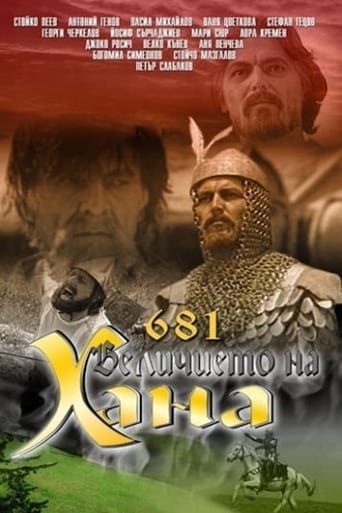
In 651, Khan Kubrat died and the Khazars accelerated their raids upon Great Bulgaria. His five sons split the Bulgarian tribe and each led his to find new land where they could live in peace. Khan Asparukh, the youngest son, went west and, after an arduous journey lasting for years, southward across the River Danube, into Moesia. In 680-81, in alliance with the Slavs, he inflicted stunning defeats on the Roman legions and forced the Byzantine Empire to recognize the formation of the new state of Bulgaria in the lands where it still exists today.
As WW2 comes to an end in the former Yugoslavia, a man without an arm and his young son are on a mission. Their goal is to find and kill five members of the fascist militia who had tortured and killed their wife and mother
Activate your FREE Account!
You must create an account to continue watching